
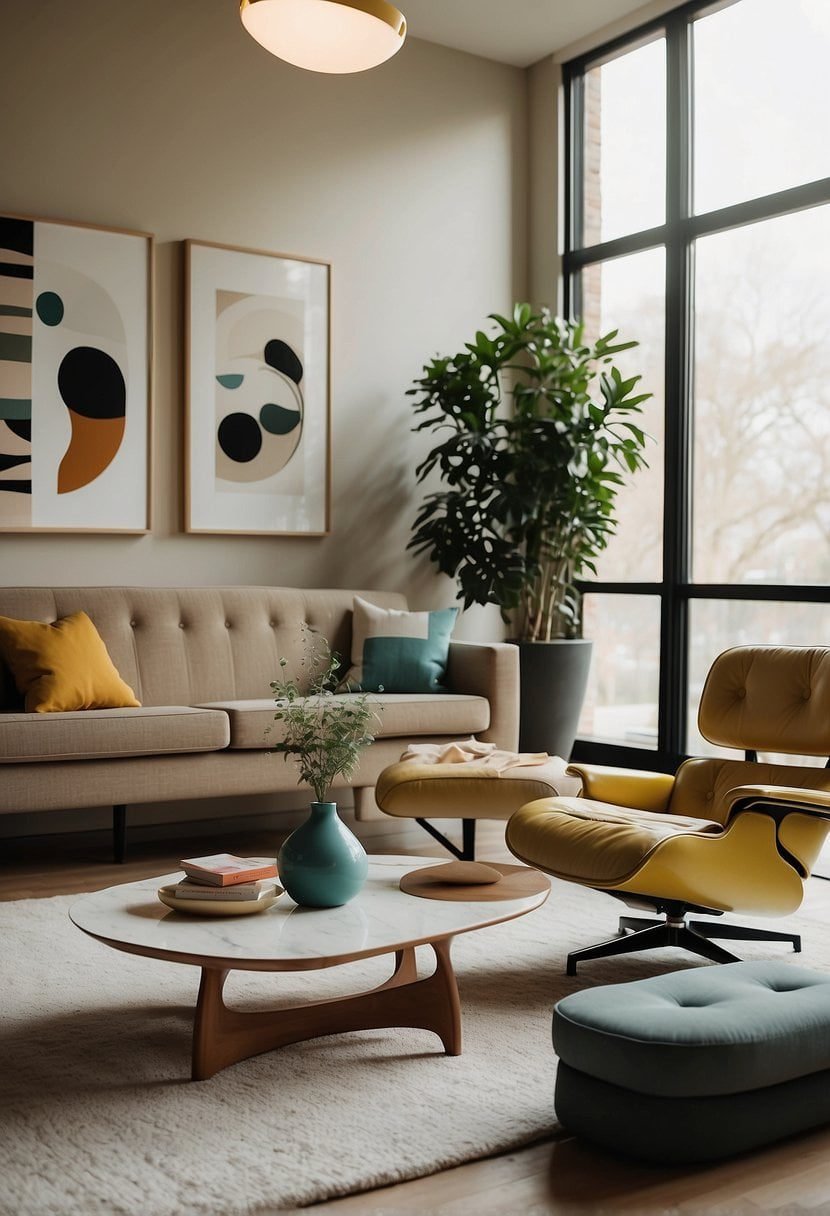
Mid-century modern style took shape in the middle of the 20th century and it’s still going strong today. Fans of this design trend love it for one big reason: it keeps things simple, practical, and easy to live with.
Architecture and interior design come together in this style through clean lines, organic shapes, and a tight relationship between form and function.
The result is a look that feels balanced and unified, with nothing fighting for attention.

Designers of that era reached for wood, metal, and glass to build the mid-century modern look, often mixing all three materials within a single room.
Rooms designed this way were meant to feel orderly, uncluttered, and connected to the natural world outside.

A defining trait of mid-century modern interiors is how they reworked familiar materials while introducing new ones, pairing contrasting textures and colors in ways that still hold up decades later.
Large windows and open floor plans were central to the movement, letting designers blur the line between a home’s interior and the landscape around it.
Affordability mattered just as much as looks. Designers wanted stylish homes within reach for ordinary families, and that priority ended up shaping residential design well beyond the countries where it started.
Key Takeaways
- Mid-century modern is a design style known for its simple, functional aesthetic and use of contrasting materials.
- The style is prevalent in both architectural form and interior design, featuring clean lines and organic shapes.
- Mid-century modern design principles prioritize functionality, affordability, and a strong connection with the natural environment.
Where Mid-Century Modern Style Began

Mid-century modern took shape as its own aesthetic in the middle of the 1900s, driven largely by the years following World War II and defined by a mix of function, comfort, and artistic detail.
It signaled a break from older, ornate design traditions, pushed forward instead by advances in manufacturing and technology.
Origins of Mid-Century Modern Style
Interestingly, the phrase itself didn’t catch on until the 1980s, even though the style’s roots stretch back to the 1930s.
Homeowners and designers alike wanted furniture that was sleek, uncomplicated, and simple to produce on a large scale, and that demand gave rise to the mid-century modern movement.
Post-War Influences
World War II left a lasting mark on design history. Once the fighting ended, both Europe and the United States were ready for a clean break from the past.
That mindset pushed industrial design toward mass production, with manufacturers focused on turning out goods quickly and efficiently.
Furniture from this period answered practical, postwar needs, while also carrying an optimistic, modern edge into everyday homes.
Notable Designers and Architects
A handful of influential designers gave mid-century modern the identity we still recognize today.
Charles and Ray Eames, Frank Lloyd Wright, Eero Saarinen, and Ludwig Mies van der Rohe were among the key figures behind the movement.
These designers experimented with new materials and construction techniques, setting the architectural and design standards that defined the era.
The Bauhaus movement, led by figures such as Walter Gropius, centered on designs that were straightforward and easy to use in daily life.
Scandinavian design took a parallel path, with designers like Alvar Aalto favoring simple forms and natural materials such as wood and leather.
Both movements fed directly into the visual language that mid-century modern design carries today.
Mid-Century Modern in Media
Television shows such as Mad Men brought renewed attention to the style, proving how well it holds up decades after its debut.
Its steady reappearance in film, television, and interior design magazines shows how deeply it still shapes modern spaces.
Key Traits of Mid-Century Modern Design

Several core principles set Mid-Century Modern (MCM) style apart from other design movements.
Function comes first, with clean lines and a mix of organic curves and geometric shapes working side by side.
Key Elements of Design
Simplicity and minimalism sit at the heart of MCM design. Common features include:
- Clean lines: Smooth, sleek lines that are both sophisticated and understated.
- Geometric shapes mixed with organic forms, achieving a functional yet visually striking balance.
Materials and Textures
Material and texture choices in MCM reflect a strong tie to nature along with a habit of mixing contrasting elements:
- Predominantly made of wood, like teak and walnut, often complemented by glass, steel, and natural materials.
- Bent plywood and upholstery fabrics are commonly used in furniture design.
Architectural Features
Mid-Century Modern architecture carries a handful of distinctive, easy-to-spot features.
- Open floor plans and ranch-style designs are emblematic of the era.
- Large floor-to-ceiling windows and glass doors blur the boundary between indoors and outdoors.
Furniture and Decor
Classic MCM furniture pieces are built to serve a purpose as much as they are built to look good:
- The Eames chair, egg chair, and Danish modern pieces highlight multipurpose furniture.
- Accent pieces often serve a dual role as functional items and works of art.
Color and Patterns
MCM design leans on bold colors and patterns, yet keeps everything visually balanced rather than overwhelming, often anchored by a neutral base like walnut wood or white walls.
- The color palette consists of both muted tones and bold colors, reflecting the era’s characteristic contrast.
- Patterns are often graphic in nature, with an emphasis on both asymmetry and rhythm.
Function Meets Everyday Comfort
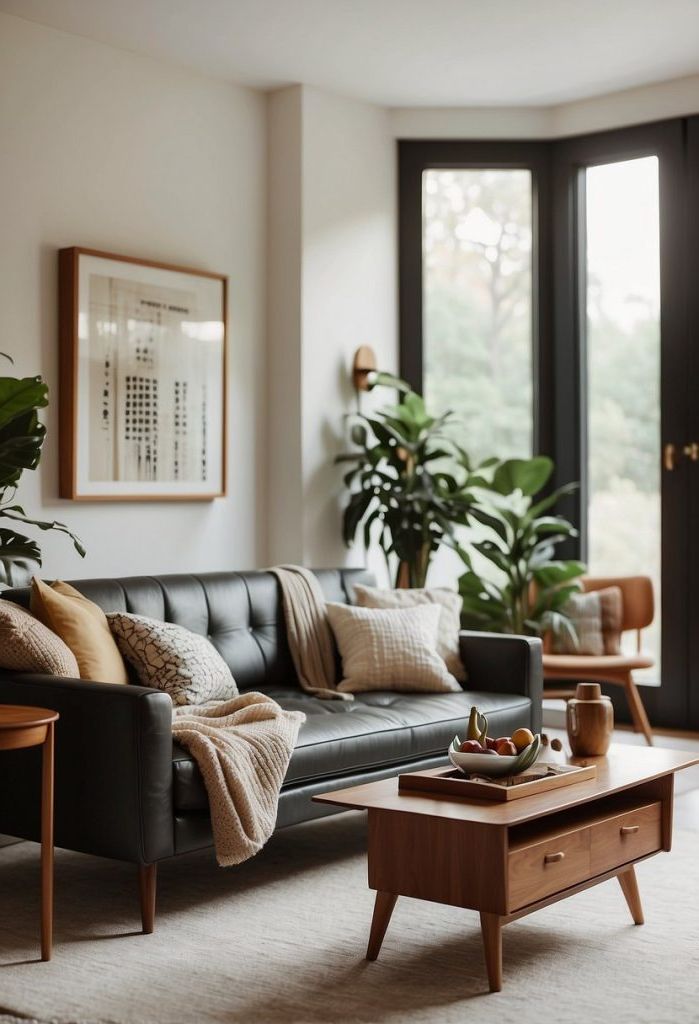
Mid-century modern style prioritizes functionality in design while maintaining comfort for the user.
The core essence lies in the creation of simple, yet highly functional furniture and living spaces that are designed for everyday use.
Form and Function
In mid-century modern design, the form of an object is inherently linked with its function.
Designers emphasized structures that were functional as well as aesthetically pleasing, adhering to the principle that beauty should follow function.
Furniture from back in the day had these cool lines and curves that were all about making things comfy and ergonomic. They were all about function and practicality!
Practical Innovations
During this time, designers really stepped up their game by coming up with some cool new ideas for making things comfy and stylish at the same time.
The introduction of new materials and techniques in mass production enabled more organic shapes, which were not only visually appealing but also provided greater comfort.
One can observe that sofas and chairs often had curved contours, fitting the human body more naturally.
Design for the Masses
Back in the day, those mid-century modern designers were all about making cool furniture that everyone could actually afford.
They figured out ways to mass-produce their designs, which made them super accessible to a lot more people.
And you know what? It actually brought down costs so everyone could enjoy high-quality, stylish furniture without breaking the bank.
You know, a lot of people just love those original mid-century pieces. But hey, there are also these cool replicas out there that are bringing that stylish vibe into more homes.
It’s like getting the look you want without breaking the bank, you know?
How Mid-Century Modern Spread Worldwide

The mid-century modern style has really made a mark on architecture and design worldwide. It’s left a lasting legacy that we can still see today in preservation projects and current trends.
You can see its impact in iconic buildings and even in how people decorate their homes today.
Preservation and Restoration
Have you ever noticed those cool mid-century modern buildings in Palm Springs? They’re like treasured pieces of history, with their unique designs and retro vibes.
Architects like Richard Neutra and John Lautner really captured the essence of that time period. It’s so awesome to see how people are working hard to preserve these iconic structures for future generations to enjoy.
Have you ever seen the Elrod House by Lautner? It’s such a great example of how the architecture blends in perfectly with the natural surroundings.
Preservationists are really big fans of these special homes, especially those designed by famous architects like Neutra and A.
Quincy Jones. They do a lot to make sure these gems are well taken care of for future generations to enjoy.
Modern Interpretations
Modern designers today are really into the whole mid-century vibe – you know, that whole minimalist and functional style. Scandinavian design is also a big deal right now, with its clean lines and natural shapes.
It’s so cool how both of these styles are still making a mark on how we decorate our homes in Europe and America.
When it comes to designing hotels and commercial spaces, the focus is on keeping things simple yet cozy, taking inspiration from the past.
This comeback of minimalist design pays homage to its origins while also catering to our current need for eco-friendly and functional living spaces.
Significant Structures
Around the world, there are some really cool buildings that show how awesome the mid-century modern style is.
One of the architects who nailed this style is Pierre Koenig, especially with his Case Study Houses.
These houses are all about that sleek international look and the cool idea of blending indoor and outdoor living seamlessly.
Have you ever heard of the Farnsworth House? It was designed by an architect called Mies van der Rohe and it’s super famous for representing some important architectural principles.
Some other architects like E. Stewart Williams and William Krisel have also made a big impact with their work.
Their legacy is still really popular today and has had a big influence on modern architecture. It’s pretty cool, right?
Common Questions About Mid-Century Modern Style
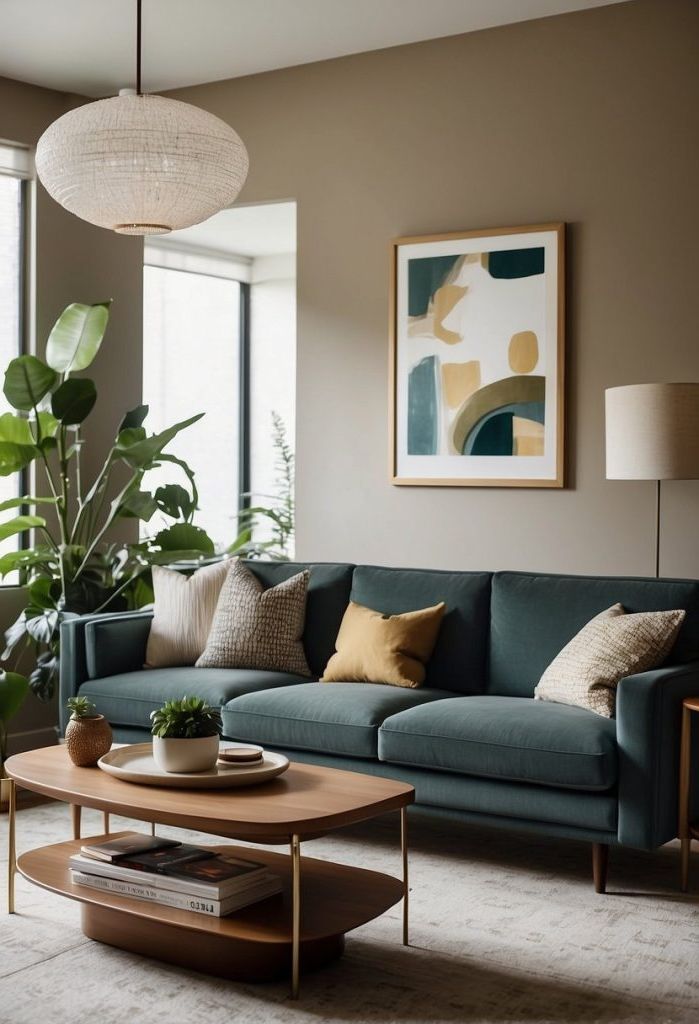
In this part, we’ve got you covered with quick answers to all your burning questions about mid-century modern style.
We’ll break down the design elements and share some cool facts about its history. So, let’s dive in and explore this awesome style together!
How can I identify a mid-century modern style living room?
So, like, a mid-century modern living room is all about those sleek lines, cool shapes, and a combo of different materials like wood, metal, and glass.
Oh, and don’t forget about the furniture with those tapered legs and simple designs – total classics for this vibe!
What are the defining characteristics of mid-century modern interior design?
Some important things to know about this style are that it’s all about keeping things practical and simple, with a touch of nature brought in through big windows and lots of greenery inside.
The color schemes usually mix calm, neutral colors with a pop of something vibrant.
What makes a piece of furniture distinctly mid-century modern?
Distinct features of mid-century modern furniture are streamlined shapes, natural wood hues paired with colorful upholstery, and a blend of traditional craftsmanship with industrial techniques.
In what ways did mid-century modern architecture stand out from other architectural styles?
Mid-century modern architecture is known for its flat planes, big windows, and open layouts that flow easily from inside to outside.
It’s all about bringing the outdoors in and creating a seamless living experience.
Can you describe the historical context of mid-century modern interior design?
So, back in the mid-20th century, after World War II, people were really into this cool design style called mid-century modern.
It was all about creating homes and furniture that were trendy and easy to get your hands on.
What sets mid-century modern graphic design and art apart from other artistic movements?
The graphic design and art from the mid-century modern era really stood out with their bold and simplified shapes and colors. They often portrayed themes inspired by the Atomic Age and space exploration.