

Japandi is a design style that blends Japanese simplicity with Scandinavian warmth, pairing Zen calm with hygge comfort. It’s become one of the most popular looks for modern living rooms.
Want to turn your living room into a calm retreat? Start with a neutral color palette on your walls, furniture, and textiles.

Clear out the clutter and swap it for clean-lined, functional furniture. Minimalism is the goal here, so let one piece, like a well-crafted coffee table, act as the focal point of the room.
Add a few live plants to bring texture and life into the space. From here, the rest of this list will walk you through 15 ways to build that Zen-inspired living room.
1. Floor Seating with Neutral Tatami Mats

Tatami mats bring a low, grounded seating option that feels both simple and comfortable. This flooring choice sits at the heart of Japandi design, which blends Japanese restraint with Scandinavian warmth to create a calm break from a busy day.

A room built entirely on neutral tones can start to feel flat. Break it up with a textured throw blanket or a couple of patterned pillows in muted colors like clay, moss, or indigo.
2. Wabi-Sabi Room with Vintage Wood and Linen Throws

This look embraces flaws instead of hiding them. Weathered wood furniture paired with linen throws builds a warm, layered room, and mixing textures like this keeps things interesting without tipping into messy.
Some people might see this as too rough around the edges, but others see charm in the rawness. It suits anyone drawn to a lived-in, authentic look over a polished showroom feel.

If this style speaks to you, add potted plants like ferns or snake plants for a natural accent. Pair aged wood pieces with linen or wool fabrics, and you can source most of it secondhand without a big budget.
Plain materials often carry the most character. Combine a few patterns and textures freely, since that variety is what gives a wabi-sabi room its lived-in, welcoming feel.
3. Calm Shelving for Ceramics and Bonsai Trees

Open shelving does more work than people give it credit for in a Japandi room. Style it with organic ceramic pieces and a small bonsai tree, and the display becomes a quiet focal point.

Stick to light wood tones on the shelves themselves for a calm base. Stagger the ceramics at varied heights instead of lining them up evenly. A single bonsai on the shelf can read like a mini zen garden.

Balance matters more than volume here. Overcrowded shelves overwhelm the eye, so edit down to a handful of pieces. Rotate the display with the seasons: fresh greenery works well in spring, while darker glazed ceramics suit the room in colder months. Small swaps like these keep the shelf feeling current year-round.
Japandi design leans on restraint, so every object on display should earn its spot. A handful of well-chosen pieces does more for a sense of calm than a shelf packed with knickknacks.
4. Shoji Screen Doors with Nordic Touches
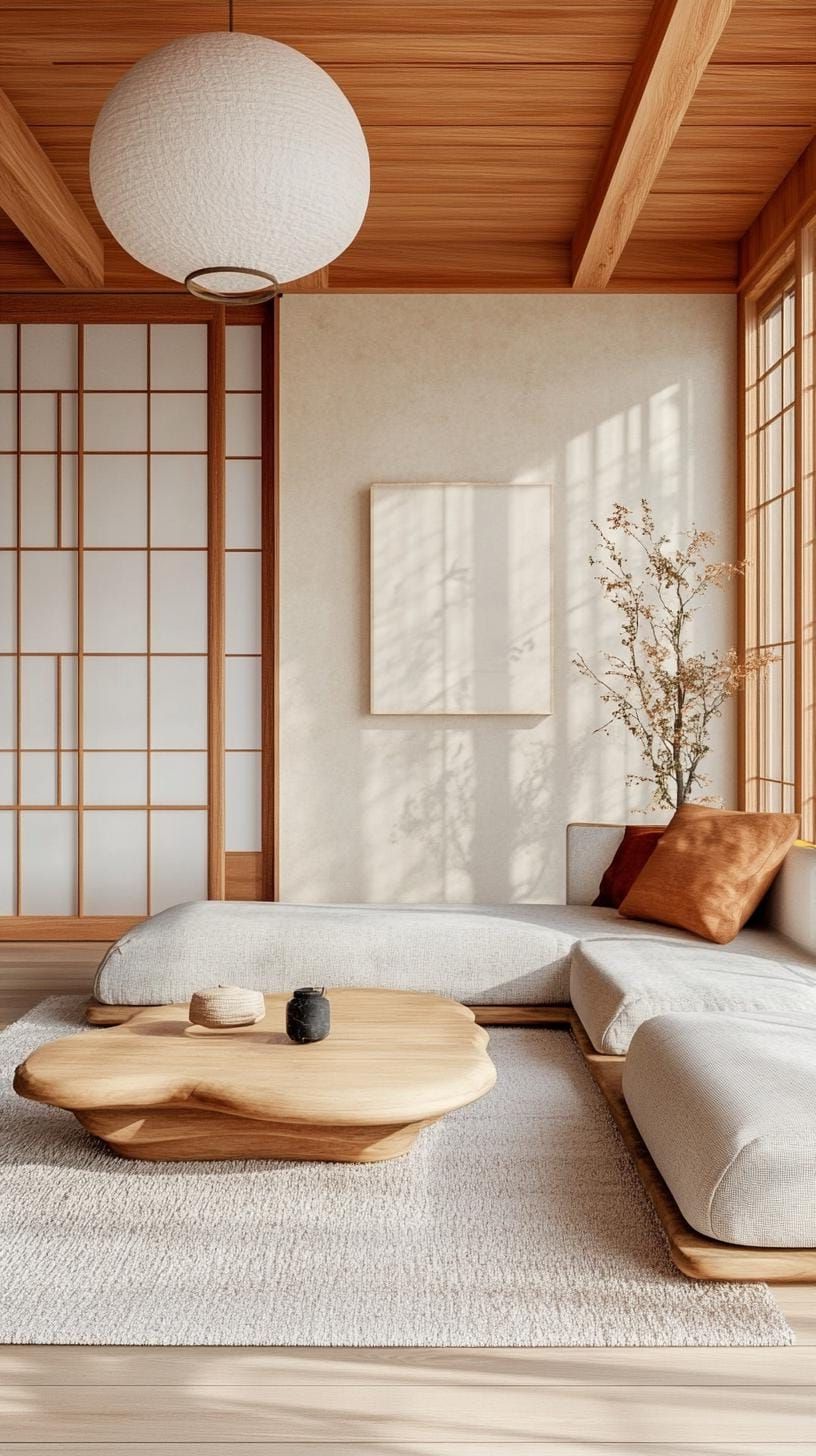
Sliding shoji screens made from wood and rice paper pair naturally with Nordic elements like pale wood frames or wool throws. Together they open up a room while keeping the mood quiet and uncluttered.

These screens let in soft, diffused light and make a room feel larger, but their translucent panels offer less privacy than a solid door. Weigh that trade-off before installing them in a room facing the street or a shared hallway.

5. Zen Corner with Pea Gravel and Bamboo Dividers

Indoor pea gravel paired with bamboo dividers can turn an unused corner into a small Zen retreat. This combination signals a clear boundary in the room while keeping the mood calm and uncluttered.

A dedicated quiet corner gives everyone in the house a spot to decompress. It functions like a mini retreat tucked into your everyday living space.

Pea gravel needs regular sweeping to stay tidy, and bamboo dividers require occasional wiping and humidity control to prevent cracking. Even so, most homeowners find the natural texture and warmth worth the upkeep.
A well-built Zen nook tends to catch guests’ attention fast, even though the design itself stays minimal. Small details, like a smooth stone or a single candle, can make the corner feel intentional rather than empty.
6. Wool Rugs Paired with Obi Fabric Cushions

A thick Scandinavian wool rug underfoot pairs naturally with cushions made from textured Japanese obi fabric. The combination brings together two very different textile traditions in one seating area.

This pairing works because it balances rustic comfort with a refined, tailored look. Obi fabric often carries traditional woven patterns, which adds visual interest against a plain wool rug.

Keep in mind that this combo needs some upkeep. Wool rugs shed fibers for the first several months of use, and obi fabric can be delicate, so gentle spot cleaning is usually safer than machine washing.
A little extra maintenance is a fair trade for a rug and cushion pairing that looks this custom.
7. Low Oak Furniture with an Ikebana Centerpiece

Low-profile oak furniture sets a calm, grounded tone in a Japandi living room. Oak’s natural grain and warm color work well with this style, and a small Ikebana flower arrangement on the coffee table adds a refined finishing touch.

Ikebana is the traditional Japanese practice of flower arranging, built around balance and negative space rather than a full, dense bouquet. Even a single stem paired with two or three leaves can carry the whole arrangement.

Oak furniture has visual weight, so too many large pieces in one room can feel heavy rather than calm. Choose a few key items, like a low coffee table and one media console, and leave the rest of the floor open.
Layer in an Ikebana arrangement for contrast against the solid wood. A room with this much restraint signals that the design choices were deliberate, not accidental.
8. Balancing Natural Light with Lantern Fixtures
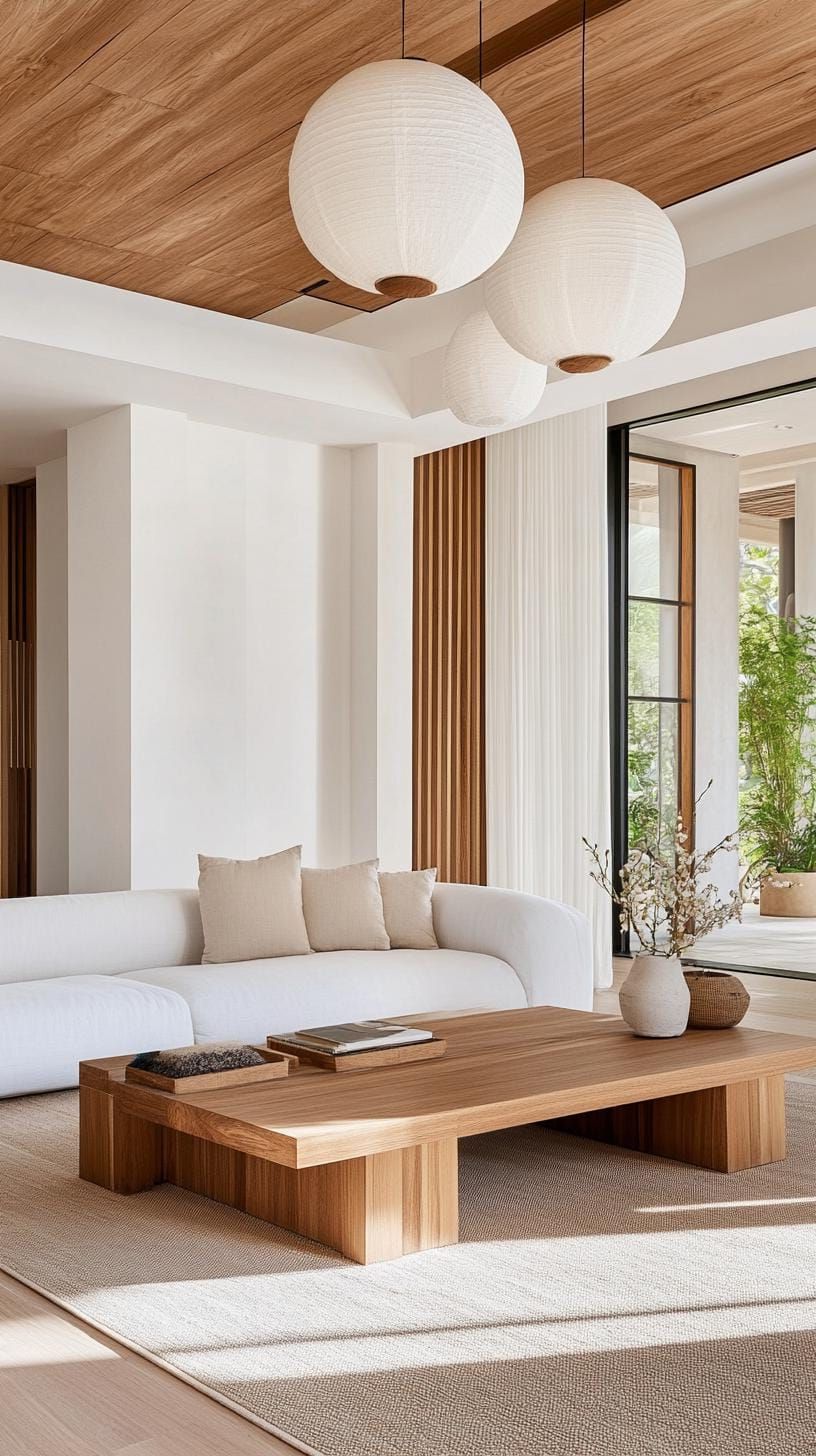
A relaxed Japandi living room usually mixes daylight with soft, warm lantern-style fixtures. Sheer curtains filter morning sun, and paper or bamboo lanterns take over once evening light fades.

Soft, warm-toned lighting brings out the natural grain in wood furniture and the texture in linen fabrics. Overdoing it with too many fixtures crowds the room’s mood, much like adding too much seasoning ruins a simple dish, so one or two well-placed lanterns usually beats a half dozen scattered around.

9. Stone Planters and Water Features for a Natural Feel

Nature-inspired elements in Japandi design create serene spaces. Stone planters add earthy textures, grounding your living room. Water features introduce tranquility, reminiscent of a gentle brook. However, maintenance could be a concern.
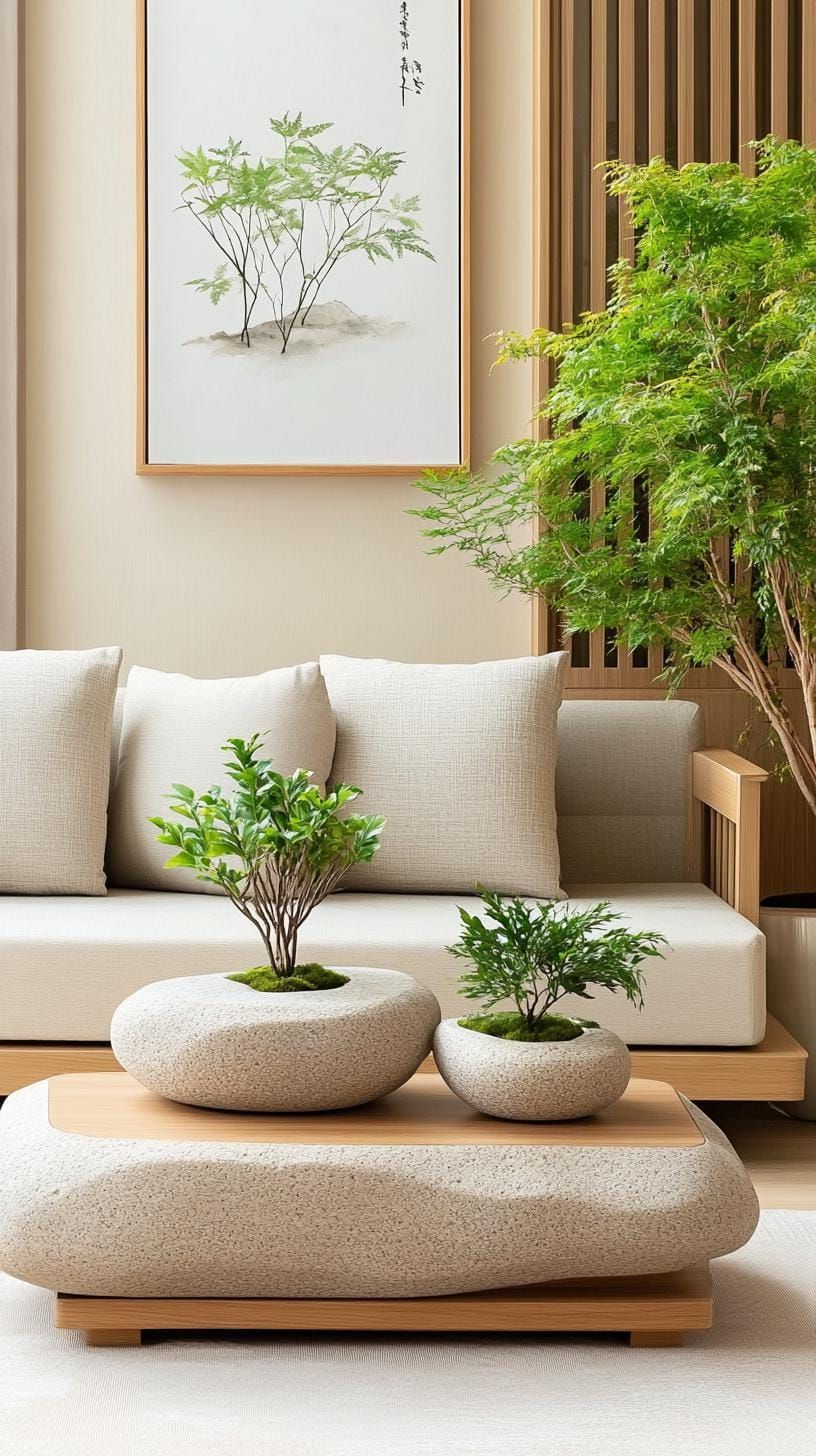
Who wants to deal with a damp carpet, am I right? Place these features strategically so you can kick back and relax without adding more cleaning to your to-do list. Trust me, it’ll be worth it!

Are you interested in sprucing up your decor? Try pairing some sleek, minimalist furniture with elements from nature. Picture a beautiful stone vase next to a soothing fountain, creating a peaceful atmosphere. Your living room will transform into a quiet sanctuary for relaxation.
Not fond of cluttered maintenance? Consider faux plants or simple stone decorations these poofy people-swappers! They mimic natural beauty effortlessly.
10. Glass and Wood Storage in Multiple Tiers

Picture these storage units that not only serve a practical purpose but also add a touch of charm to your home. By blending the warmth of wood with the sleekness of glass, you can achieve a harmonious and balanced aesthetic in any room.
This style is perfect for people who love to keep things tidy and also want their space to look beautiful. It’s a great mix of practicality and elegance that will make you happy.

I love those glass shelves for showing off my favorite stuff, and those wooden compartments are perfect for hiding all the random things I can never find a spot for. And don’t even get me started on those pesky remote controls – everyone needs a good place to keep those! And the best part? It’s so easy to keep everything clean and organized.
Just give it a quick wipe down, no need for any fuss. Japandi is all about effortless elegance – the ideal pick for anyone looking to bring a sense of calm into their living space.
11. Big Windows and an Earthy Color Scheme
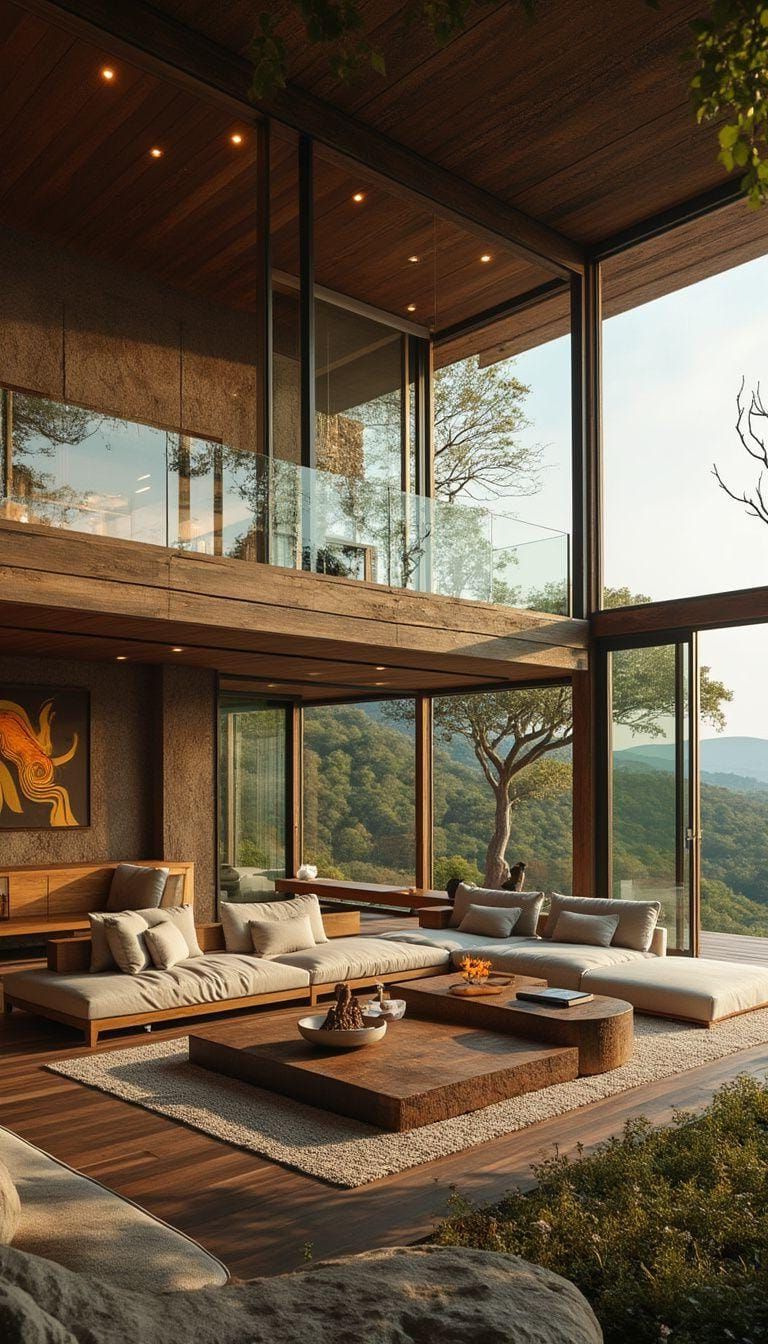
Picture a room filled with natural light streaming in through large windows, creating a peaceful and serene atmosphere. The earthy tones of greens, beiges, and browns add a sense of relaxation to the space. It’s like bringing a piece of the outdoors inside.
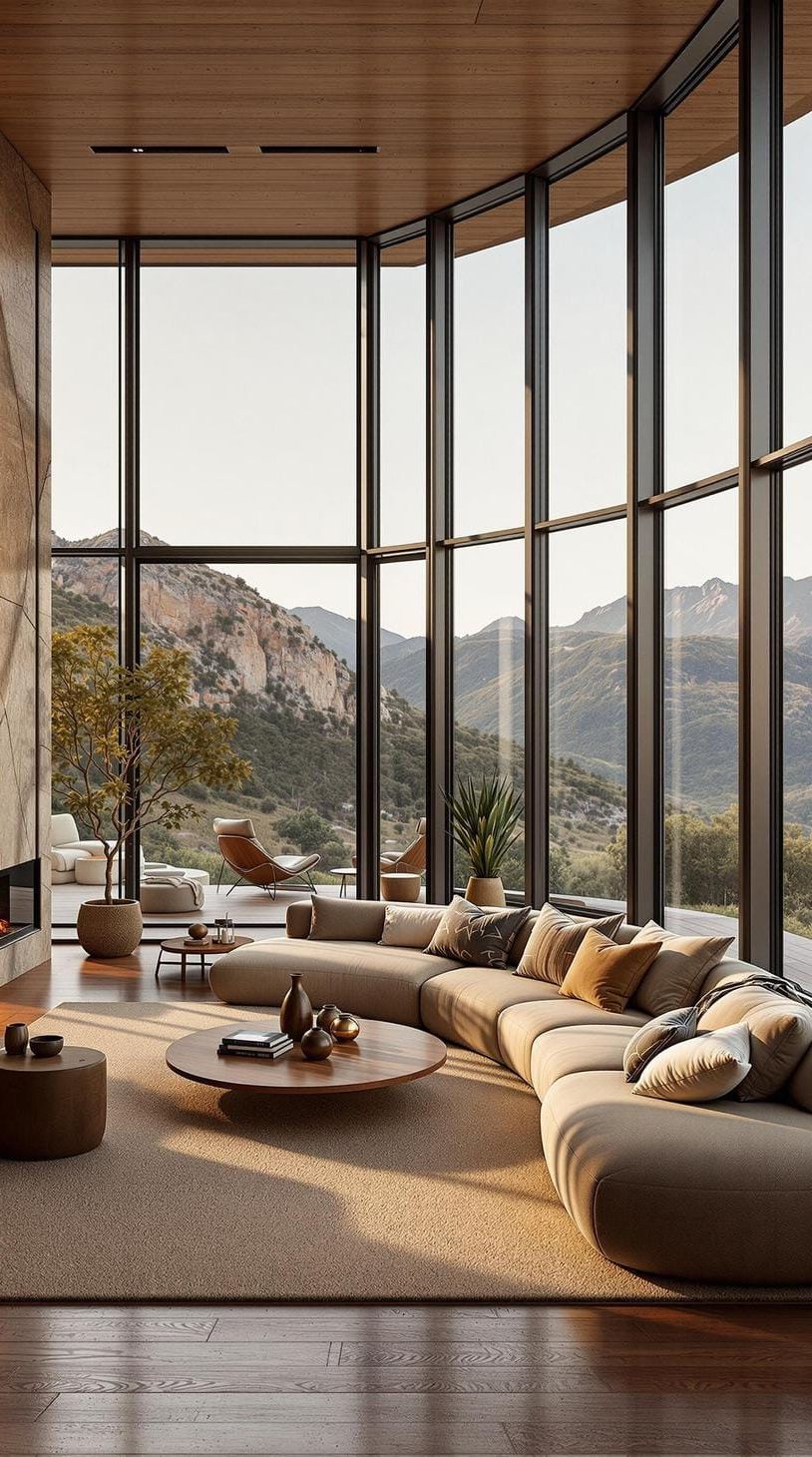
Hey, just a heads up: using the same color tone too much can start to feel a bit boring. Try mixing things up with some dark wood or charcoal accents to add some contrast and variety!

12. Calligraphy Scrolls Meet Nordic Wall Art

Picture this cool wall I saw that seemed to blend two different worlds. On one side, there were these beautiful Japanese calligraphy scrolls with graceful strokes that just oozed tradition and peace. And on the other side, there were these clean and crisp Nordic art prints. It was like a unique mix of styles coming together in one space.
Their minimalism charms with a whisper of modernity. Such balance turns your living space into a serene gallery.

When you mix these elements, it’s like adding different flavors to a dish – it creates a more interesting and diverse cultural experience. Calligraphy brings a sense of history and tradition, while Nordic art can bring a touch of modernity and brightness. Just a heads up, though; don’t go overboard with too many items as it might throw off the harmony. Instead, focus on selecting a few pieces that really speak to you and convey emotion or meaning.
If you’re into Japandi style, you’ll love the beautiful mix of history and modern design in this art synergy. It’s a perfect match for all you Japandi enthusiasts out there!
13. Kintsugi-Inspired Decor for a Standout Look

Adding Kintsugi’s artistry to a Japandi living room is like adding a beautiful touch to your favorite tune. This traditional Japanese technique really highlights the beauty of imperfections, don’t you think?
Imagine a ceramic vase, cracked, yet filled with gold seams. It tells a story, a conversation starter for sure! Do your guests want boring? Of course not!

Balance is key here. You don’t want to go overboard with too many Kintsugi items, as it could start looking cluttered. Instead, try to imagine a standout piece among your minimalist decorations. Maybe just a small Kintsugi bowl or a patched-up plate on a shelf to add that special touch.
These pieces give just a subtle touch of style without being too flashy. Remember, sometimes less is more when it comes to being stylish!
14. Reclaimed Wood and Soft Upholstery Combinations

Have you ever considered how incorporating reclaimed wood can really bring a peaceful vibe to your living room? Japandi style is all about combining simplicity and comfort. Reclaimed wood adds a unique touch and makes for a great focal point in the room. Pair it with some soft pastel upholstery for a cozy finishing touch. What do you think?

Soft hues breathe tranquility. Do you fancy a splash of subtle elegance? Japandi style whispers calm, not chaos.
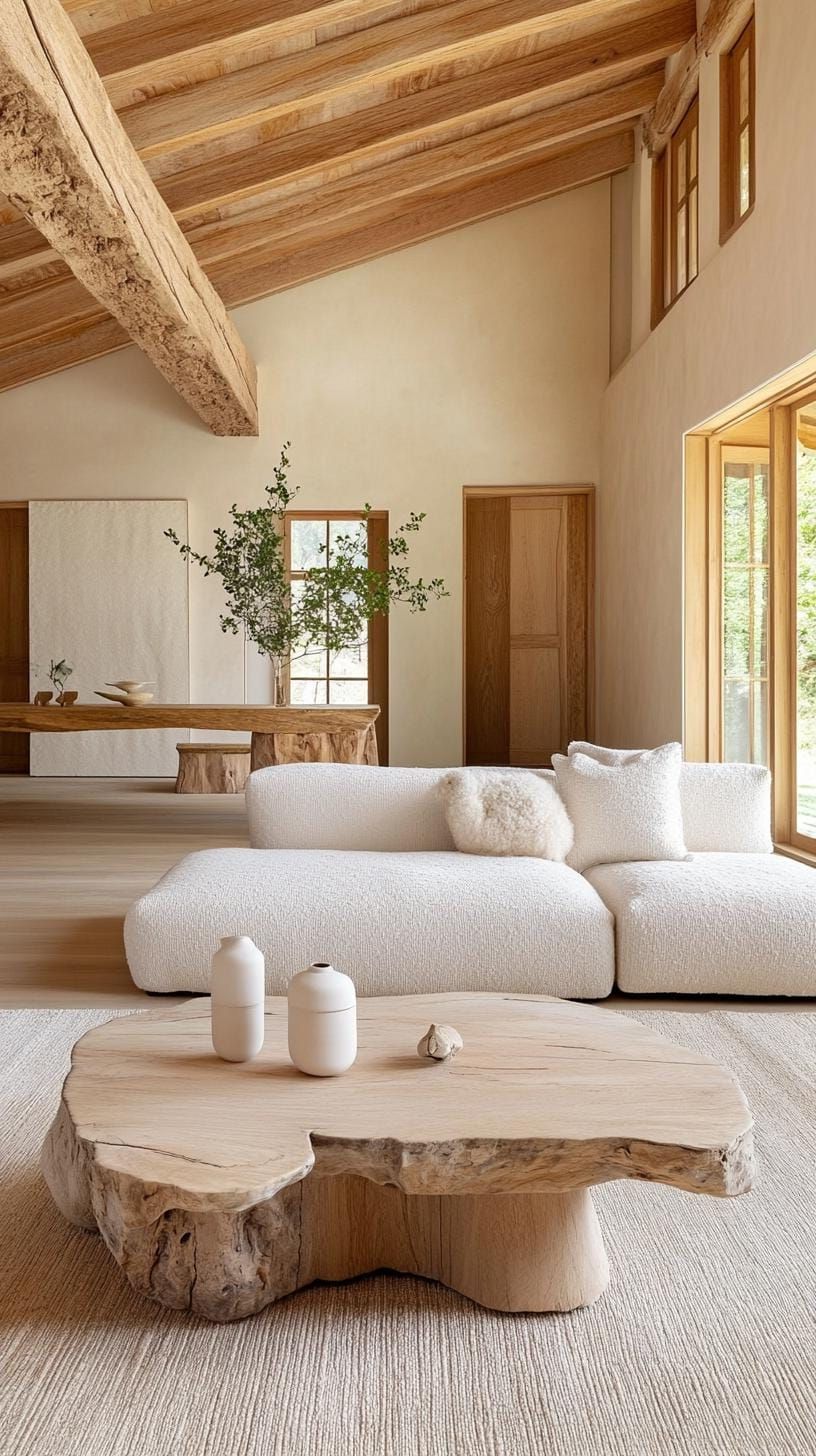
Mixing textures can be a bit of a challenge sometimes. You want to make sure you balance reclaimed materials with soft fabrics. And try not to go overboard with patterns! Just pick a nice geometric design that you love. Keep it simple and stay focused.
Don’t you just love how simple and easy this layout is? It really makes any room feel so much more elevated. They say less is more, and that’s definitely true when it comes to Japandi style.
15. Neutral Tones with Texture and Symmetry

Picture this: a little whisper of calmness in your living room. Just mix in those beautiful Japandi colors with some cozy wool blankets and comfy rattan chairs, and you’ve got yourself a peaceful oasis.

Have you ever noticed how symmetry can bring a sense of peace and order to a space? It’s like it gives you a nice, calming feeling. But, you know, you don’t want to go overboard with it because then things might start feeling a bit boring and bland. It’s all about finding that perfect balance between symmetry and creativity to keep things interesting and refreshing!
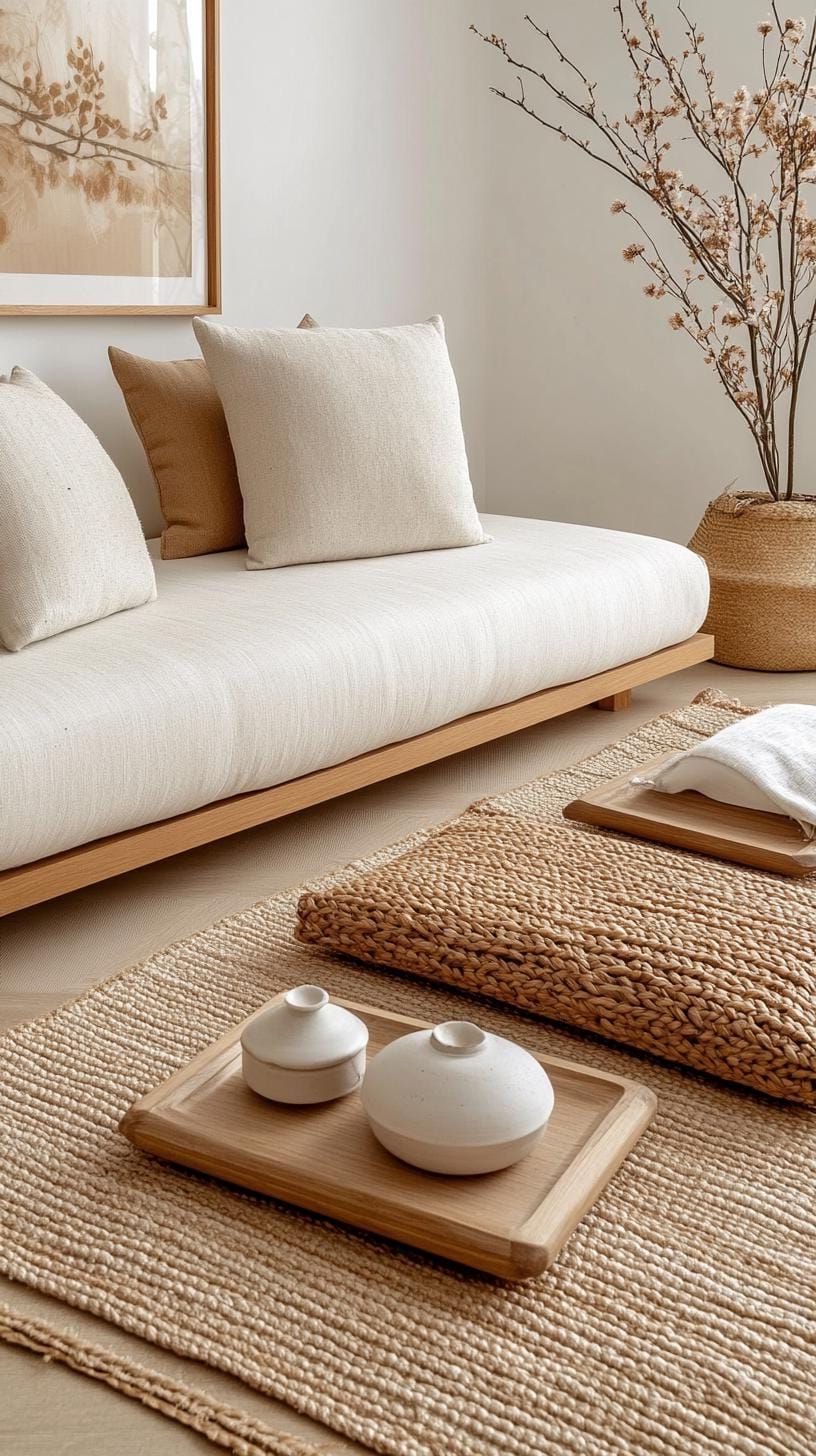
Hey, here’s another tip for you! Adding some nature-inspired decor like bamboo or a bit of greenery can really liven up a room. It brings a sense of freshness and tranquility without overwhelming the space. Just aim for a good balance between simplicity and adding unique touches to keep things interesting.
You know, a nicely decorated living room isn’t just something pretty to look at; it’s like your own little oasis of calm.
Final Thoughts
Embracing Japandi style in your living room is akin to blending the simplicity of Scandinavian design with the elegance of Japanese ascetic. Imagine a space where calmness meets coziness, inviting relaxation. It’s minimal, yet completely wondrous.
So, grab a cup of tea, embrace neutral tones, and let your space breathe. Start small, maybe a bamboo vase or a comfy, low-seated sofa. Your living area will soon become a peaceful oasis, reflecting tranquility.
Hey there! Let’s talk about some topics that are related to this. What are you interested in discussing or learning more about? Let’s dive into some topics that are connected to this one. What piques your curiosity?
- Moody Neutral Living Room
- Neutral Living Room Ideas
- Contemporary Living Room Ideas
- Minimalist Living Room Ideas
- Modern Living Room Ideas
- Modern Living Room Inspirations