
60 Japandi-Style Bedroom Ideas for Calm, Cozy Spaces
Ever walked into a room and felt both fancy and comfortable at the same time? That’s the essence of Hygge – a warm mix of elegance and coziness that settles right into your chest. A Japandi-style bedroom captures that same feeling while staying calm and stylish. This design approach leans on natural, soft materials to build a simple, serene atmosphere. This article breaks down exactly how to blend Hygge and Japandi together in your own bedroom without much fuss.
Bringing the outdoors inside is easier than it sounds. A few carefully chosen textures, the right lighting, and natural materials can turn a plain room into a cozy retreat fast. Japandi style pulls from nature in a way that feels chic rather than rustic. Ready to see how it all comes together? Let’s get into it.
How to Build a Japandi-Style Bedroom
Peace and calm don’t require a total overhaul – clean lines and a bit of warmth go a long way. A room built on soft, soothing elements naturally invites you to slow down and relax. Japandi design blends Scandinavian comfort with Japanese minimalism, giving you a space that feels both grounded and inviting. The goal is balance: nothing too bare, nothing too busy, just mindful surroundings.
 Save
Save
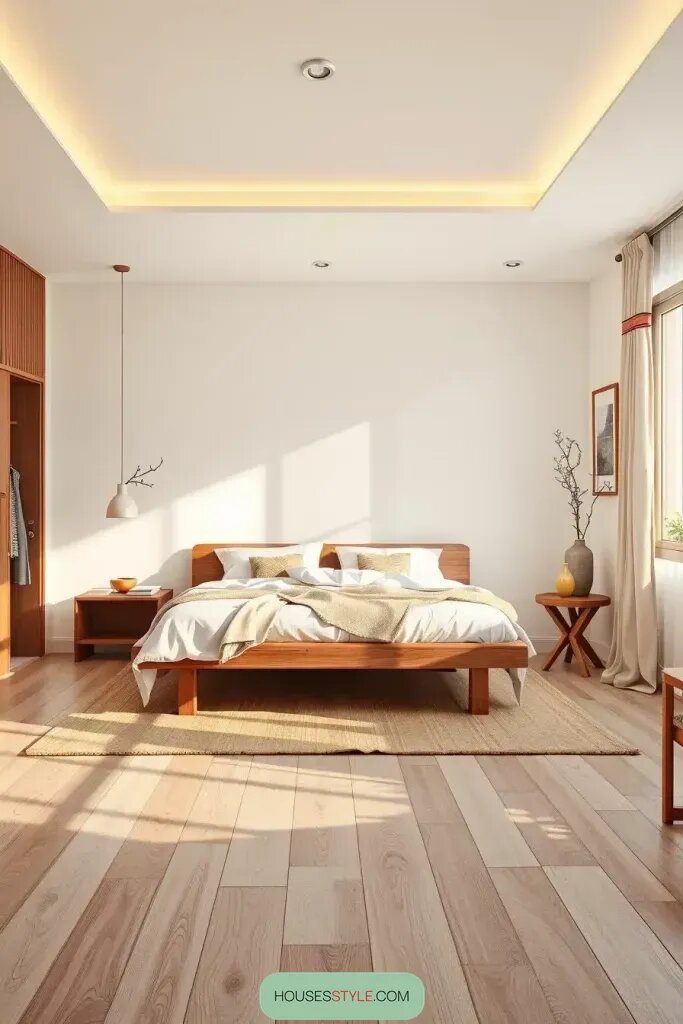
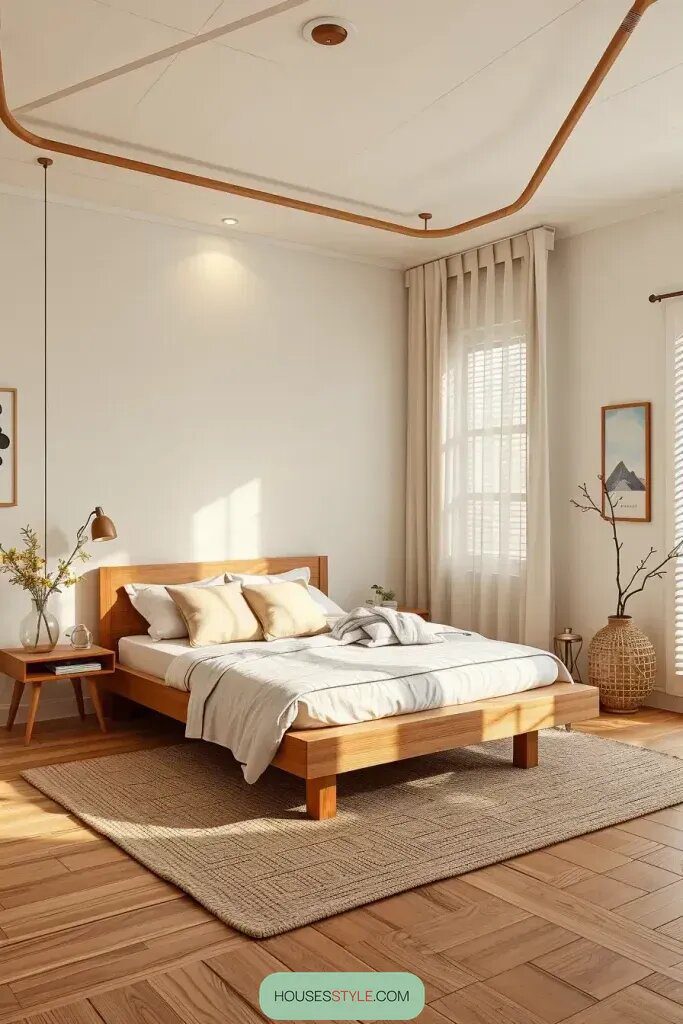
A well-designed Japandi bedroom has every piece working together. A low platform bed paired with light wood nightstands and rounded edges sets the tone. Layered soft fabrics add comfort without clutter, while warm neutral wall colors let natural textures stand out. Hidden storage keeps the room looking tidy and calm, which matters as much as the furniture choices themselves.
 Save
Save
Clients consistently tell me this design brings real peace into their daily routine. Architectural Digest has pointed out that Japandi’s soothing, grounded qualities make it especially well-suited for relaxation-focused spaces like bedrooms.
One thing worth exploring further is how light and scent work together in a Japandi bedroom. Soft, warm lighting paired with a subtle scent – think cedar, sandalwood, or green tea – builds a cozy, inviting mood. The next section covers this pairing in more detail.
Where Japanese and Scandinavian Design Meet
Understanding where Japandi comes from helps when designing your own cozy bedroom. It blends Japanese wabi-sabi with Scandinavian hygge – two philosophies rooted in presence, nature, and simplicity. The result is a style that embraces imperfection while staying both beautiful and functional.
 Save
Save
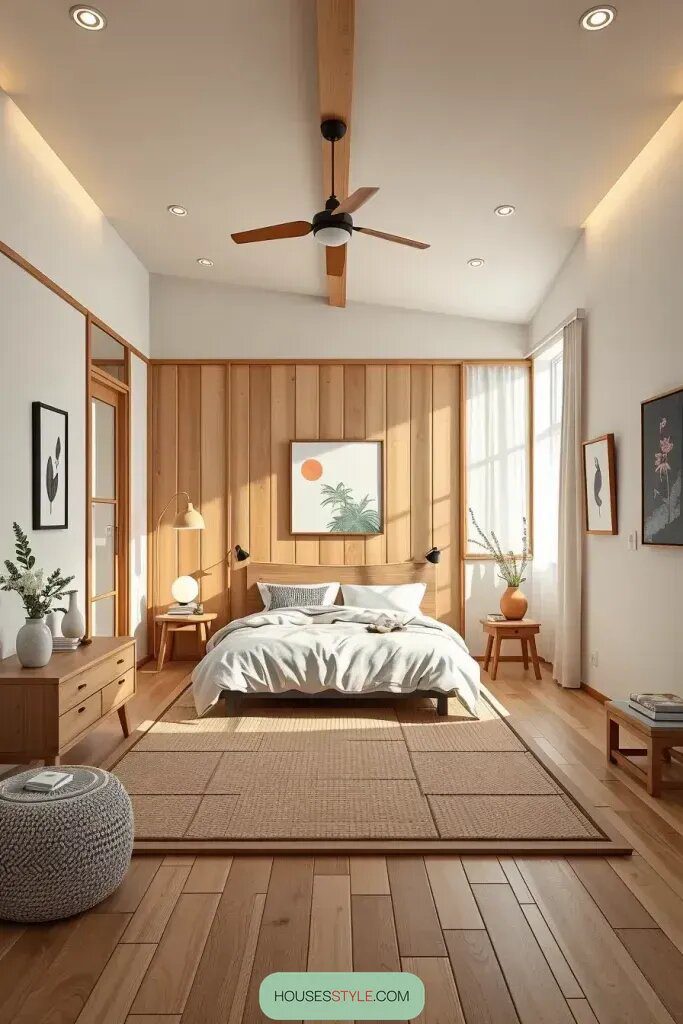
For furniture, natural wood pieces with a minimalist, low-profile design work best in this style. Linen and wool add comfort through texture, and handcrafted pottery or paper lamps bring in small personal touches. Lighting deserves attention too – a thoughtful mix of shadow and glow creates the calm, grounded feeling Japandi is known for.
 Save
Save
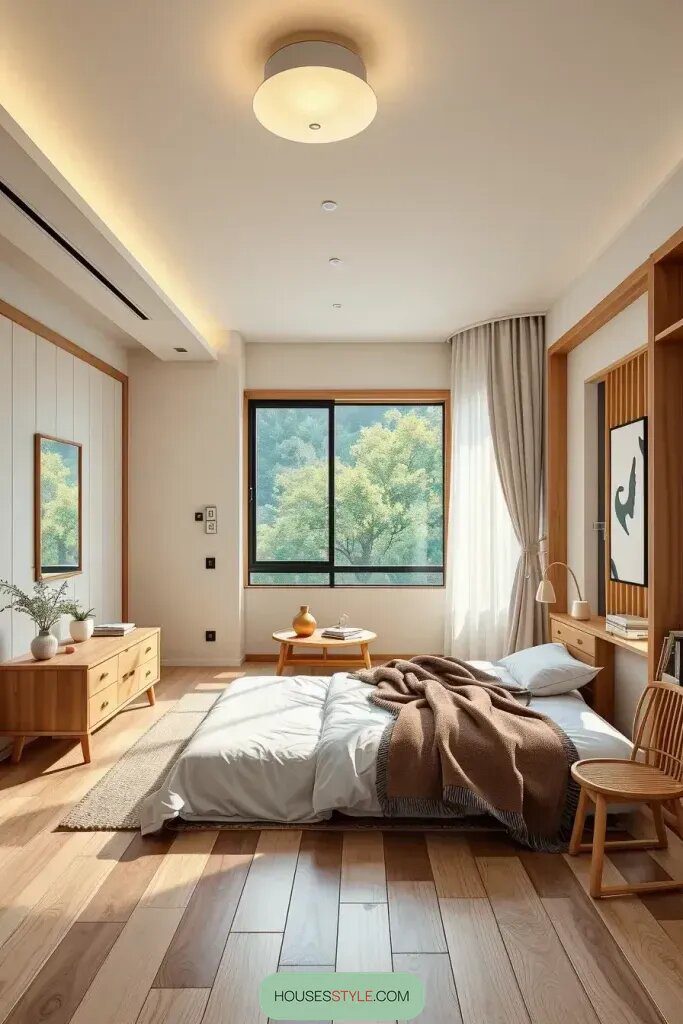
This style pushes you toward a more relaxed daily rhythm by cutting down on unnecessary stuff. It’s less about minimalism for its own sake and more about intention. Marie Kondo and Norm Architects have both spoken about how an organized, peaceful bedroom supports better sleep.
Showing a few side-by-side contrasts could strengthen this section – a Scandinavian chair next to a traditional tatami mat, for example. That kind of pairing shows exactly how these two design traditions meet in one room.
Building a Cozy Feel with Soft Color Palettes
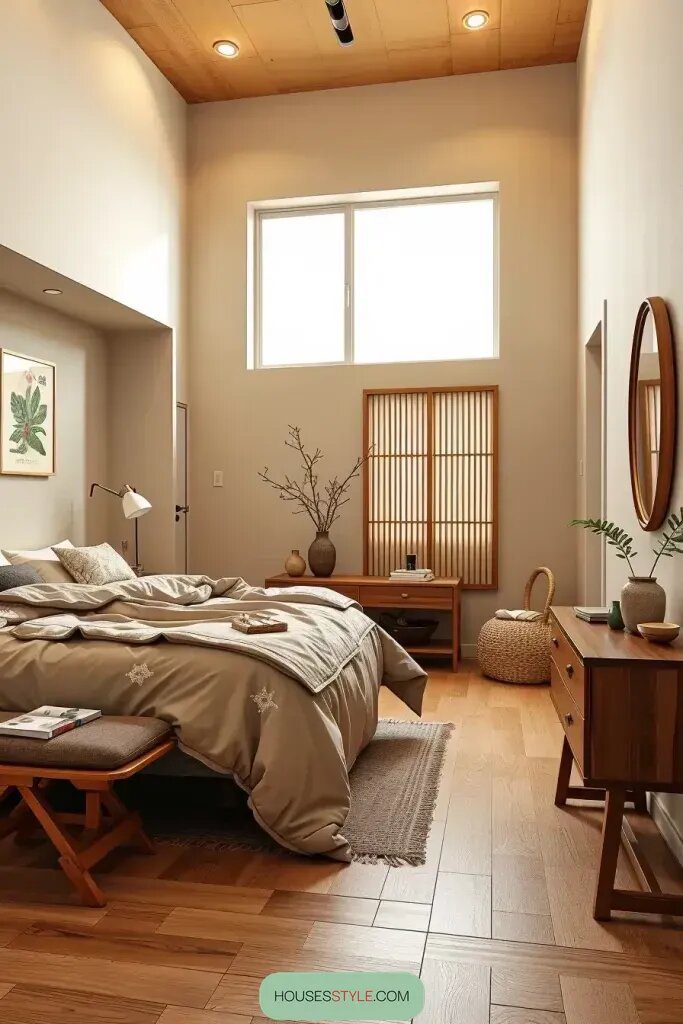
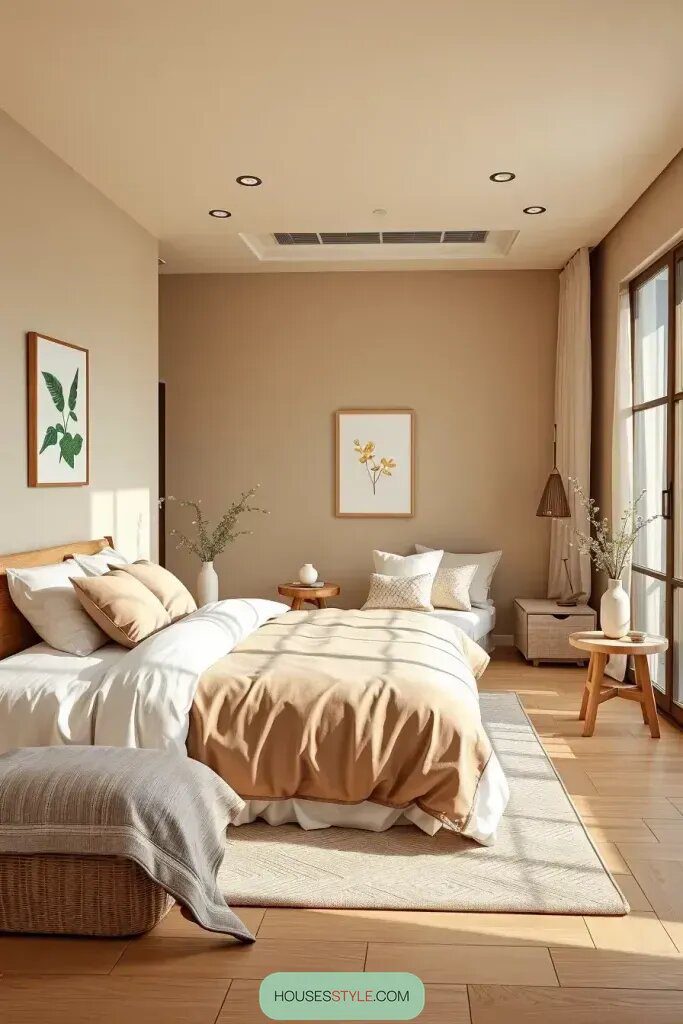
Color choice carries a lot of weight in Japandi design. Neutral tones – beige, warm white, soft gray, taupe, greige – form the backbone of the style and let natural materials and textures take center stage. These hues create the calm, restful backdrop the whole design depends on.
 Save
Save
Muted, earthy wall colors paired with larger furniture pieces keep a room grounded. A darker accent, like charcoal brown on a headboard or cushions, adds contrast without disrupting the calm. The aim is a soft, natural blend of tones rather than anything sharp or jarring – that’s what keeps the room visually restful.
 Save
Save
This approach to color does more than look good – it supports mental calm too. The Sleep Foundation has noted that softer, earthy tones in a bedroom can improve sleep quality and lower stress levels. That’s a big part of why Japandi color schemes work so well for rest.
Adding sample paint guides with complementary shades would strengthen this section, along with visuals showing color blocking through soft furnishings like throws and cushions.
Minimalist Furniture Paired with Natural Textures
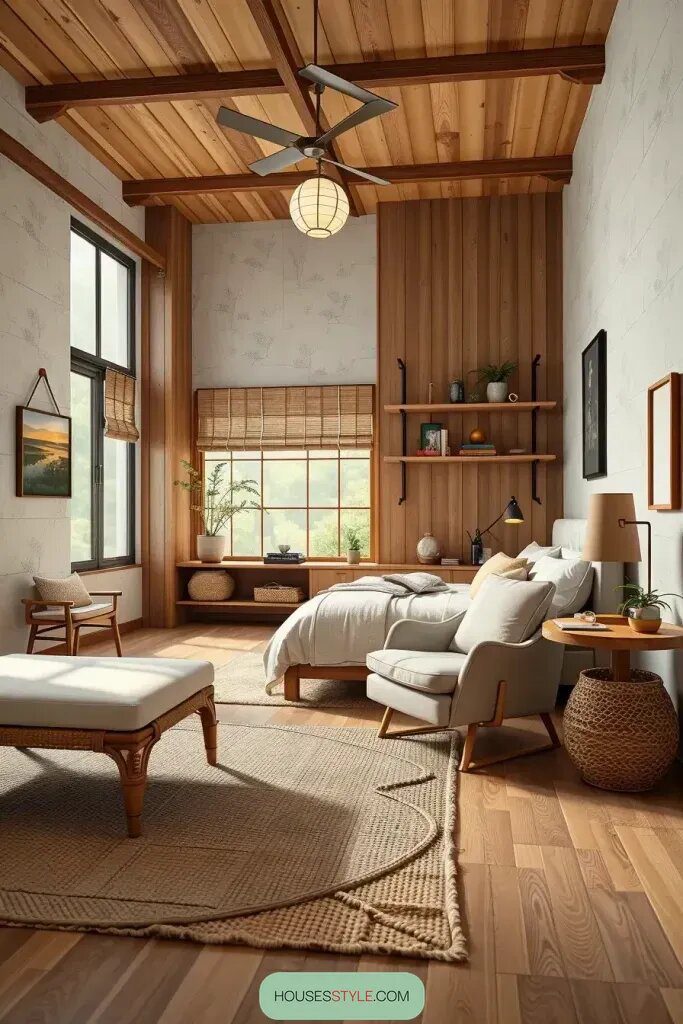
Simple, minimalist furniture forms the backbone of a Japandi bedroom, but minimalist doesn’t mean stark. Natural textures – wood grain, woven fibers, raw stone – keep the room feeling warm rather than empty. Choosing pieces with both function and texture is key.
 Save
Save
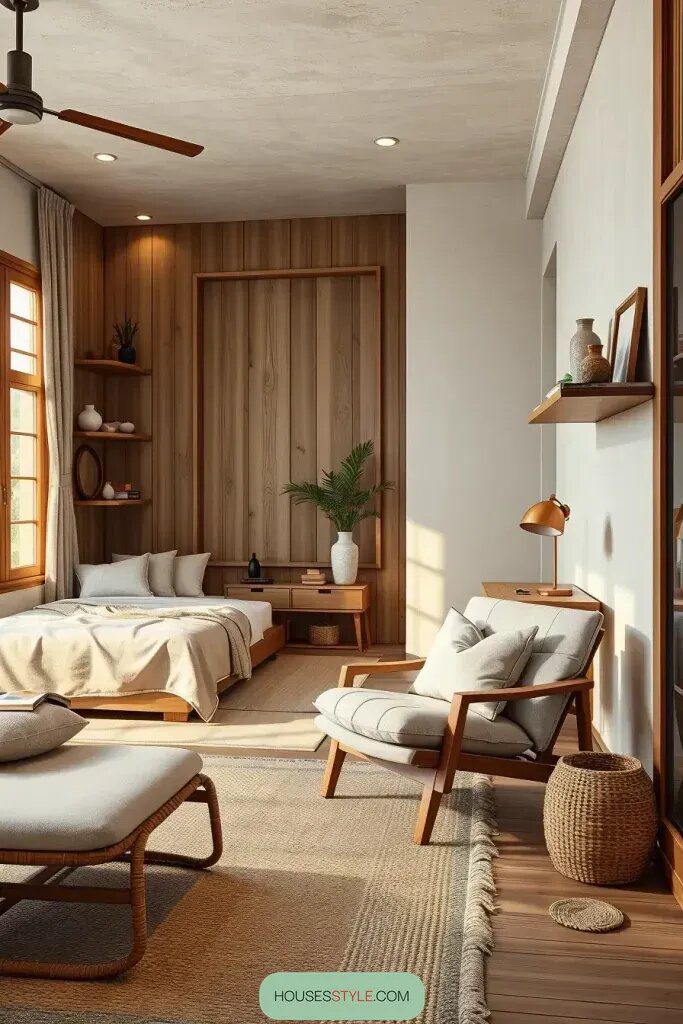
A simple wooden bed frame, a natural cane bench, and floating nightstands bring texture while keeping lines clean. Textured fabric chairs, bamboo drawer fronts, and linen upholstery panels soften the overall look and add visual depth without cluttering the space.
 Save
Save
Balance matters most here. One client described it well: sharp lines paired with earthy textures created a peaceful, cozy feel in their bedroom. Dwell magazine has also noted that blending minimalism with natural materials keeps a room from feeling cold, which is a common pitfall of stripped-down modern design.
A stone-top nightstand or matte black steel frames paired with oak wood can add variety without breaking the minimalist look. Small swaps like these bring personality into an otherwise pared-down room.
Low-Profile Beds and Floor Seating Ideas
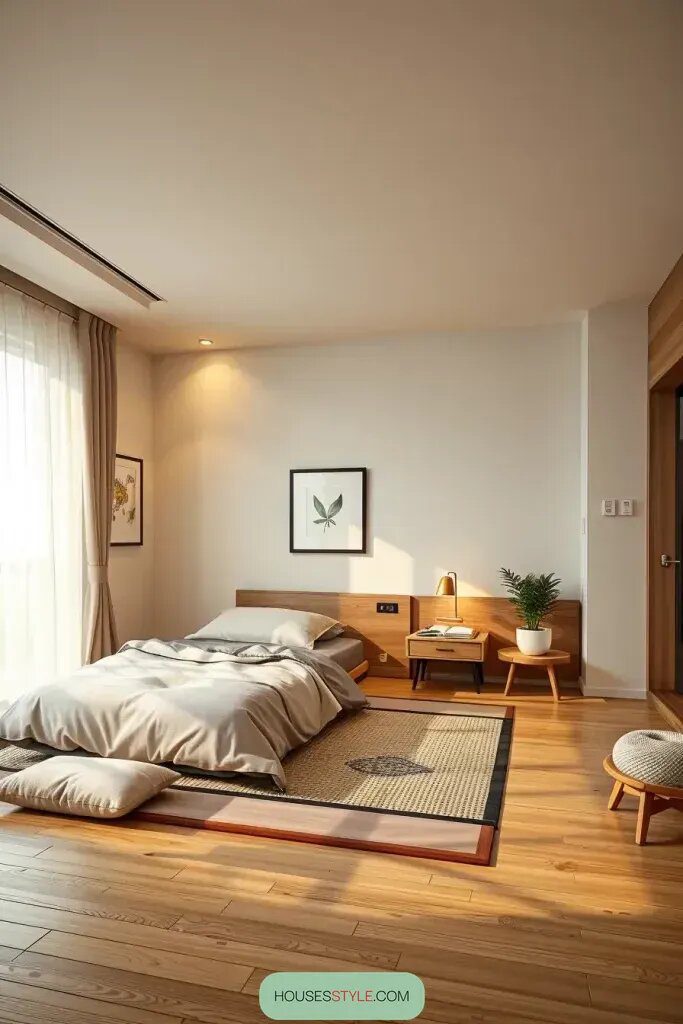
Low, short furniture – especially the bed – defines much of the Japandi bedroom look. Low-profile beds echo the traditional Japanese futon while still offering modern comfort. This furniture height keeps the room feeling open and calm rather than crowded.
 Save
Save
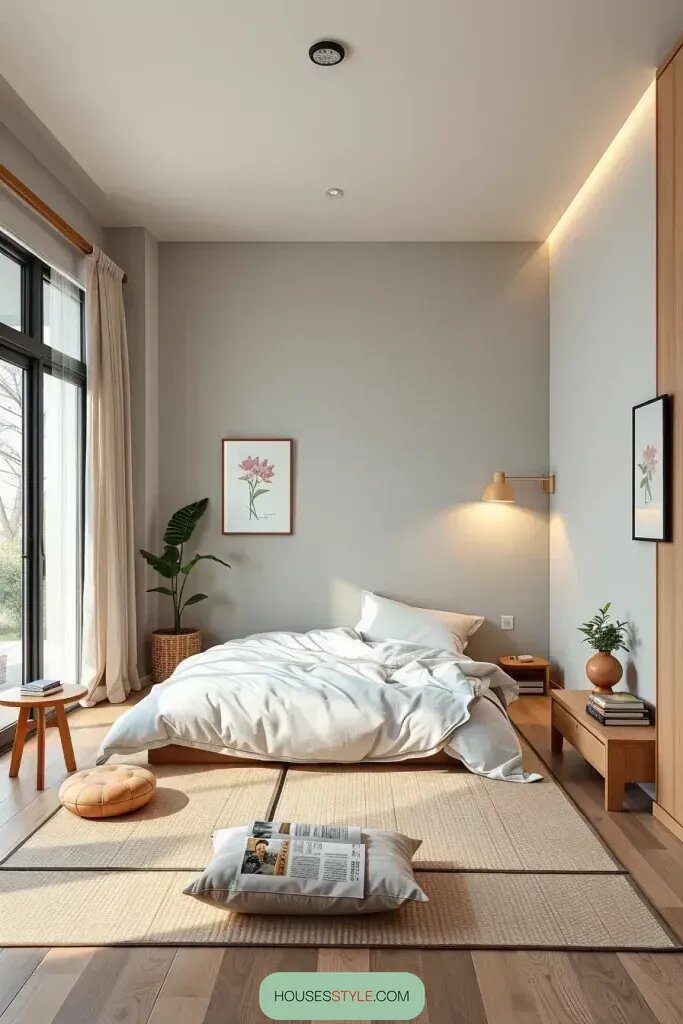
A low bed frame with a soft headboard, paired with a floor cushion or small reading chair, keeps a room cozy without feeling cramped. A tatami mat with a tray table can create a small nook for tea or reading. These additions add versatility while keeping the Japandi aesthetic intact.
 Save
Save
Clients often gravitate toward beds set lower to the ground, and for good reason – the lower height creates a calmer, more open feel in the room. Interior stylist Megan Morton has noted that low-slung beds can make a space feel larger by visually stretching the walls outward, which works especially well in smaller or busier bedrooms.
Adjustable headboards or under-bed storage compartments would be a smart addition to this section, keeping the sleek low-profile look while adding practical function.
Natural Materials in Japanese and Scandinavian Design
Setting up a Japandi bedroom starts with natural materials. This design style leans on raw materials not just for looks, but because they age well and bring warmth into a minimalist space. Over time, these materials develop character instead of wearing out.
 Save
Save
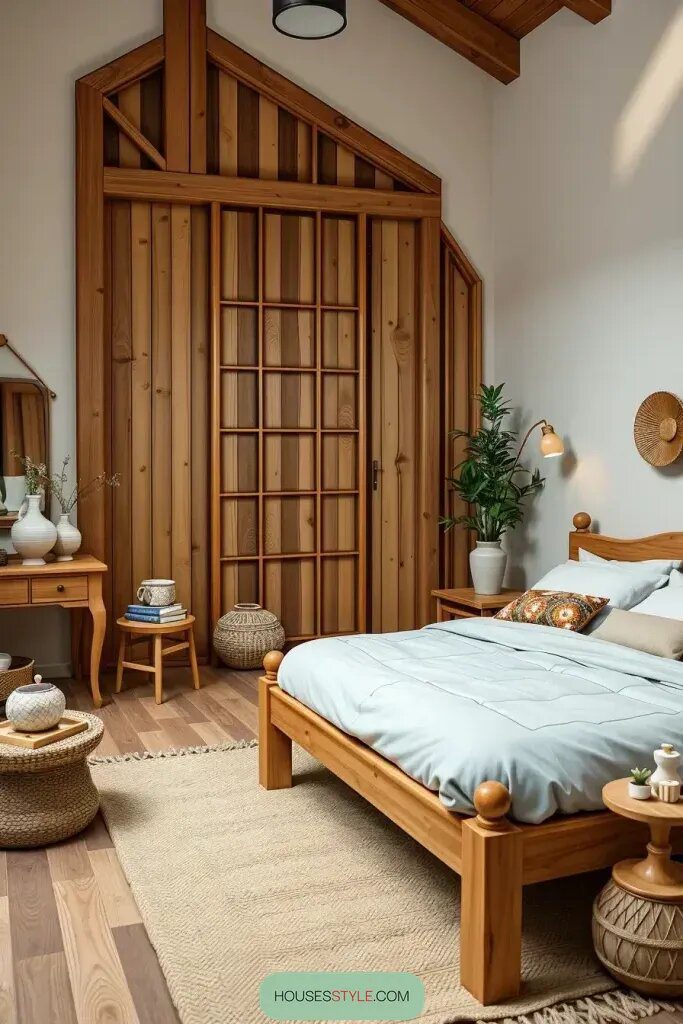
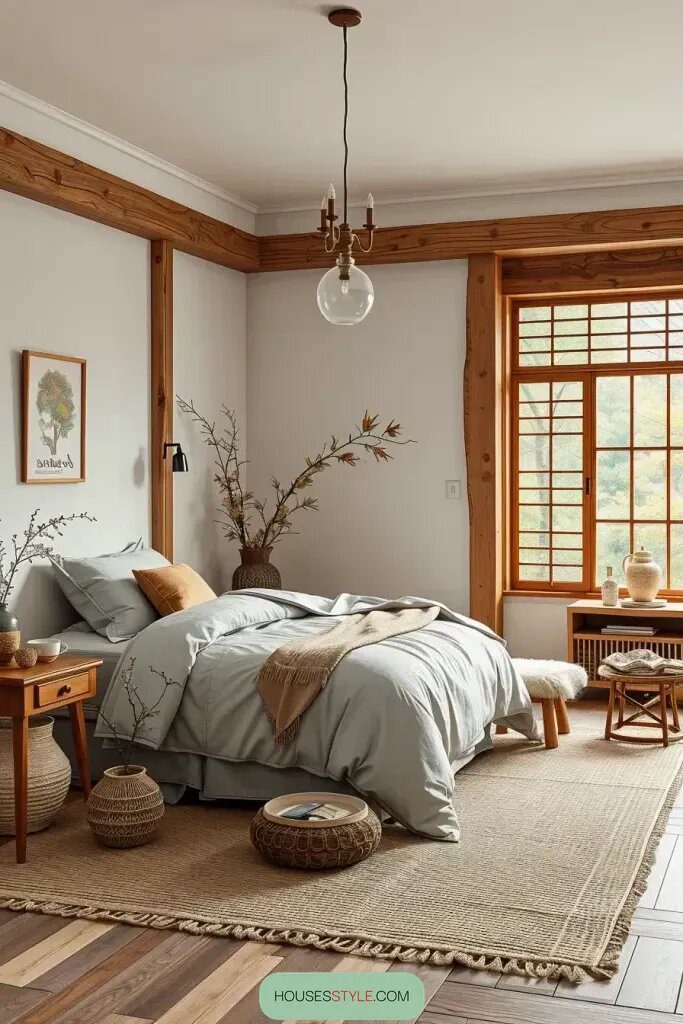
Wood, rattan, bamboo, linen, wool, and clay all show up often in Japandi decor. Larger furniture pieces usually come in oak or walnut, while wool or jute rugs add texture over hardwood floors. Ceramic lamps and vases round out the look, blending elegance with an earthy feel.
 Save
Save
Untreated wood and raw clay age beautifully over time, adding a lived-in warmth that polished materials can’t match. Designer Jeremiah Brent has incorporated similar natural elements into his own calming, authentic interiors.
Cork panels or hemp textiles would fit well here, since both align with the sustainability focus that runs through Japandi design.
Earthy Tones and Subtle Contrasts for a Natural Feel
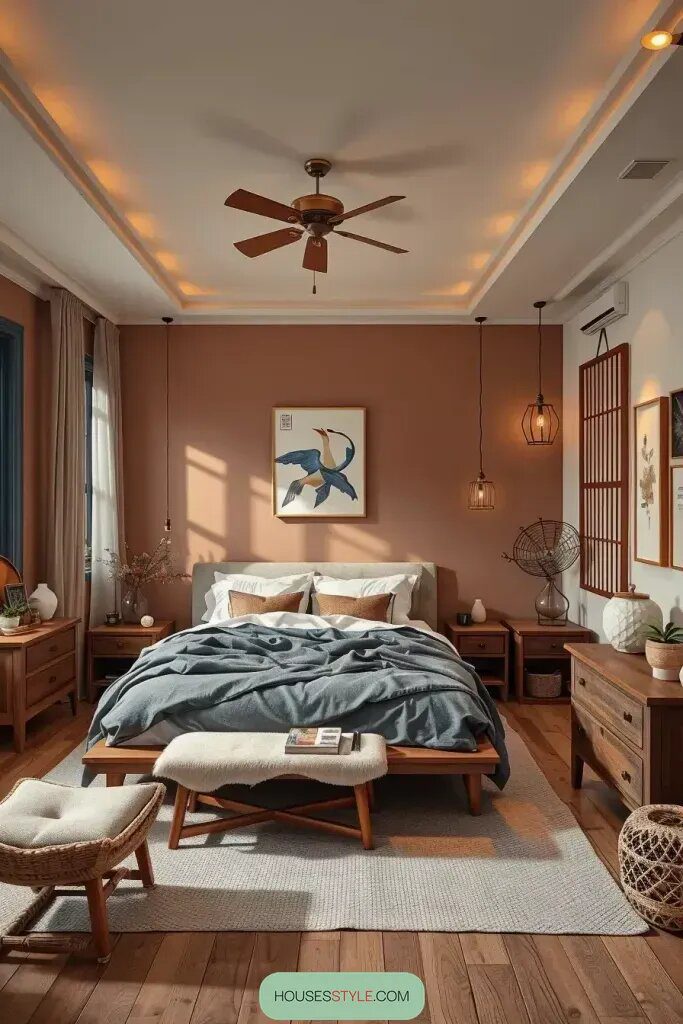
Choosing décor accents that complement the wall color is essential in a Japandi bedroom. Earthy tones like sand, ochre, clay, and charcoal, paired with soft whites and blacks, bring nature indoors without overwhelming the eye. The goal is a space that feels calm but still visually interesting.
 Save
Save
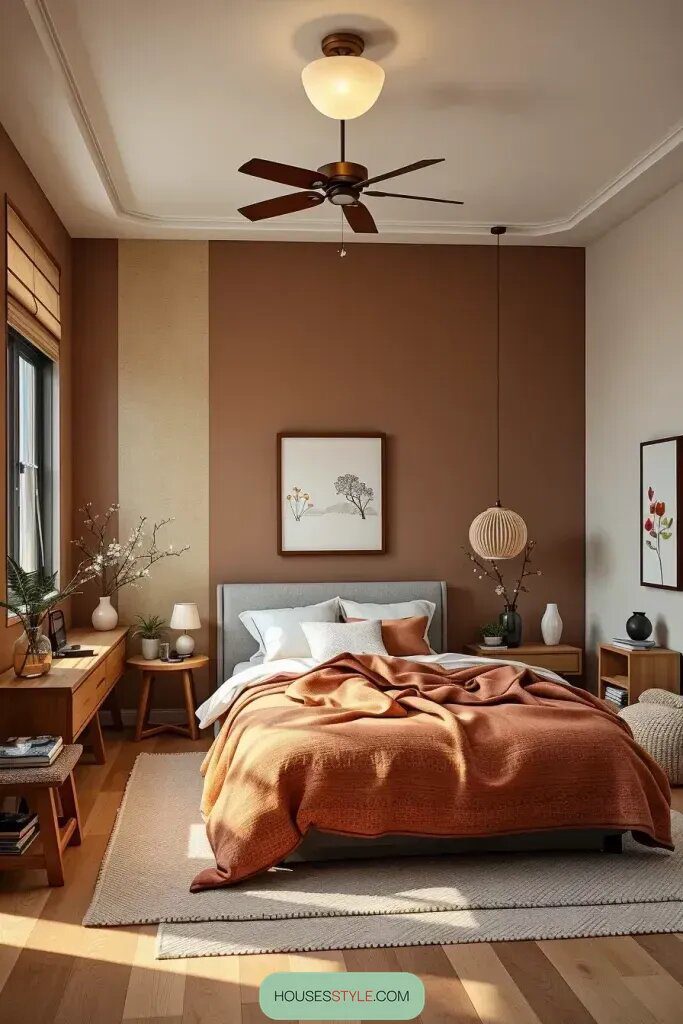
These earthy colors work well in accent pillows, ceramics, wall hangings, and throws. Even small details – switch plates, drawer pulls, picture frames – can echo this subtle contrast. Nothing shouts for attention in a Japandi palette, but everything feels deliberate and connected.
 Save
Save
One mountain-themed project used rust and charcoal textiles against a raw oak bed frame and soft white walls, creating a peaceful, retreat-like feel. Elle Decor experts have pointed out that varying shades within a limited color scheme keeps a room from feeling flat while still holding everything together visually.
This section could walk through building small bedside vignettes – books, ceramics, and textiles arranged with earthy tones for a layered look that captures Japandi style at a smaller scale.
Wood Accents for a Japanese Scandi Feel
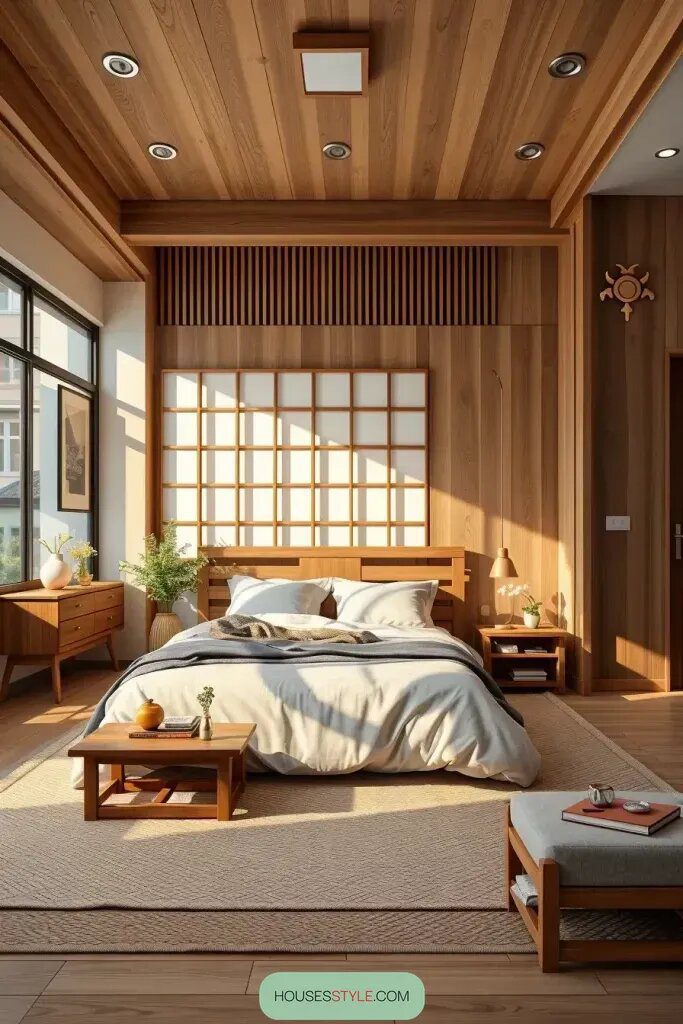
When you’re designing a Japandi-style bedroom, adding in some cozy wood accents is key to making the space feel warm and inviting. Personally, I like to use oak, walnut, or ash because they bring in a calming natural vibe while keeping things simple and sleek. It’s all about blending that Japanese love for nature with the Scandinavian passion for soft, comfy textures.
 Save
Save
I absolutely adore pieces made of warm wood detailing, like a slatted wooden headboard or an open shelving unit filled with books and ceramics. Even a simple wooden bedframe with a light stain catches my eye. The beauty of Japandi style lies in the raw, tactile nature of every piece, from a plain nightstand to a sturdy stool. They not only offer structural integrity but also create a sense of openness and breathability in a room.
 Save
Save
I really connect with the concept of adding personality and warmth to a space by using unique accent features like oversized wooden grain pieces. Whether it’s a large Japandi-style room or any other type of space, incorporating warm tones on the walls and floors can create a cozy and inviting atmosphere. House Beautiful also mentioned this idea, and I think it’s a great way to make a room feel more intimate and welcoming.
If you want to spruce up this area a bit more, I think adding some contrast could do the trick! Maybe consider using darker wood for the light fixture, like a nice dark walnut. It could add a little depth to the room without being too overpowering. What do you think?
Layered Textiles for a Touch of Elegance
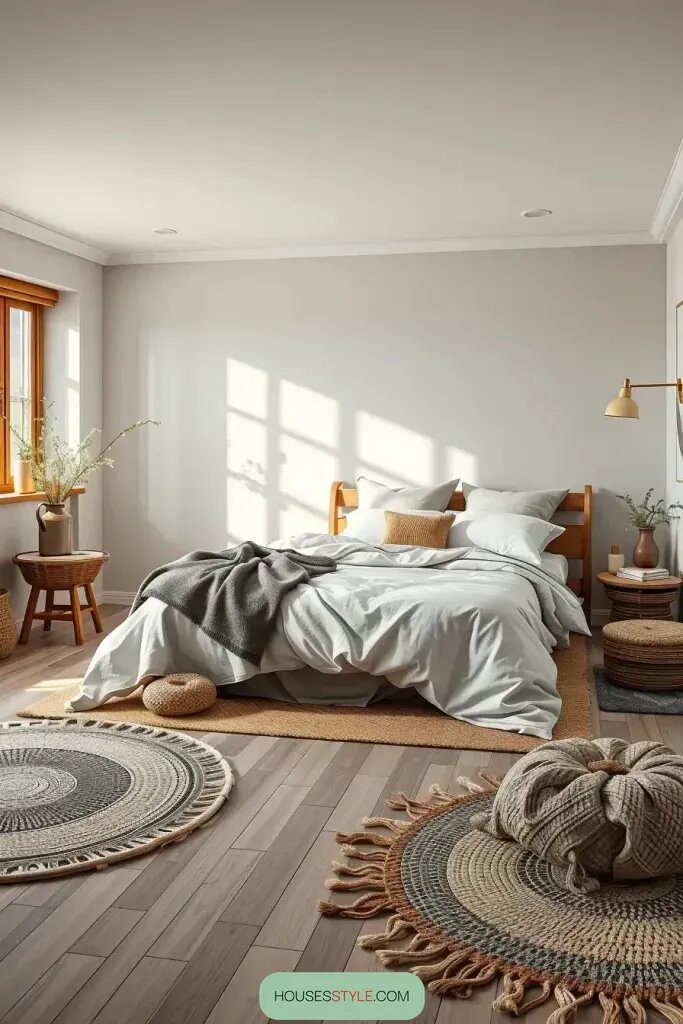
You know how both Japanese and Scandinavian styles are all about keeping things simple? Well, that’s what Japandi is all about. Personally, I don’t like the idea of a space looking too bare and empty. So, I like to play around with different textures like natural linen, washed cotton, cozy wool throws, and soft woven cushions to give it a bit more warmth and character. What do you think?
 Save
Save
When it comes to designing bedrooms, I like to think of bedding as the main ingredient for creating a cozy space. I usually begin with some fresh, neutral linen sheets to set the tone, then layer on a textured blanket for extra comfort. To add a touch of warmth, I top it all off with a soft wool throw. And let’s not forget about curtains! I love using lightweight drapes that let the sunlight in gently, while also adding a nice touch of texture to the room.
Personally, I feel like the key to finding the perfect balance between Japandi minimalism and creating a cozy atmosphere in a room is by “layering with intention”. This basically means having fewer items, but making sure each one is genuine and adds a sense of warmth and comfort to the space.
To make that section even better, we could think about switching up the fabrics depending on the season. Maybe use lighter linens in the summer to keep things cool and cozy, but switch to heavier wool-blend throws in the winter for that extra warmth and a nice contrast.
Linen Sheets and Soft Throw Blankets
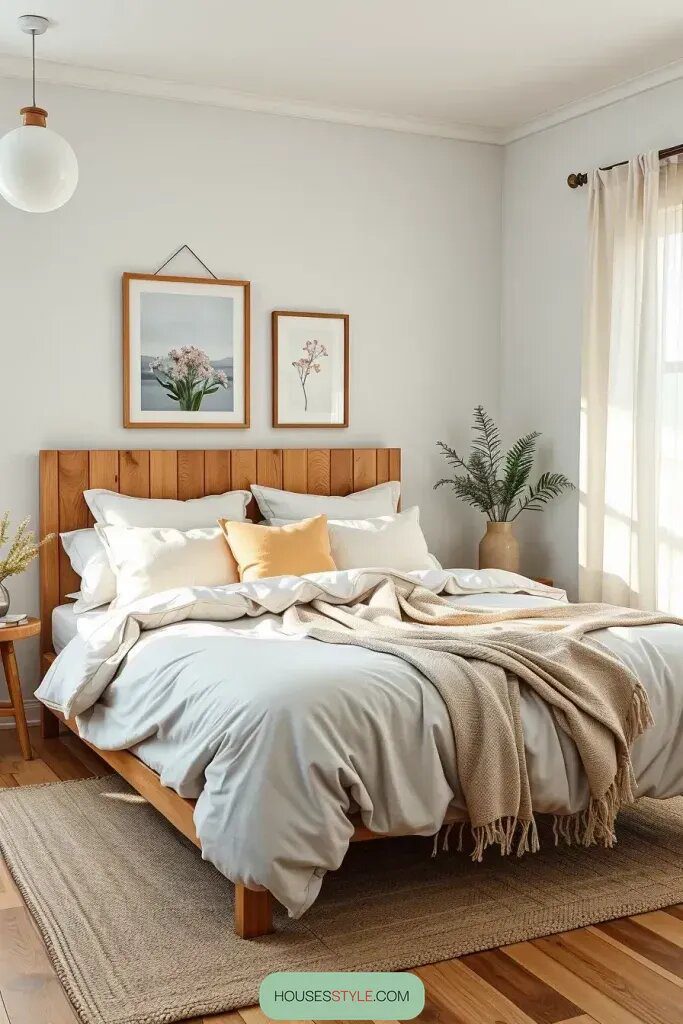
You know, having the right bedding is essential for any Japandi bedroom, and I find that linen is just perfect for the job. I really love linen bedding because it’s so breathable and has this effortlessly chic look with a nice texture. It totally fits with the whole Scandinavian and Japanese styles that are all about that natural, relaxed vibe and minimalistic approach. Plus, as linen gets softer over time, it just enhances that appreciation for aged materials that Japandi design is all about.
 Save
Save
When I set up my bedding, I like to begin with a cozy stonewashed linen sheet in a beautiful ivory or soft gray shade. Then, I layer on a neutral-colored duvet and a throw for that extra coziness. The throw is usually made of wool, mohair, or cashmere, adding a nice touch of texture and relaxation to the space. And if things are looking a bit dull, I’ll throw on two different-weighted throws to really spruce things up – it always does the trick!
In my opinion, investing in good linen is totally worth it. I read in Better Homes & Gardens that sleeping with linen feels like being wrapped in a comfy cloud, and I totally agree! It keeps you at just the right temperature. Plus, it doesn’t get all wrinkly – it just gets softer and cozier with time. It always looks stylish and put-together, which is awesome because who wants a messy bed, am I right?
You know what I think would make this set even better? Adding some cute patterned stitching or a subtle fringe at the bottom of the throws. Nothing too flashy, just a small detail to give it a little extra oomph without taking away from the overall vibe of the set.
Simple Layouts That Feel Serene
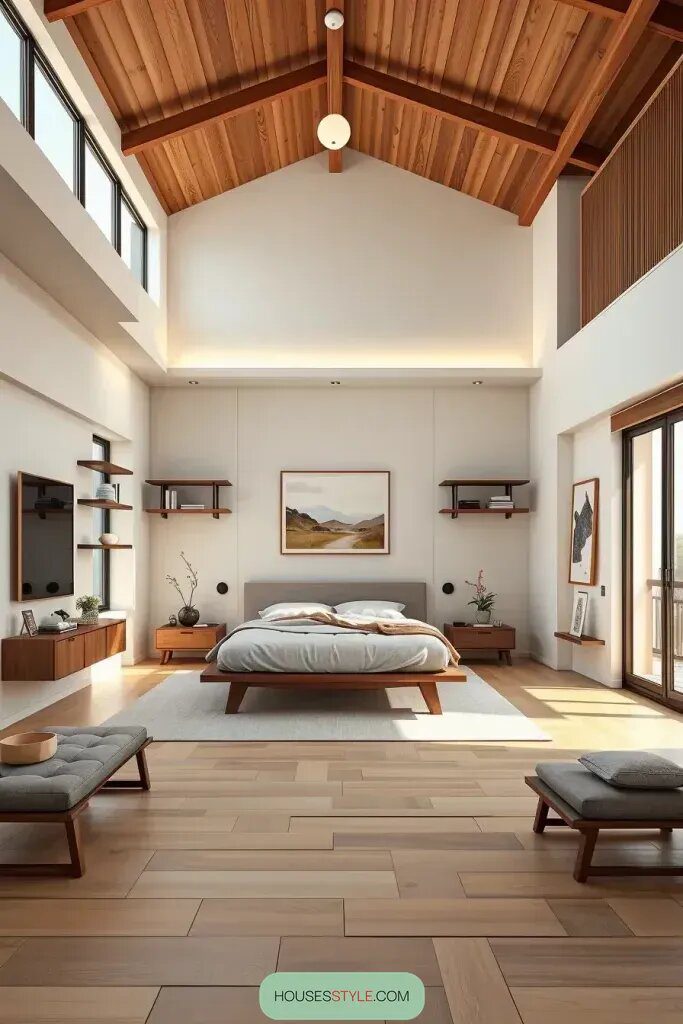
When it comes to designing my Japandi-style bedroom, I always prioritize creating a space that feels soothing and easy to move around in. I believe in keeping things simple and purposeful, following the Zen concept of minimalism. Each item in the room should have a reason for being there and contribute to a harmonious balance of light and surroundings.
 Save
Save
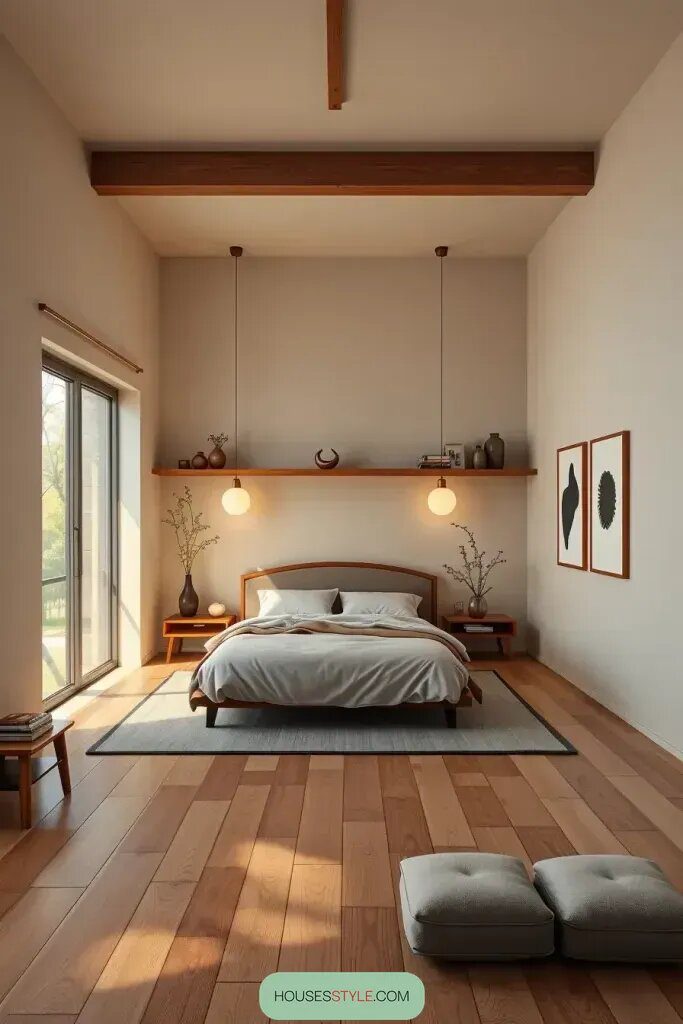
So, when I set up a bedroom, I like to put the bed against the longest wall to make it the main focus. I keep the furniture around it to a minimum to create a more open feel. I add side tables, benches, and wardrobes in specific spots to make it easy to move around and see everything clearly. I want things to look balanced and just right, so I aim for some symmetry without making it too strict or formal.
 Save
Save
You know, I think people don’t always realize how important good layout design is, but in my opinion, it should definitely be a top priority. When I want to Feng Shui a bedroom, I always begin by figuring out where the bed and mirrors should go. According to The Spruce, keeping paths clear and using low-profile furniture can really elevate the room’s look and create a more positive mindset for everyone in it.
If you’re looking to keep things neat and tidy in your space, consider using versatile pieces like a bench with storage or a floating shelf that can double as a nightstand. These types of furniture items can really help elevate the overall look and feel of your room by keeping clutter out of sight.
Less Clutter for a Calmer Room
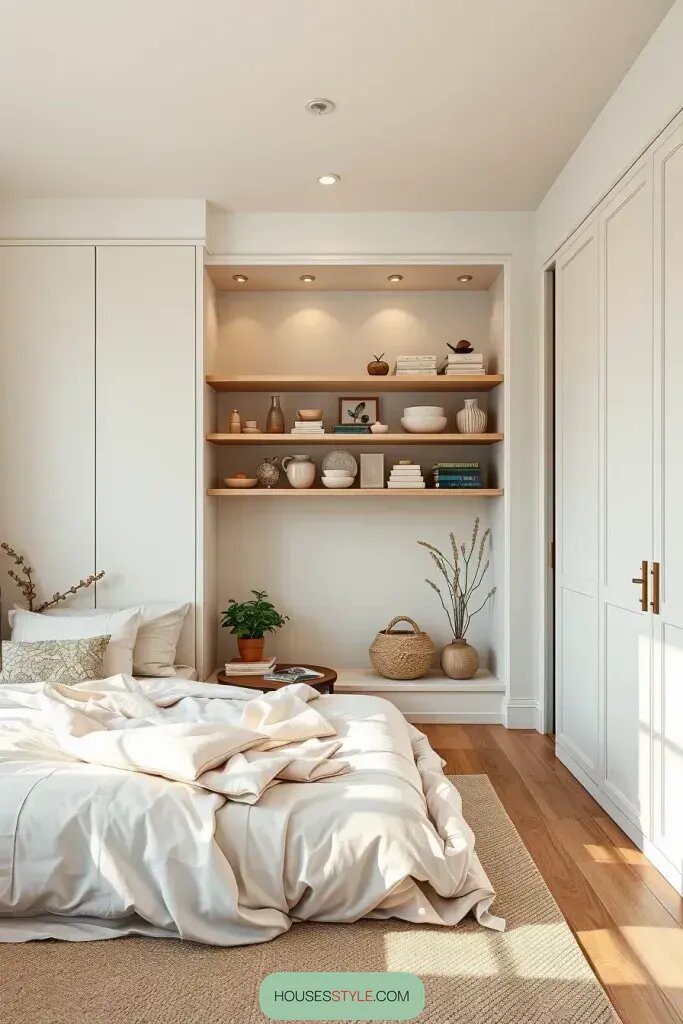
So, when it comes to designing a cozy Japandi-style bedroom, the main idea is to keep things simple and clutter-free. It’s not just about having fewer things, but also about making sure everything looks clean and organized. In my work, I always see clutter as a way to test my design skills – I aim to create a space that brings a sense of peace and serenity, not chaos.
 Save
Save
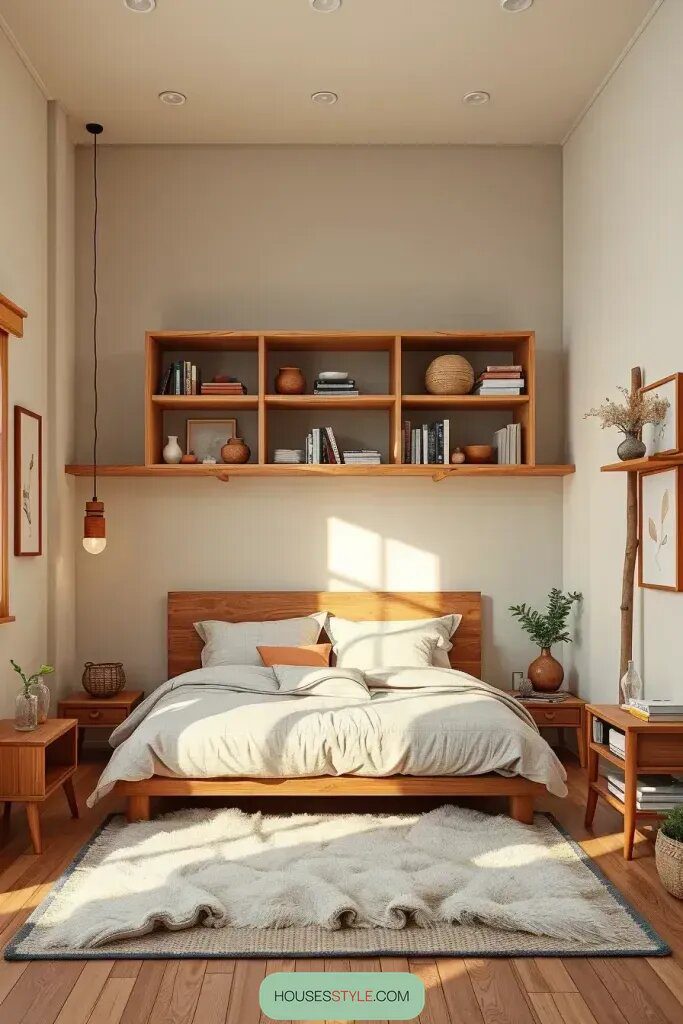
So, to create this look, I like to add built-in units like drawers under the bed or tall wardrobes with simple, smooth doors. I keep the accessories to a minimum and only decorate the open shelves with a few carefully chosen items, like pretty vases, books with linen covers, or dried flowers. I avoid bold prints, flashy colors, chaos, and noise to maintain a clean and peaceful vibe.
 Save
Save
I absolutely love the peaceful vibes in places like this. I truly think that keeping things simple is the way to go. Have you heard of Marie Kondo? She’s all about decluttering and organizing your space, and I totally agree with her approach. It goes hand in hand with the whole Japandi style, which focuses on thoughtful design and functionality. When there’s less stuff cluttering up your space, it’s easier for your mind to feel calm and relaxed. It’s all about creating a peaceful environment for yourself.
You know what would really make this space even better? We should also take care of all the digital clutter, like hiding those messy cords and stashing away our devices in drawers. And maybe we could switch out that modern lamp for a classic wall clock or a traditional lamp to create a more mindful atmosphere. Just some little touches to really elevate the space!
Soft, Warm Lighting Ideas for Japandi Rooms
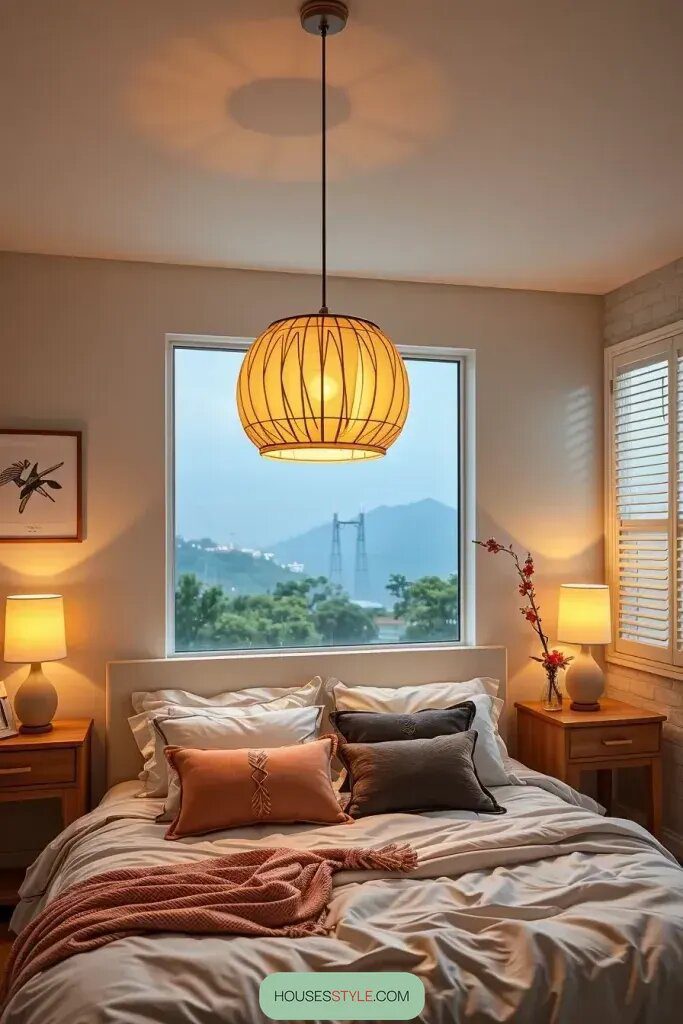
I love creating bedroom lighting inspired by Japandi design because it brings out a simple yet elegant vibe. I believe that soft, warm lighting is super relaxing and comforting. As an interior designer, I focus on creating lighting that helps you unwind at night and wake up gently in the morning. I aim to strike a balance between cozy warm light and a calming ambiance in the bedroom. My goal is to create a lighting setup that creates different moods throughout the day, all while keeping everything harmonious.
 Save
Save
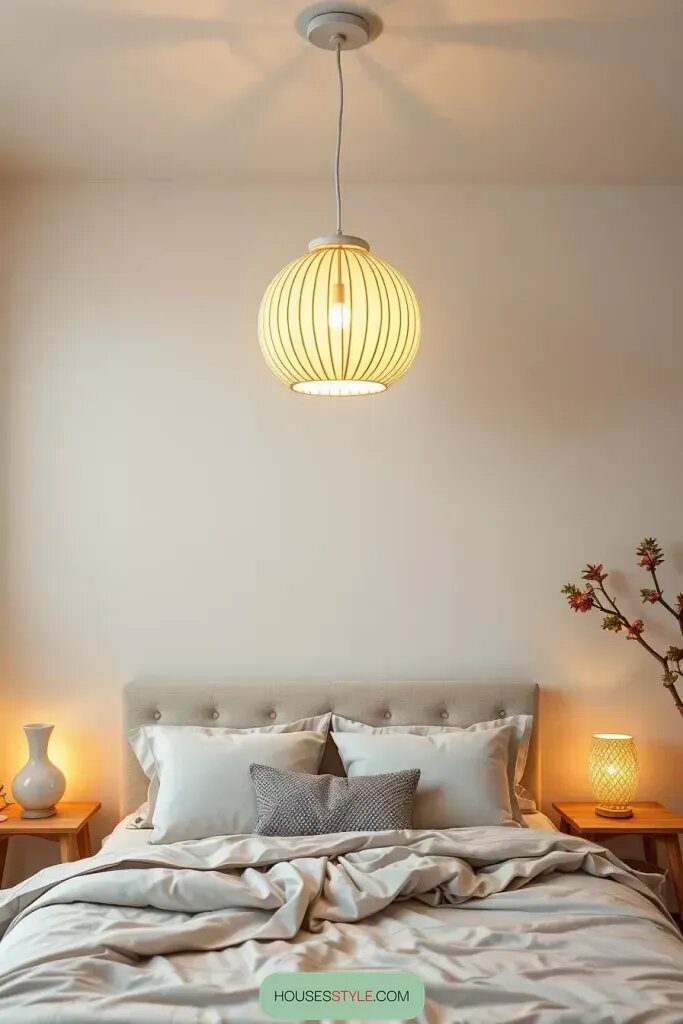
For this type of style, I would suggest going for a woven paper pendant light, some warm tea light-inspired lamps for the bedside, and maybe even a simple floor lamp with fabric wood grain shades. It’s good to aim for a look with rattan, bamboo, and matte ceramics since they help soften the light and complement the natural materials. You can also consider adding some floating furniture or wall-mounted sconces with LED strips underneath to create a cozy atmosphere and avoid harsh lighting.
 Save
Save
I’ve noticed that clients who have softer, more relaxed lighting in their spaces tend to sleep better and feel less stressed. It’s always a struggle when the lighting is in the wrong place! According to Lighting Design Magazine, cold-tone LEDs in the bedroom can be useful, but it’s best to avoid harsh, cool tones. The Japandi decor style seems to agree with this idea.
You know, using smart dimmers with touch lamps is a great way to easily adjust the lighting in your room and keep everything looking clean and clutter-free, which is perfect for that Japandi decor vibe!
Shoji Screens Paired with Scandinavian Curtains
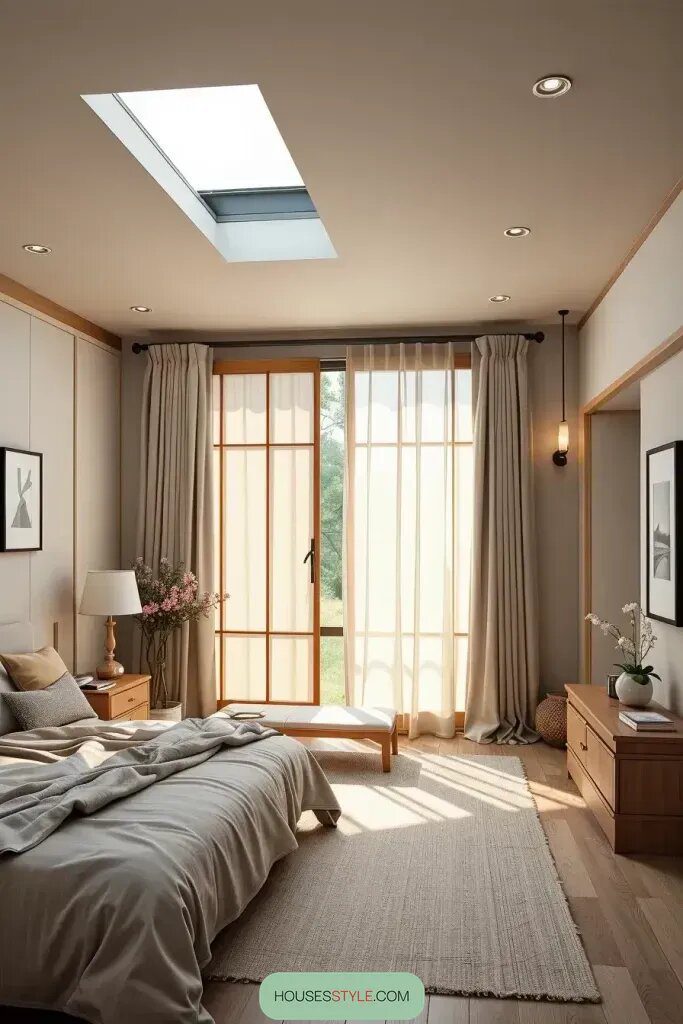
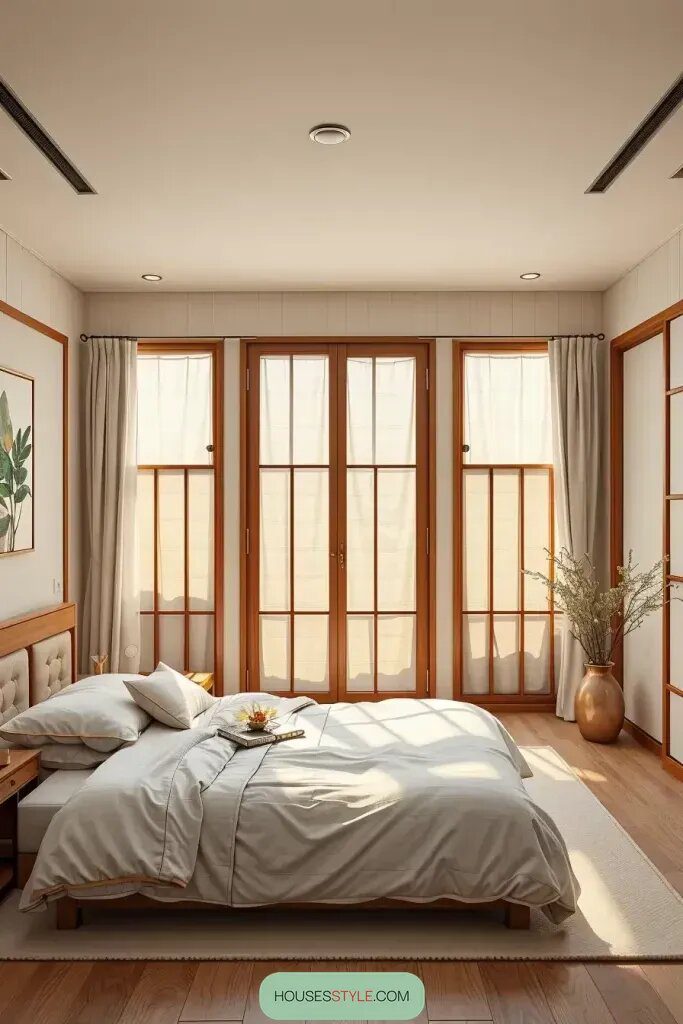
So, to really bring the whole vibe of a Japandi-style bedroom together, I like to throw in some Shoji screens or maybe some simple Scandinavian curtains. The light that filters in through those Shoji screens just really sets the mood, you know? It brightens up the room but still keeps things cozy and private. And those grommet drapes from Scandinavia? They add a nice touch of softness to the space while keeping it all looking clean and tidy. It’s all about the little details, right?
 Save
Save
When it comes to drapery, I personally love using the thicker unlined linen or cotton fabrics in Stone or taupe colors. I find that Scandinavian drape curtains work best without any lining, letting in natural sunlight. Lately, unlined curtains have been a popular choice for decorative purposes, especially for creating a classic Shoji style with panels.
 Save
Save
I think this design really nails the perfect mix of natural light and privacy, depending on what you need at the moment. Striking the right balance between a structured and soft feel is key in creating a cozy atmosphere, just like Ilse Crawford’s childhood space illustrates so well.
Okay, to wrap things up in this section, I suggest trying out this window treatment combo to tackle privacy concerns during the day: using light sheer curtains with a thicker curtain on the Shoji for when it’s dark. This way, you not only enhance its functionality but also mix up the overall look and feel of the room.
Bringing Nature Into Minimalist Decor
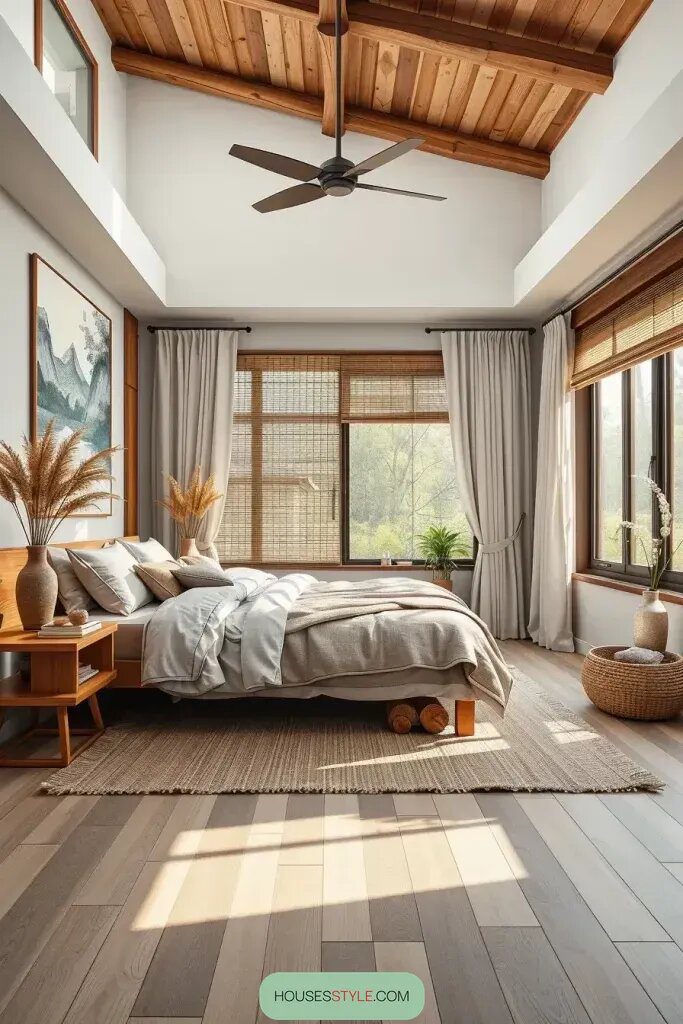
In Japandi design, nature plays a key role by being incorporated into the space in a thoughtful and minimal way. This is especially great for cozy bedrooms where you want to create a feeling of openness. A Japandi-style bedroom is so lovely because it combines the simplicity of Japanese wabi-sabi with the coziness of Scandinavian hygge, subtly bringing in elements of nature through textures and colors instead of overwhelming you with tons of stuff.
 Save
Save
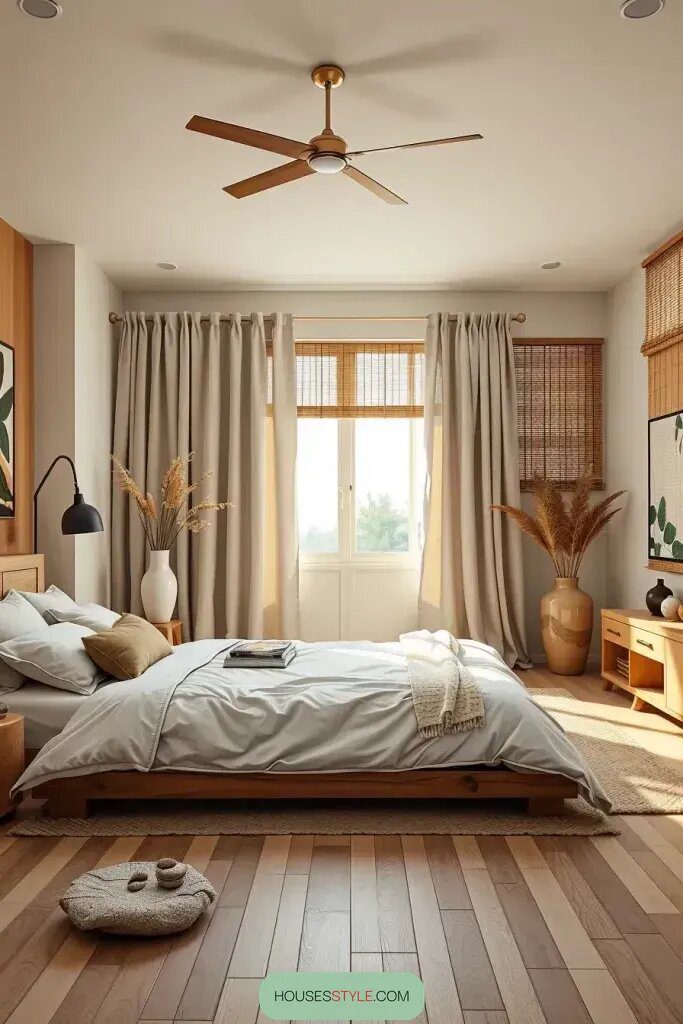
So, when it came to designing this space, I wanted to bring in some cozy elements like paper lamps, bamboo blinds, linen curtains, raw-edge wood side tables, and minimalist wood side tables. Each piece has a simple and natural look that I love. Oh, and to balance out the minimalist vibe, I added a neutral jute rug to keep things feeling warm without stealing the show. And don’t forget about the little details – like placing dried pampas grass or a smooth stone bowl on the nightstand to give the room some extra charm and personality. Just little touches here and there can really make a space feel like home, you know?
 Save
Save
From what I’ve learned in my time working in this field, I’ve found that the most beautiful Japandi rooms are the ones that incorporate nature in a subtle way. I remember working on a project once where a client wanted a moss wall and five different types of plants, which ended up making the space feel cluttered and confused. So, I can’t stress it enough – simplicity is key when it comes to this style. Architectural Digest also agrees, mentioning how the beauty of Japandi decor comes from the restraint shown in the design choices. It’s all about keeping things simple and letting nature shine through in a natural and understated way.
I think it would be lovely to add a little touch of life with a cute vertical planting, like a slim olive tree in a pretty ceramic pot. It would be just the right amount to bring some nature into the space without overwhelming it.
Handcrafted Accessories With a Purpose
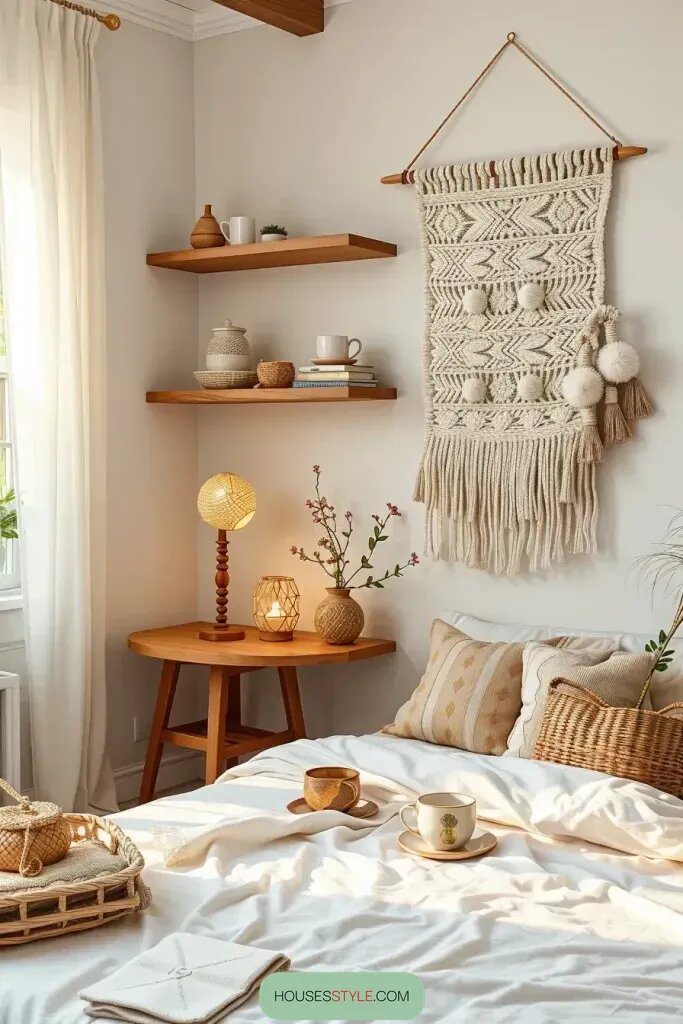
When it comes to adding handmade decorations to a Japandi style bedroom, I’m totally on board! But I think it’s important for those handmade pieces to serve a purpose, either by looking great or being useful. A Japandi bedroom isn’t about cluttering every surface with stuff, so every item should be special or functional. This style creates a cozy atmosphere that feels carefully put together, without being too busy or messy.
 Save
Save
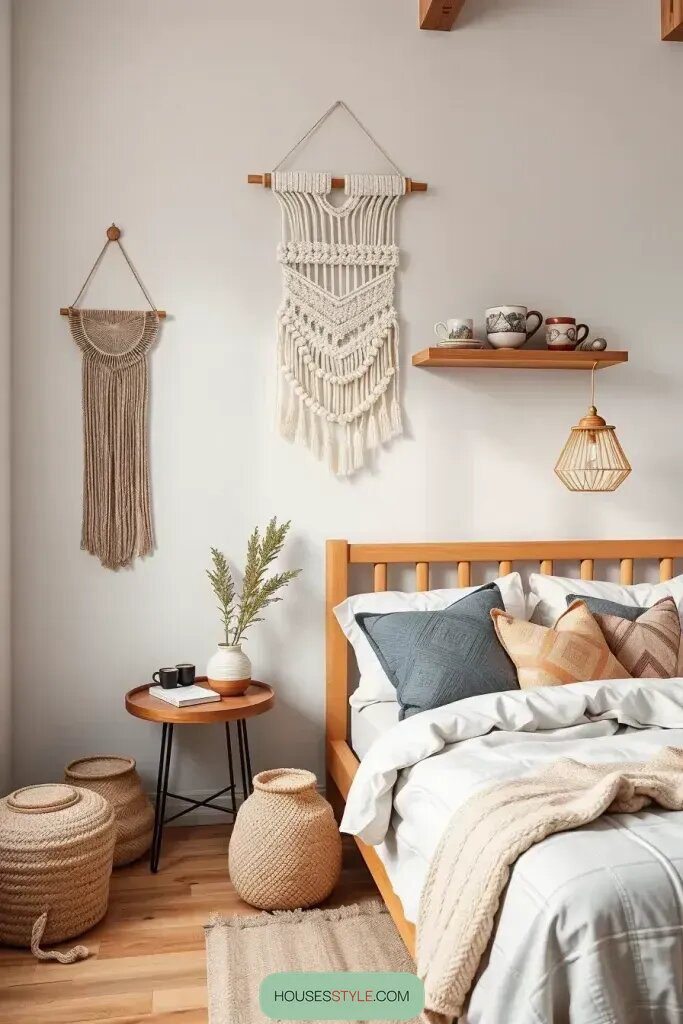
Oh, I absolutely love having hand-thrown ceramic mugs on my bedside shelf! They add such a cozy touch to my room. I also like having a small bonsai or a pretty ikebana flower arrangement to brighten up the space. And those floating shelves and wooden hooks made by local craftsmen are a great way to add some charm and practicality. I use them to store extra blankets or books, keeping everything neat and tidy under the bed or next to the wardrobe. Their elegant woven design really ties everything together nicely!
 Save
Save
At home, I picked out a beautiful handwoven wool wall hanging by a talented Scandinavian artist to hang above my bed. It really catches your eye and adds a cozy touch to the room. I read in Elle Decor once that “Japandi is more about subtraction than addition,” and I totally agree with that when I’m choosing unique handmade decor items.
You know, I also like to add a carved wooden stool next to the bed as a little decorative touch. It’s not just for show though, it really comes in handy for extra height and a place to put things.
Plants That Bring Harmony and Beauty
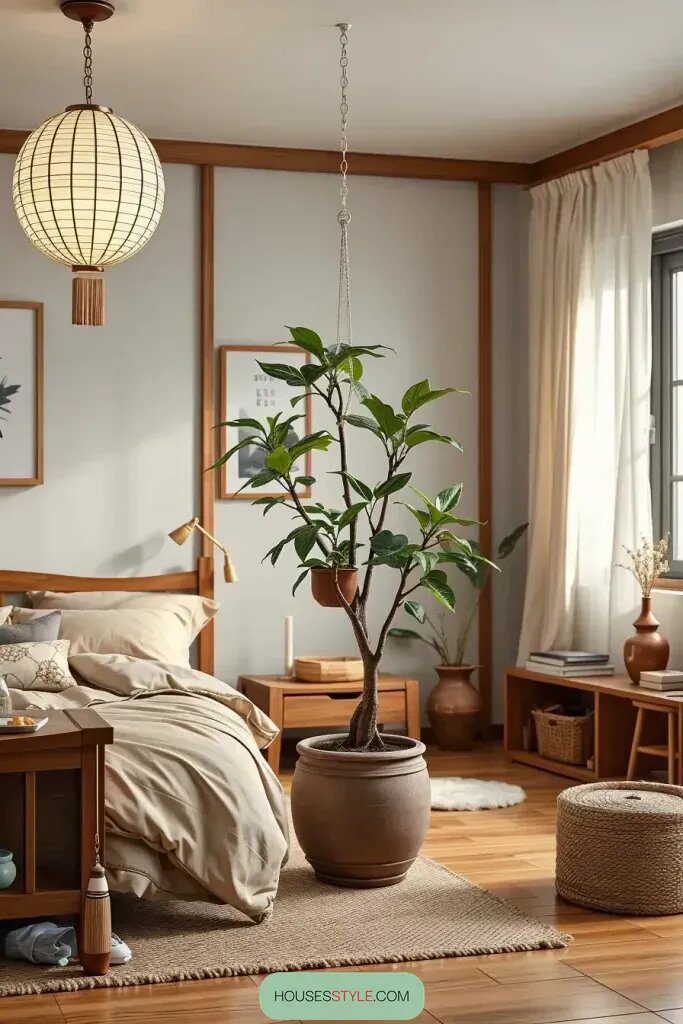
When it comes to adding some greenery in a Japandi styled bedroom, it’s important to have a purpose behind it. You don’t want it to look too busy. I suggest choosing just a couple of indoor plants and placing them thoughtfully. It’s all about having a nice focal point that adds a pop of color and shape without taking over the room. The goal is to let nature shine in a way that complements the room’s sleek design.
 Save
Save
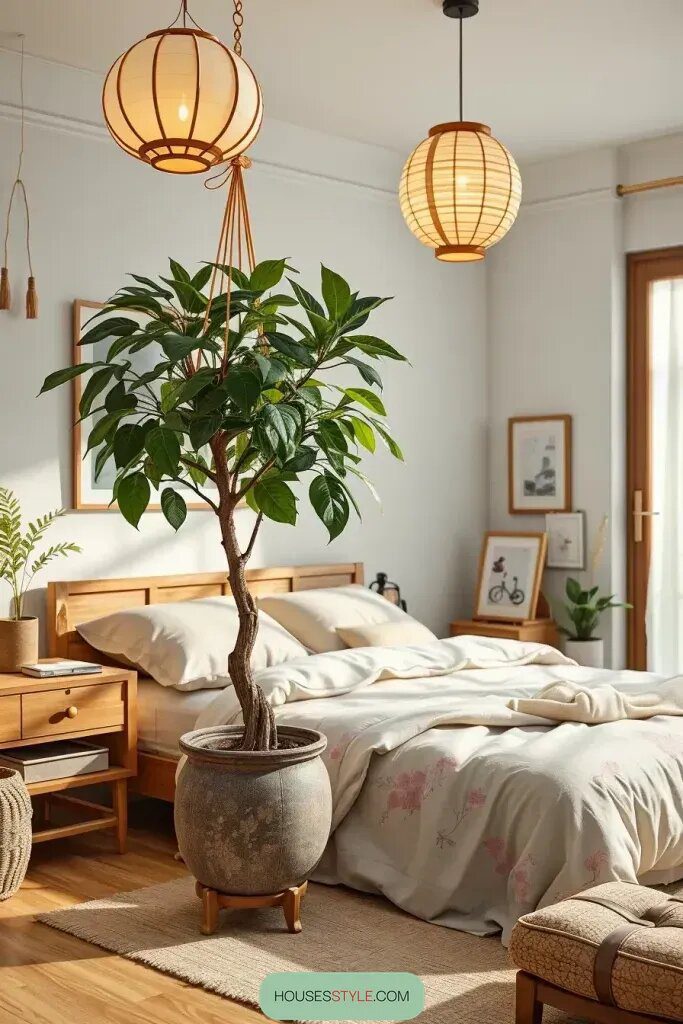
In my designs, I love incorporating architectural plants like a beautiful rubber tree in a simple clay pot, or a cascading pothos in a cute macrame holder. You could also place a long vase with a single branch or dried flower on the dresser for a charming touch. These little touches bring a touch of sophistication and simplicity to the space, drawing your eye to all the different elements in the room.
 Save
Save
In my experience, I’ve noticed that clients really seem to feel calm and at peace when they are surrounded by soothing green plants that are placed thoughtfully and not too crowded. It’s interesting to read in House Beautiful how having just the right amount of greenery can enhance relaxation and help reduce the overwhelming feeling that too many plants can bring.
In my opinion, I wouldn’t really go for ferns or bushy plants in this style. Instead, I’d suggest something like a bonsai or bird-of-paradise. They have nice clean lines and can really bring a sense of calm as a focal point.
Wabi-Sabi: Finding Beauty in Imperfection
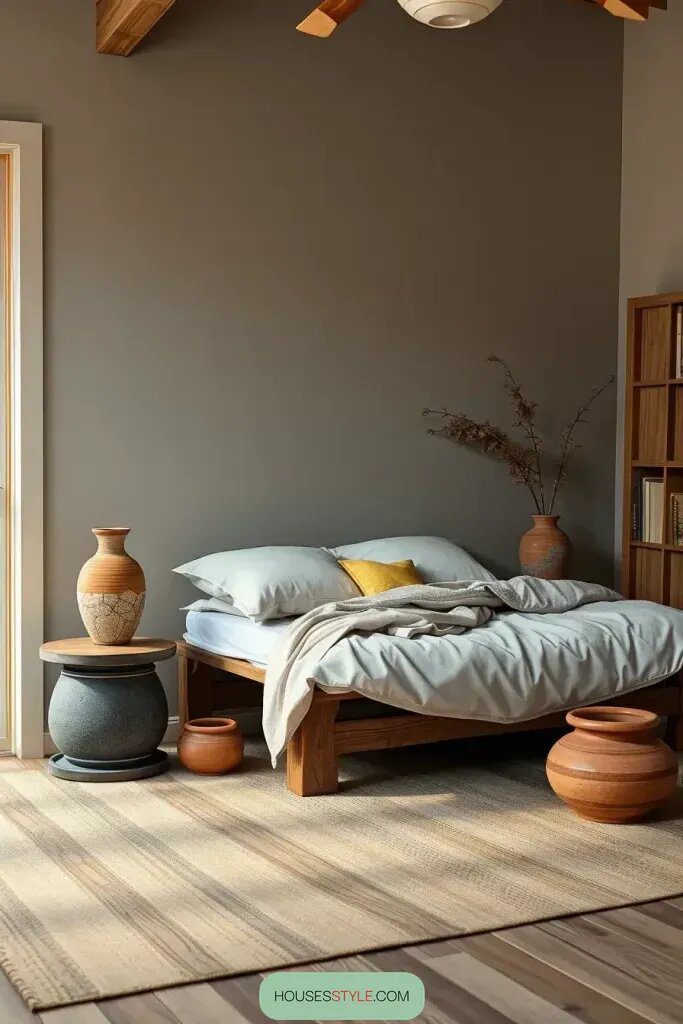
I absolutely love the concept of Wabi-sabi, which is all about embracing imperfection. It’s such a beautiful philosophy to incorporate into a Japandi bedroom! I really connect with the idea of valuing natural wear and tear, asymmetry, and handmade pieces. It’s so calming to me because it reminds me that it’s okay to have a few loose ends in life rather than constantly striving for perfection.
 Save
Save
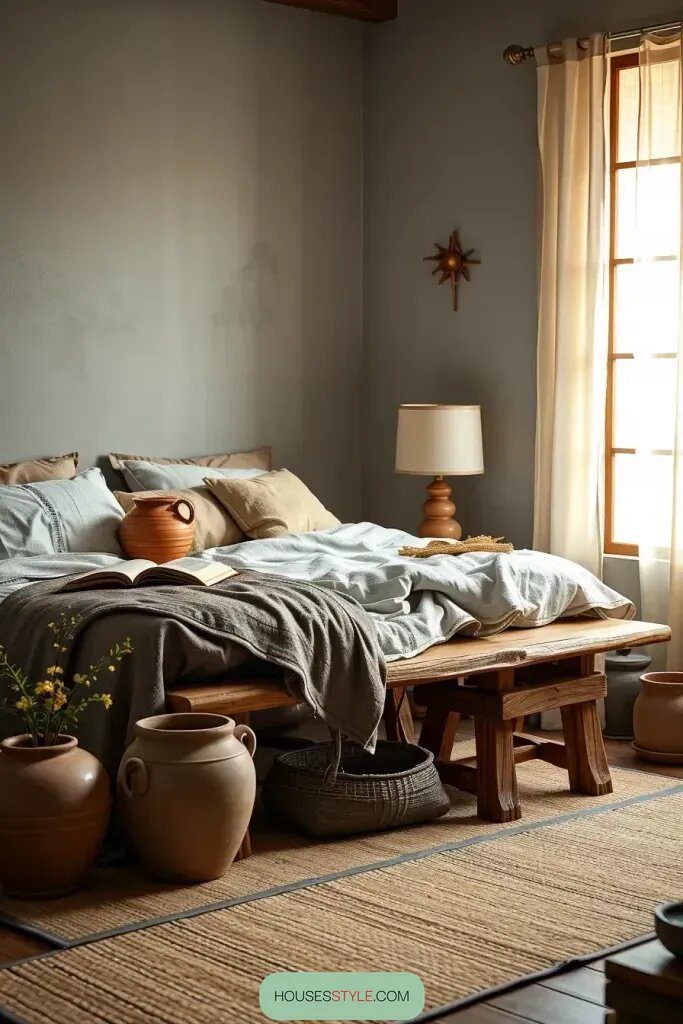
Hey, some of the cool things I offer are hand-glazed pottery, furniture made from raw wood with knots showing, and linens that naturally wrinkle like linen bedding. I love incorporating imperfect pieces like a cracked clay pot or an uneven ceramic lamp base, they add character and embrace the beauty in flaws.
 Save
Save
So, in my cozy Japandi style bedroom, I decided to throw in this rustic reclaimed wood bench at the end of my bed. It’s got some character, you know – a few scratches here and there, not quite perfect, but that’s what gives it that charming lived-in feel. I read this article in The New York Times talking about wabi-sabi, calling it “finding comfort in imperfection,” and I couldn’t agree more. It’s like this bench was made for my room!
I think if we want to go for that modern minimalistic vibe with a touch of Japandi style, we could mix in some reclaimed or vintage furniture here and there to really elevate the look. What do you think?
Simple Storage Solutions Worth Trying
Having too much clutter in a Japandi bedroom can really throw off your vibe, right? So, what you wanna do is focus on having storage that’s built right in and super easy to keep up with. The idea is to keep things looking neat and tidy without going too crazy with the decor.
 Save
Save
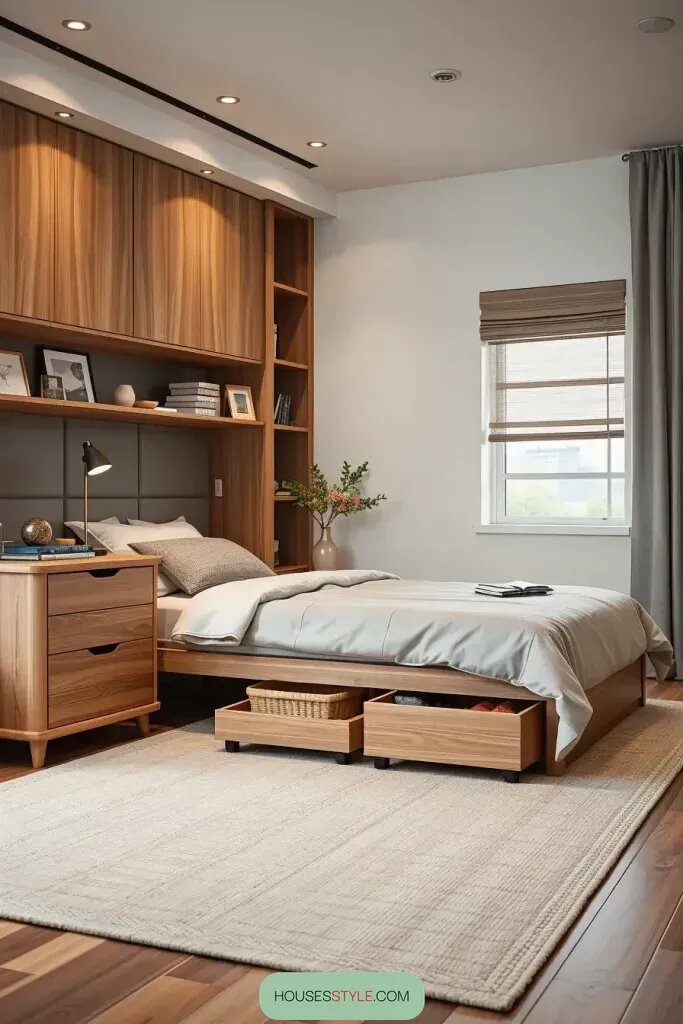
I really like integrated wardrobes with a matte finish, oak under-bed drawers, and low-profile dressers with touch-latch or clean hardware. Soft-close cabinetry is a must for me because it reduces noise and makes things feel more peaceful. I also find woven storage baskets super helpful for keeping things organized.
 Save
Save
I was redoing my room recently and decided to get a new platform bed with hidden drawers – and let me tell you, it was a total game-changer! It’s amazing how much difference it made to have a peaceful, clutter-free space. I read in Dwell Magazine that the most successful Japandi designs are the ones that make the most of storage, especially in smaller areas. So glad I made that choice!
“How about adding a nice, big wardrobe with sliding doors in a beautiful wood finish to make the room even more practical and stylish?”
Color Schemes for Small Japandi Bedrooms
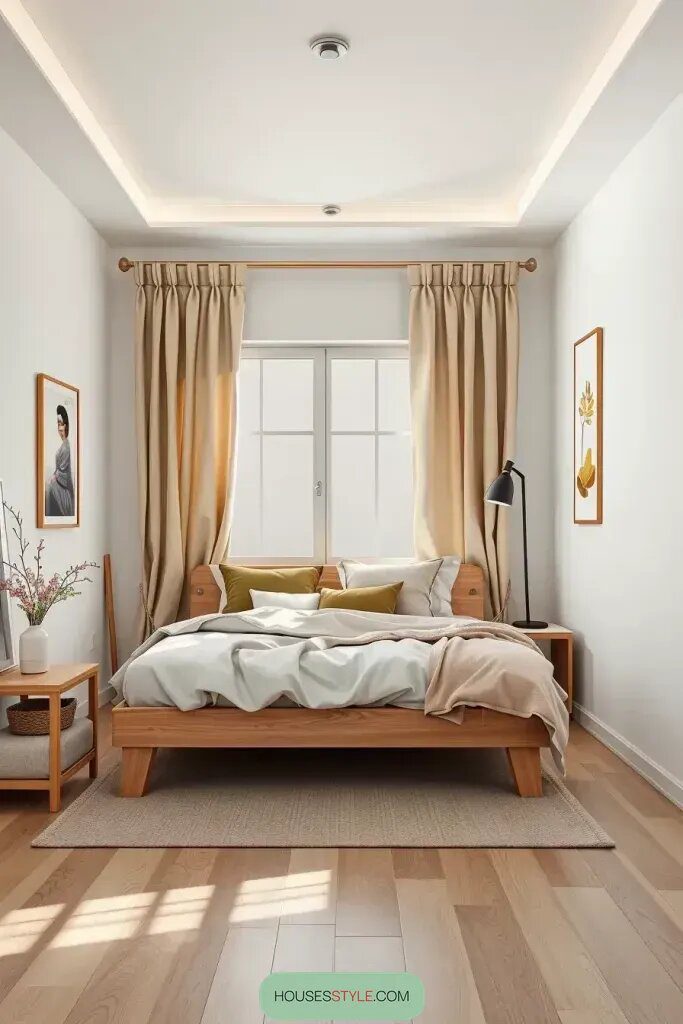
When it comes to decorating a cozy Japandi-style bedroom, picking the perfect colors is key! I suggest going for soft, earthy tones like creamy whites, sandy beiges, light wood hues, or a mix of grey and beige (greige). These colors will give your space a welcoming and spacious vibe with a touch of warmth and texture.
 Save
Save
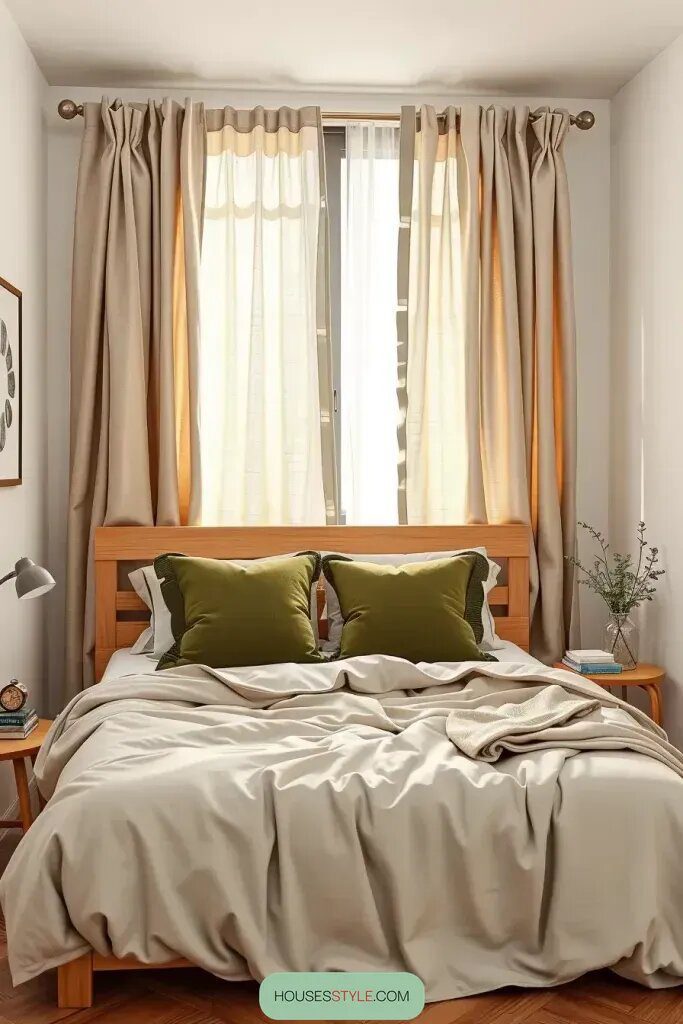
I like to begin with soft clay and beige-gray walls to create a serene backdrop. Then, I bring in natural wood furniture and earthy decor like olive green or stone grey throw pillows. I always aim for a soothing mix of colors and materials, avoiding harsh contrasts. What do you think?
 Save
Save
In my opinion, a simple tip to make a room look bigger is to paint the ceiling the same color as the walls. It kind of gives the room a seamless look and makes it feel taller. I read in Better Homes & Gardens that layering similar tones can really help make a small bedroom feel more spacious and balanced.
I think it would be a nice touch to add some sheer floor curtains in a lovely oatmeal or taupe color. They do a great job of softly filtering the light and fit in perfectly with the warm, neutral colors.
A Peaceful Mix of Japanese and Scandinavian Style
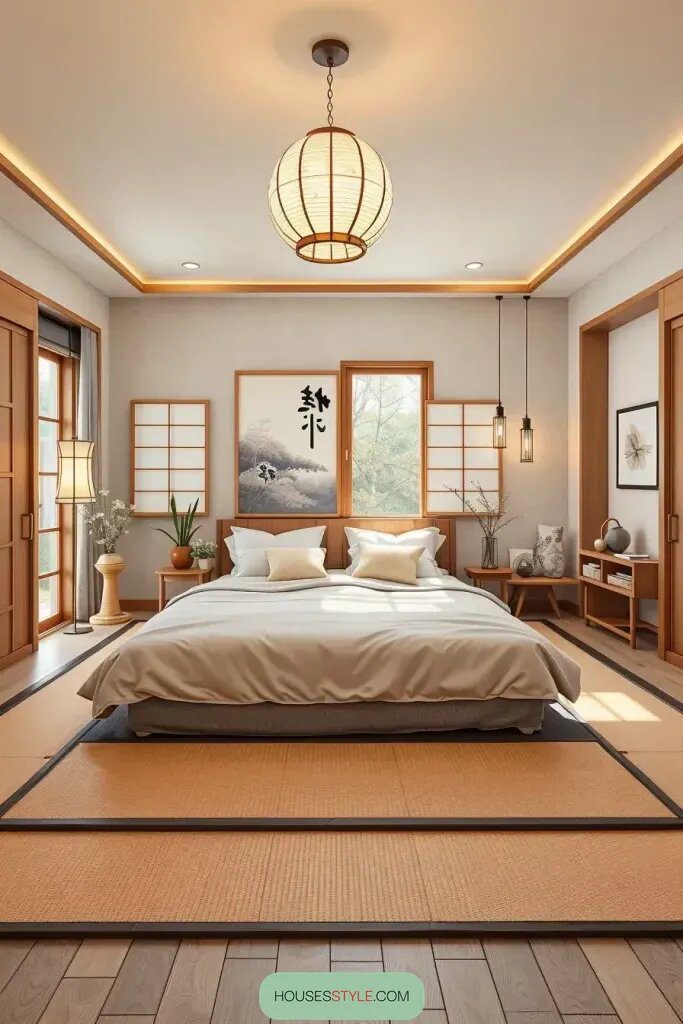
I personally love how tatami mats add a touch of cultural charm and cozy comfort to a Japandi bedroom. It just feels so natural and down-to-earth, you know? Walking on them barefoot, feeling the textured surface and that faint scent of straw, it’s a simple pleasure that really connects me to the essence of Japandi style.
 Save
Save
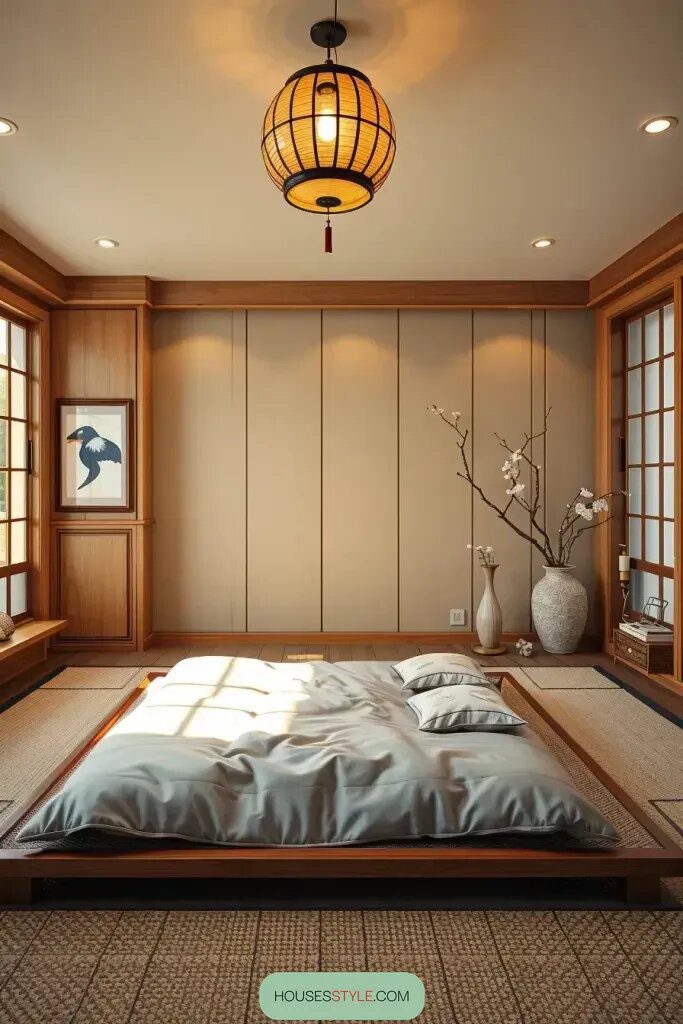
In a lot of my projects, I like to go for a modern look by using a sleek bed frame along with a low futon mattress or platform base, topped off with a tatami style mat. I’m not going for a completely timeless style, but rather updating the way textures and pieces are put together. I like to mix in some light wood furniture, soft upholstery, paper lanterns, and neutral bedding to bring everything together in a balanced way.
 Save
Save
When I was in Japan, I stayed at this hotel that had these amazing tatami sleeping pods – let me tell you, I’ve never slept so good in my life! It totally inspired me to incorporate those kinds of elements into my own design work. Actually, I read in Domino Magazine that they’re saying tatami is the next big thing for creating peaceful and relaxing spaces. Cool, right?
These tatami squares are perfect for people who want a versatile and easy-to-use option. If you’re renting a place, you can easily swap them out without any hassle. So they’re a great choice for those looking for something low-maintenance.
Wooden Slat Accent Walls for a Natural Look
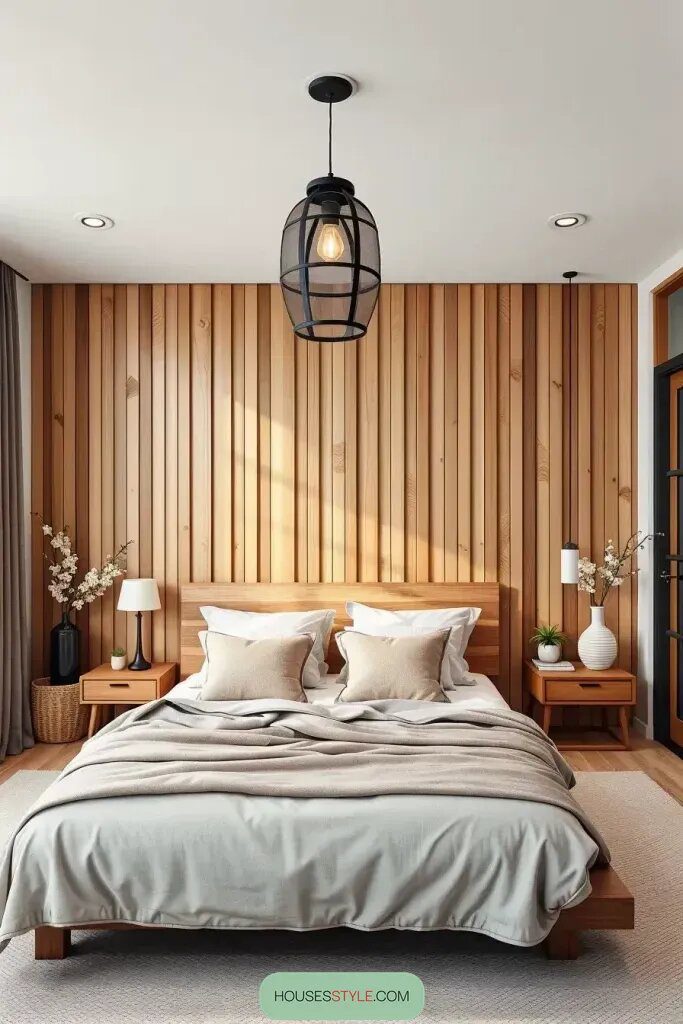
One thing I really love about a Japandi-style bedroom is the wood slat accent wall. It just adds so much texture and character to the room without it feeling too overwhelming. I like to put them behind the headboard or use them as a divider between the bedroom and dressing room or study. It really helps to create a sense of depth while still keeping that sleek, minimalist look that Japanese and Scandinavian design is known for.
 Save
Save
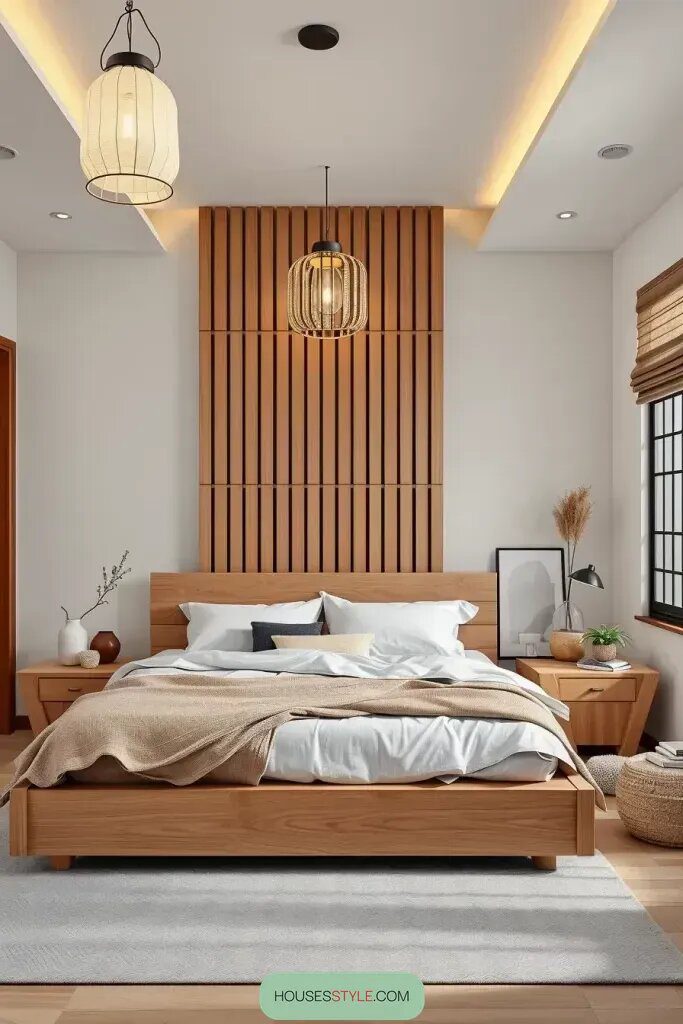
So, for the materials, I was thinking we could go with some vertical oak or ash wood slats with a nice matte finish. I think it would look great if we scaled them from the floor all the way up to the ceiling in equal dimensions to make sure everything flows nicely and looks symmetrical. To complement that, I like to pair them with low-profile beds, some muted tone bedding, and maybe some cozy paper lantern pendants for a touch of ambiance. And to add some warmth to the room, we could consider adding a natural accent wall without introducing any new colors, so that the whole color scheme stays simple and cohesive. What do you think?
 Save
Save
One of the projects that I absolutely loved was when we switched up a client’s room by swapping out a boring white wall for a beautiful custom birch slat panel. The difference it made was incredible – not only did it soften the acoustics, but it also created a much cozier atmosphere. It’s funny, I saw a similar design in Tokyo apartments on Dezeen, and they were raving about how the wood slats added visual warmth and balanced out the minimalist interiors. It’s amazing how a simple change like that can really transform a space, don’t you think?
To make this design even better, we could try adding some hidden LED lights behind the slats. They would give off a soft, gentle glow and really enhance the relaxing vibe of the bedroom.
Romantic Touches for a Cozy Japandi Bedroom
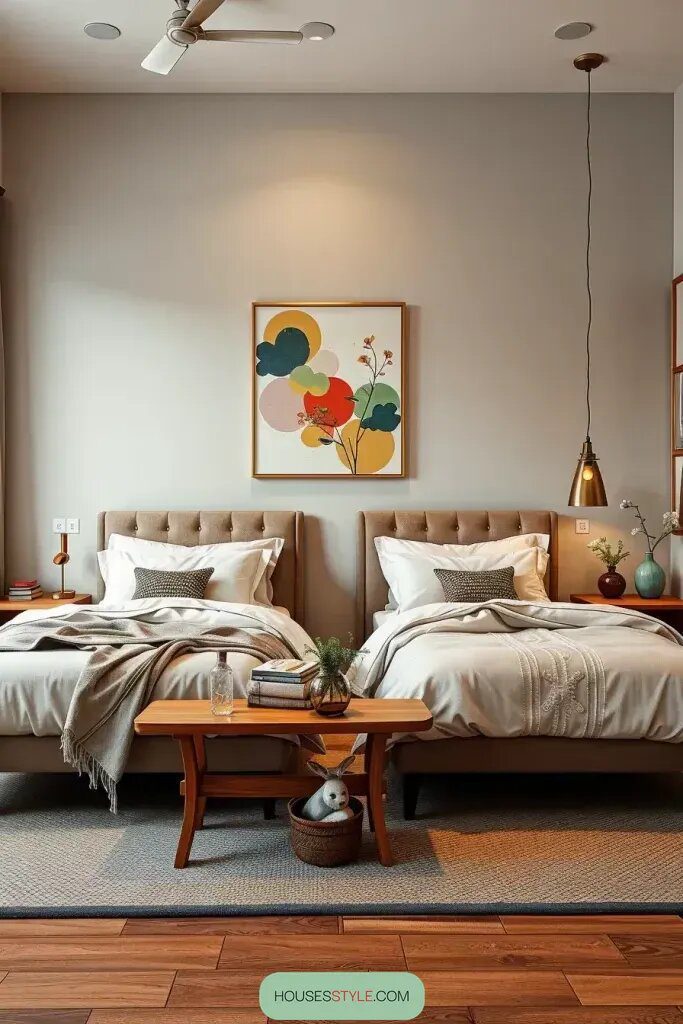
When you’re designing a Japandi bedroom for you and your partner, it’s all about creating a space that reflects both of your styles and emotions. To achieve this, it’s important to strike a perfect balance between functionality and coziness. Personally, I find that pairing up items like nightstands and lamps on either side of the bed really helps tie the room together. The goal is to make the room feel snug yet open, with lots of soft fabrics and storage options to make it a welcoming place for both of you to relax and unwind together.
 Save
Save
When it comes to decorating, I would recommend keeping things simple with a mix of neutral colors for the bed linens. You can add some texture by incorporating linen, cotton, and a cozy cashmere throw. For the walls, I think some calming nature-inspired artwork would be nice. Maybe two ink brush prints or some abstract pieces in black and taupe.
It could be nice to have a low-profile bench at the end of the bed for some extra seating and visual interest. And if you and your partner have different reading preferences, adjustable arm sconces or pendant lights would be a great choice to provide individual lighting options. Just some ideas to create a cozy and personalized space!
So, I love creating designs that cater to all kinds of styles and preferences. One cool idea I like to incorporate is a shared shelving unit or a custom headboard with cubbies, so each partner can have their own space to personalize. As the folks at Real Simple put it, designing for two is all about finding that perfect balance, especially when dealing with smaller spaces.
I’ve been thinking about how we could make our space even more comfy and inviting, and I had this idea for a cozy lounge chair or reading nook. I thought it would be cool to have some dual-purpose lighting that lets you relax on your own but still feel like you’re part of the group. What do you think?
Open Layouts for Serene Japandi Bedrooms
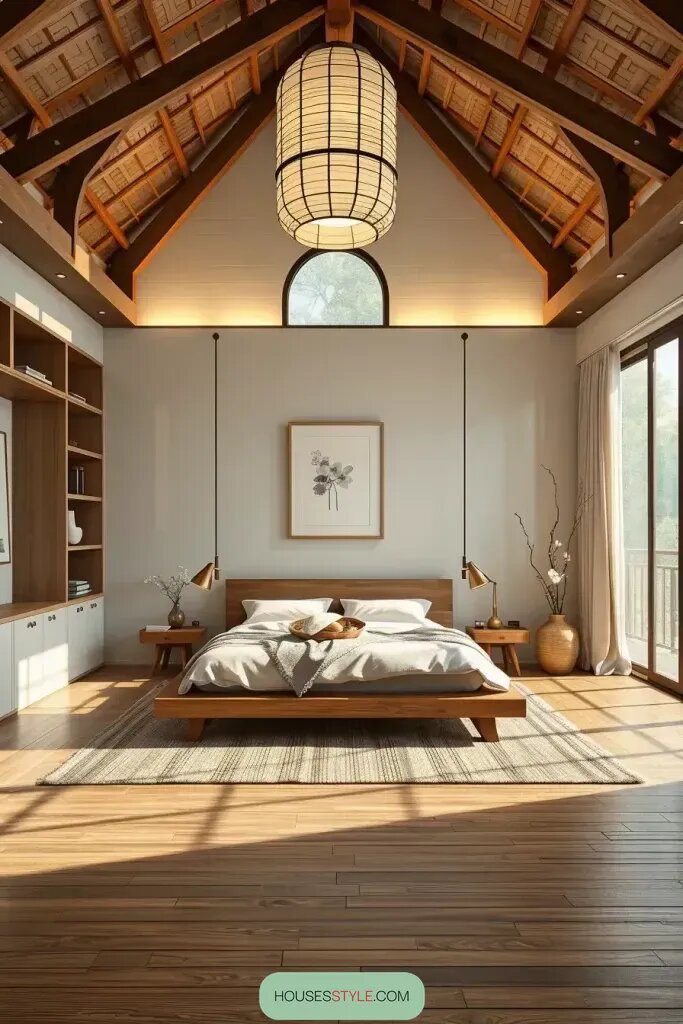
Have you noticed how cozy and spacious Japandi-style bedrooms are? They have this neat and clean look with a minimalist vibe. I find that getting rid of extra walls and bulky furniture makes the room so much more convenient and lets in lots of natural light from the windows. These layouts are perfect for master bedrooms where you can sleep and relax all in one peaceful space.
 Save
Save
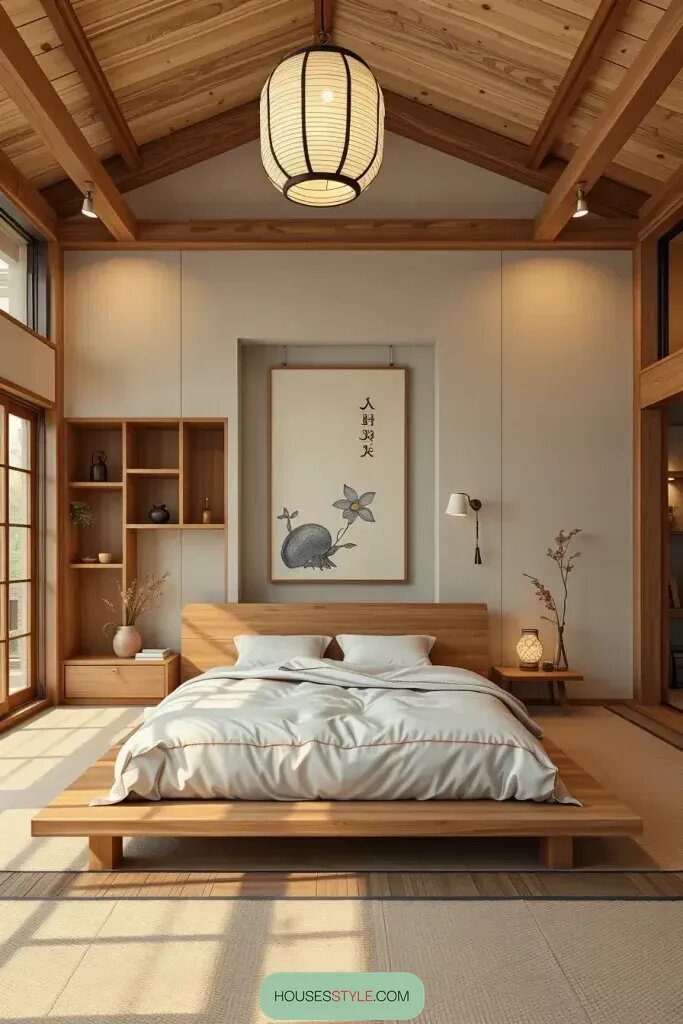
I like to go for low-to-ground furniture like platform beds, low benches, and floor cushions because they make the room feel more spacious. Recessed dressers also help keep things looking balanced. It’s nice to keep the middle of the room clear of obstacles and use the borders for adding decorative touches.
 Save
Save
When I was planning out my bedroom, I decided to trade in my big closet for a simple clothing rack and shorter drawers. It really changed the whole vibe of the room and made it feel more open and airy. I read on Apartment Therapy that having a more open layout in your home can actually make you feel healthier because you don’t feel as closed in. Pretty cool, right?
I was thinking that to make this space even better, we could add a modular screen or something like a shoji divider. It would help separate the areas for getting dressed or reading, but still let the light come through. What do you think?
Sophie’s Apartment: A Modern Japandi Bedroom Look
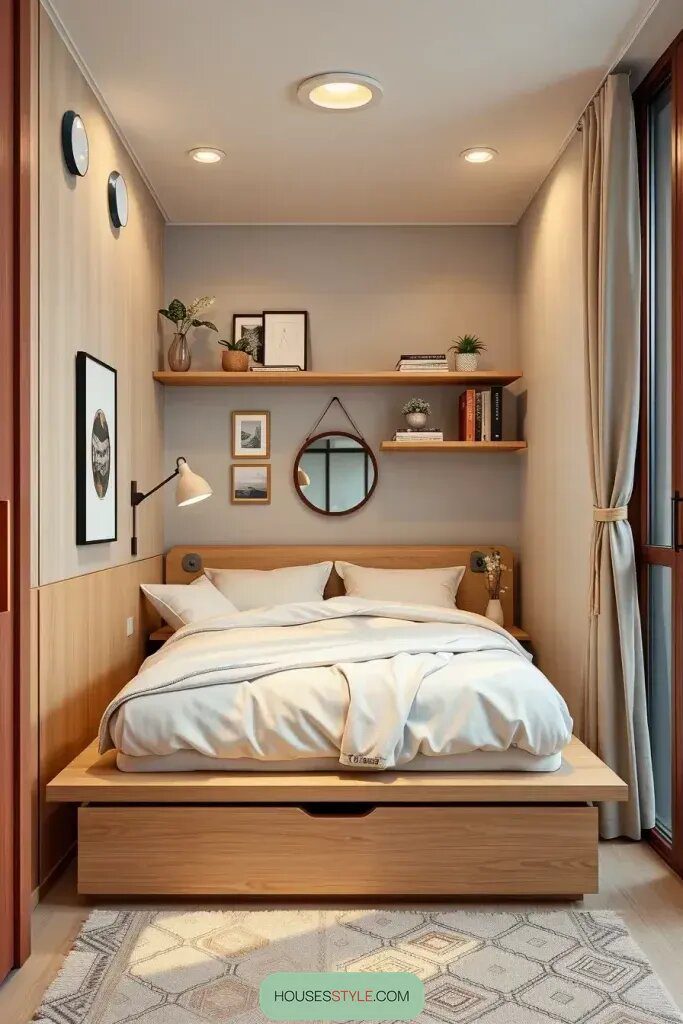
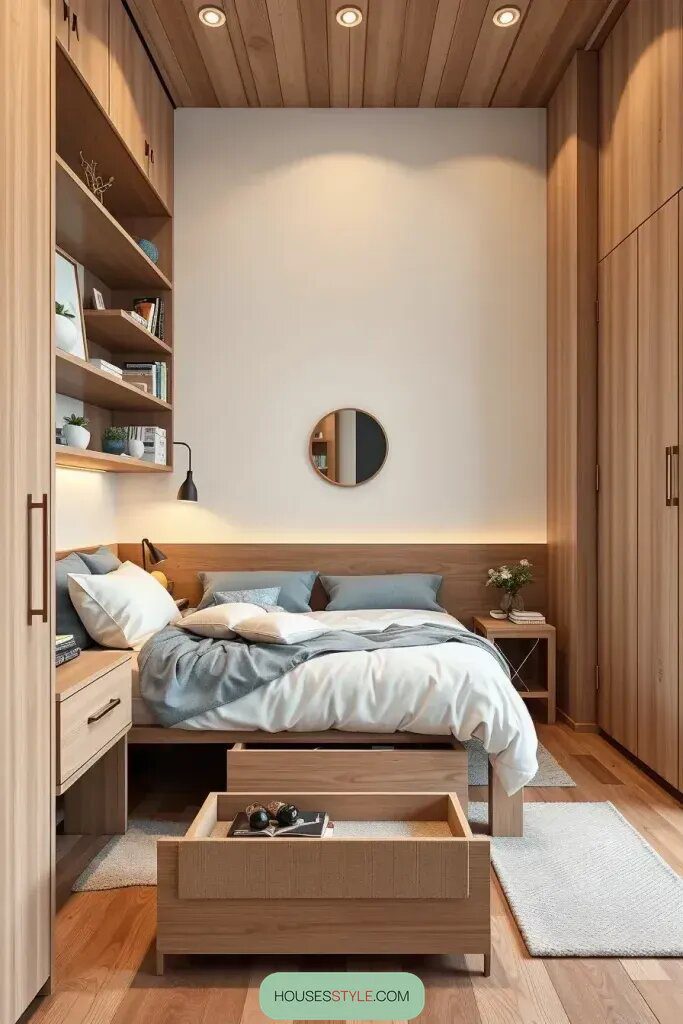
When you’re designing an apartment bedroom in Japandi style, it’s important to think about the limited space you have. Personally, I like to go for furniture that serves more than one purpose, stick to light colors, and make sure there’s plenty of hidden storage. The goal is to create a peaceful retreat that’s also practical, perfect for a lifestyle with limited space.
 Save
Save
I really like low platform beds that have built-in drawers because they’re super convenient. I also love floating night stands and a small desk that can double as a vanity. To save space, I use wall hooks and slim shelves to keep things organized. I prefer using soft colors like white, warm gray, and light wood finishes to create a relaxing and airy vibe in my room.
 Save
Save
In my cozy little apartment in the city, I tried putting a mirror across from the window and it made the room feel much brighter and bigger. I read in Better Homes & Gardens that mirrors, especially when paired with vertical lines, can really help in small spaces. I totally agree with that! It definitely improved the layout without adding any extra space.
I think it would be cool to spruce up this design with a nifty foldable Japanese floor chair called a zaisu. It’s traditional and practical all in one – a win-win!
Wood Floors That Add Light and Warmth
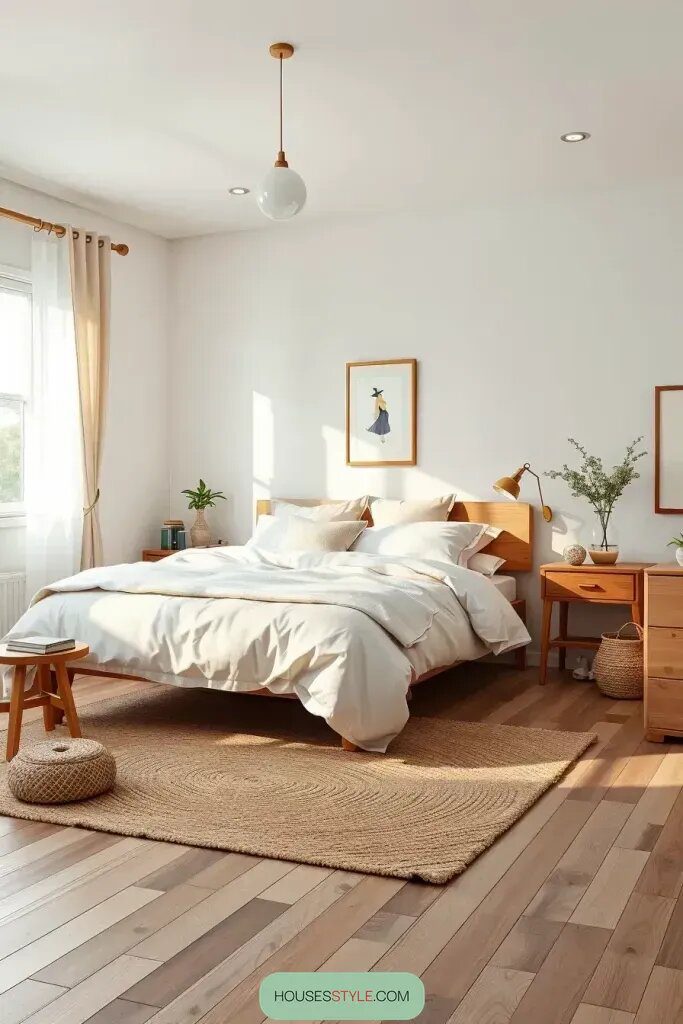
When it comes to a Japandi-style bedroom, I believe the flooring really sets the tone for the entire room. I love the look of Scandinavian light wood floors because they provide a solid base that feels warm and inviting. I personally prefer wide planked, matte oak, ash, or birch floors because they are not only classic and long-lasting, but they also help brighten up the space and create a sense of peace and tranquility that is so important in this kind of design.
 Save
Save
I like to keep things simple in my home, so I only have a few small rugs that are handwoven in off-white or gray. I believe rugs should be subtle and not take over the room, but instead provide a comfy spot to walk on.
In one of my projects, I decided to go with whitewashed oak floors paired with a natural woven jute rug. It ended up creating just the right balance of brightness and coziness. I remember reading in Domino Magazine that “Light woods have become the ultimate neutral,” and I have to say, I totally agree with that statement.
If you’re looking to go the extra mile, you might want to consider installing radiant heating under these floors, especially if you live in a colder climate. It not only adds a cozy touch but also keeps the room looking sleek and modern without any clunky heaters in sight.
Scented Ambience in Japandi Bedroom Retreats
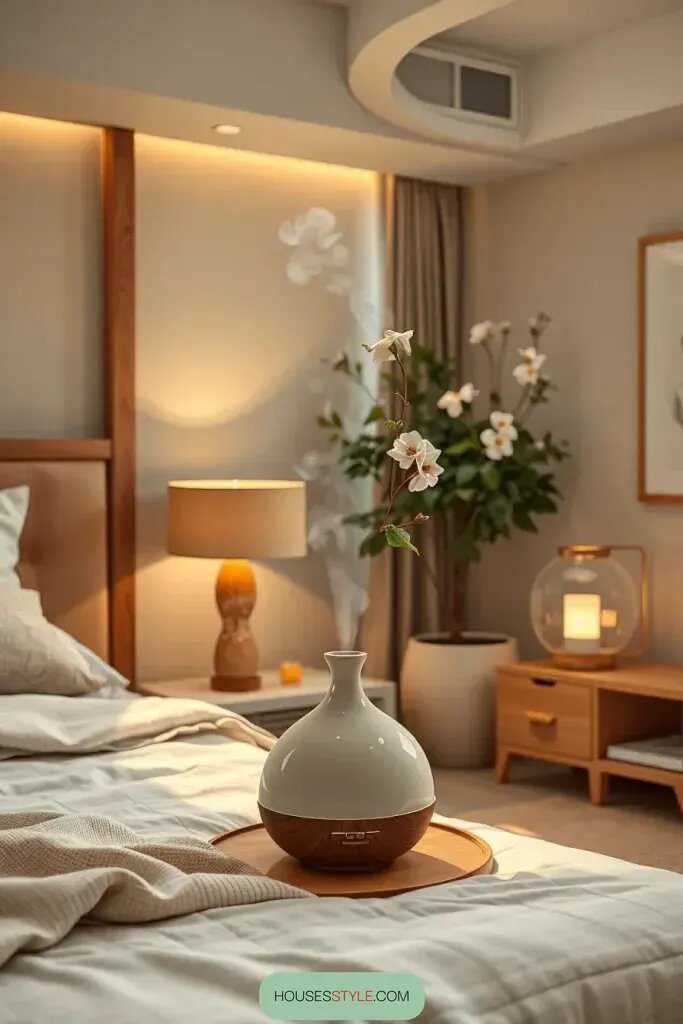
I love creating Japandi-styled bedrooms because they’re not just pretty to look at, they’re also a cozy escape for the senses. When I’m working with my clients, I always make sure to incorporate soothing scents and relaxing sounds into the room to really enhance the calming vibes. Adding in some gentle aromatherapy with some soft background noise really helps create a truly immersive experience.
 Save
Save
I really love using ceramic and frosted glass essential oil diffusers. They just have a certain charm to them, you know? Especially when I’m going for that Japandi style vibe. I find that scents like hinoki wood, sandalwood, or lavender work best with that aesthetic.
And when it comes to creating a relaxing ambiance, I like to add some soft wind chimes to the mix. Or sometimes I’ll just crack open a window for a gentle breeze, or turn on a low hum from a sound machine. It really sets the mood.
I’ve learned to steer clear of anything too harsh or loud when it comes to tech sounds. I prefer gentle options that blend in nicely with the background. It just helps me unwind and destress.
 Save
Save
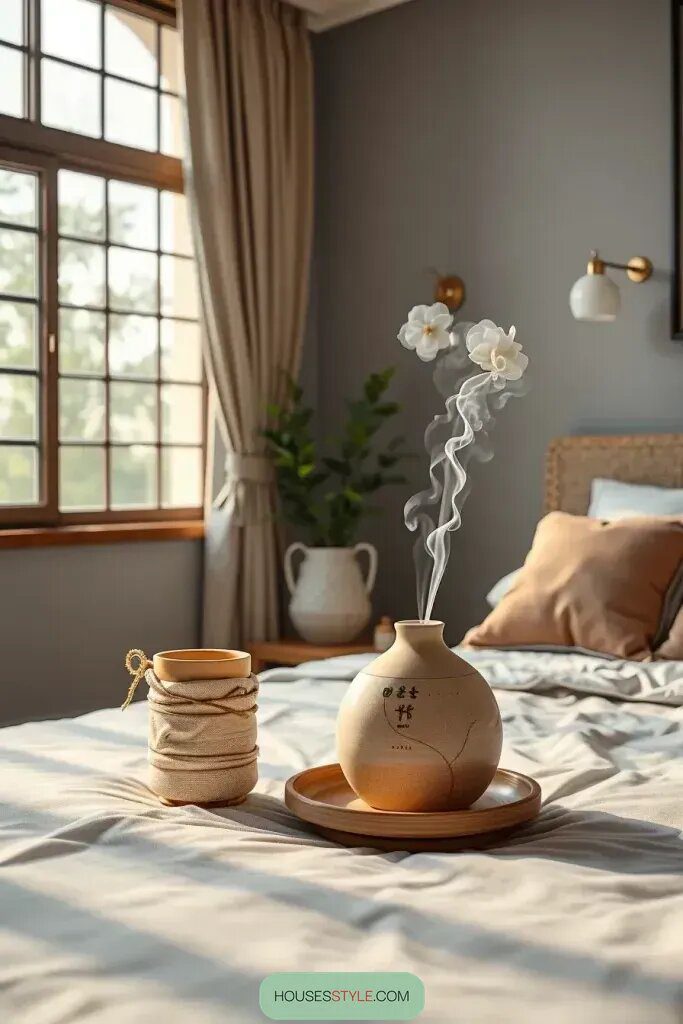
I love the earthy smell of burning Japanese cypress sticks in my home, especially when they’re placed in a beautiful ceramic incense holder. Architectural Digest reminds us that creating a peaceful environment involves engaging all of our senses, and we often forget about the importance of scent in design.
I really love the linen wrapped speaker because not only does it look great, but it also plays such soothing white noise or nature sounds. It’s perfect for creating a calming atmosphere in any room without being too flashy.
Stylish Wardrobes for Cozy Japandi Bedrooms
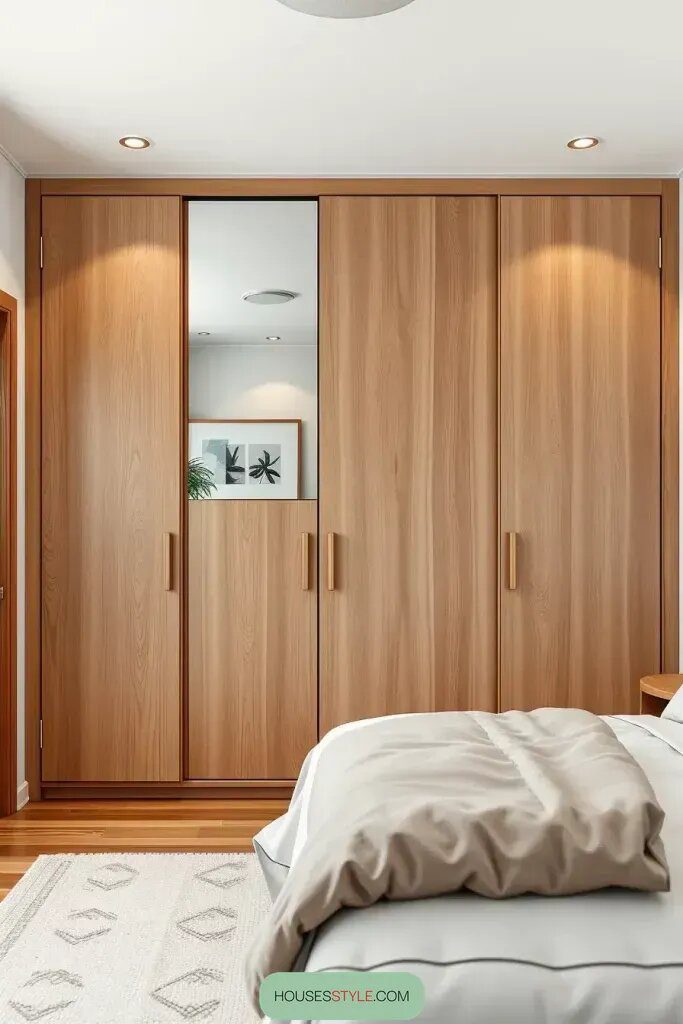
When it comes to creating the perfect Japandi bedroom, self-contained closets are a great addition! I love designing these closets myself, making sure they blend seamlessly with the room’s simple and spacious vibe. I usually opt for natural wood or soft matte white leather to keep things balanced. And for a clean look, I always choose door fronts with no handles or deep-set pulls to keep things clutter-free.
 Save
Save
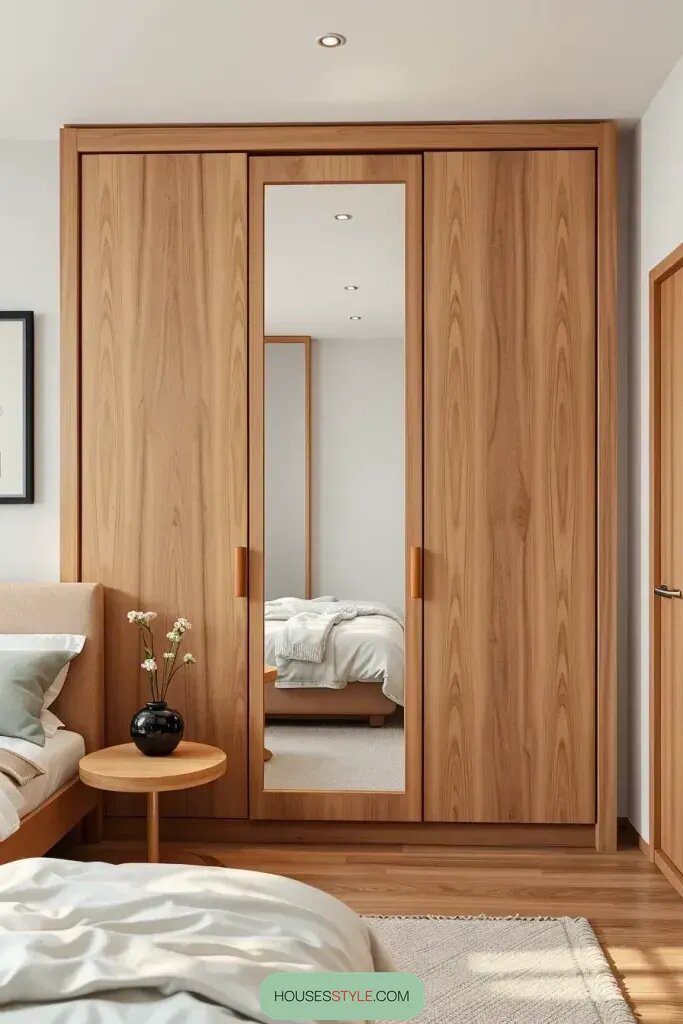
Having storage compartments like drawers, shelves, and hanging space is really helpful in keeping things organized. It’s also good to keep the fronts clean to avoid clutter and draw attention to the design. And don’t forget, a wardrobe mirror placed strategically can make the room look bigger and brighter by reflecting light.
 Save
Save
I recently worked with a client in a downtown loft and we ended up creating a custom wardrobe that covers the entire wall. We added sliding doors made of wood veneer to make it both functional and stylish. It has become a standout feature in the room without being too overwhelming. As Interior Design Magazine aptly put it, “Built-ins elevate minimalism to a sculptural form,” and I totally agree with that statement.
Here’s another idea for you – how about using different materials to create a cool contrast? For example, you could use a linen texture finish for the drawers. It’ll give them a unique look and add some depth to the overall design without looking too busy. Just a thought!
Artwork With Eastern and Nordic Influence
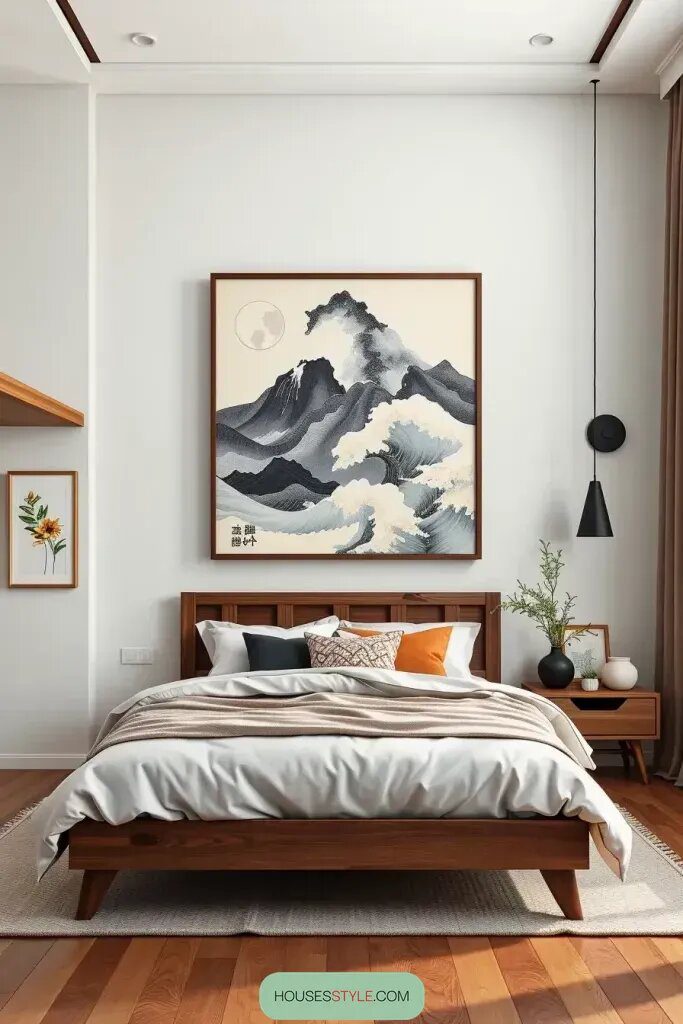
You know, when you’re putting together a Japandi-style bedroom, one thing you shouldn’t overlook is the art. Adding in some Eastern vibes mixed with Nordic pieces really helps bring the room together and keeps that peaceful vibe going strong. Personally, I like to look for big paintings in black ink or soft watercolors – think simple nature scenes and delicate brushstrokes. They bring such a sense of calm and harmony to the space, and they tie in perfectly with the overall design and materials of the room.
 Save
Save
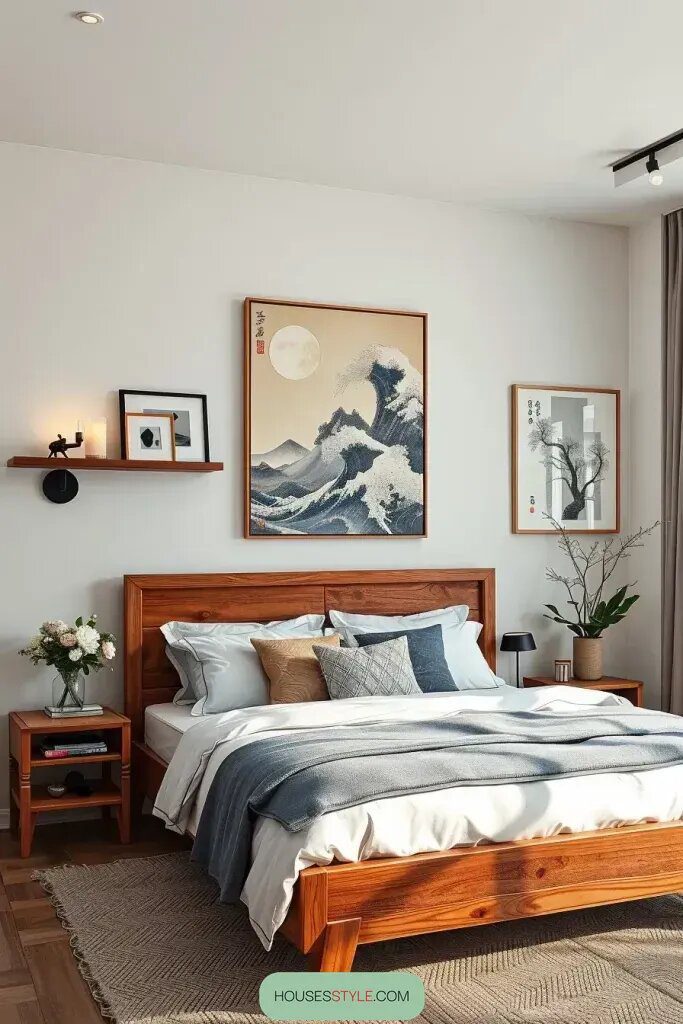
You know what really adds a nice touch to a room? Handcrafted wooden frames, fabric wall scrolls, or soft architectural scrolls. They’re like subtle statement pieces that tie everything together. I suggest adding a Japanese sumi-e painting and a gentle Scandinavian abstract to bring a nice cultural balance to the space. Also, try to keep the furniture more linear, like a sleek wooden bench or shelf, to draw attention to the art. And don’t forget to position the shelf right under the frame for that finishing touch of elegance. It really brings the whole room together!
 Save
Save
In my opinion, adding some really nice artwork can totally elevate a Japandi room from just being okay to feeling really thought out and special. It gives the space a personal touch and helps enhance that calm, zen vibe. Architectural Digest says that Japandi is all about keeping things simple but also showing off your own unique style. So, with some carefully chosen art pieces, you can add a touch of sophistication and personality while still keeping that clean and minimalistic look.
If you want to really enhance this area, I would recommend throwing in a floor lamp or a cool light fixture in brass or matte black near the artwork. It not only brightens up the space but also draws attention to the art without making the wall look too crowded. It just ties the whole room together, making it both stylish and practical.
Adding Hygge Warmth to a Japandi Bedroom
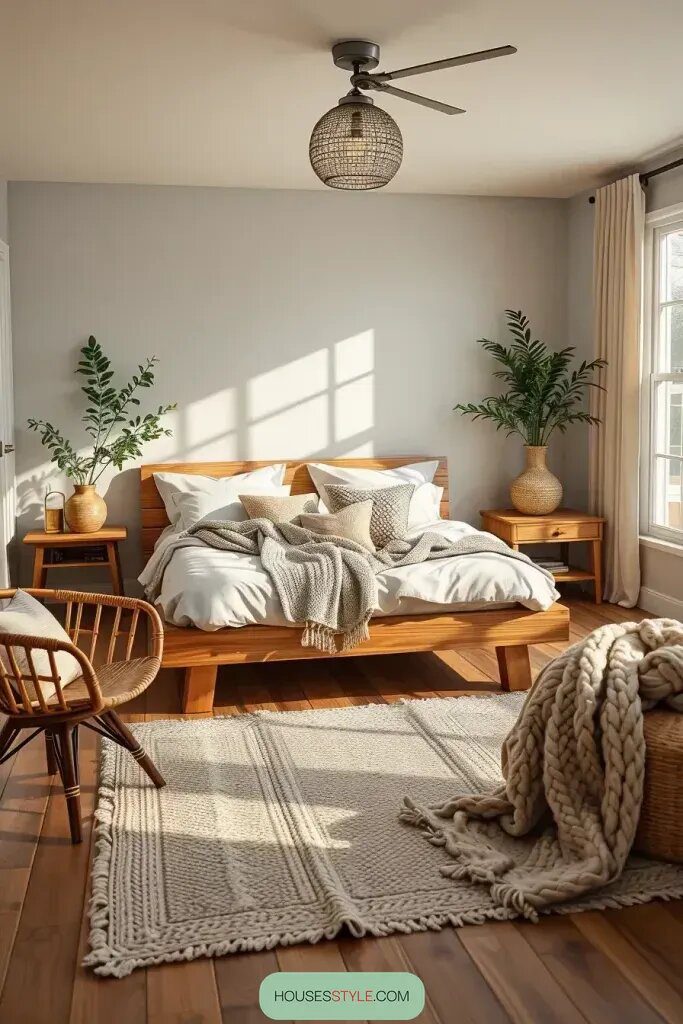
You know, at first it might seem a little strange to mix the sleek look of a Japandi-style bedroom with that cozy Hygge vibe, but trust me, it works like magic! It’s all about creating a space that’s super comfy without going overboard. By layering textured blankets, cozy throw pillows, and plush rugs, you’re practically inviting yourself to just chill out and relax. Stick to earthy tones and top-notch materials, and you’ll see how it all comes together to bring that Japandi flair while making the room feel even more warm and inviting.
 Save
Save
The room has a cozy vibe with warm colors on the linen pillows and a wool rug under the bed. The platform oak bed fits in perfectly with the decor. A knitted throw adds some texture and is draped over a bench, placed near the soft lighting. A bamboo chair sits invitingly in the corner for you to relax in. The key to this layout is to create a sense of breathing room and space.
 Save
Save
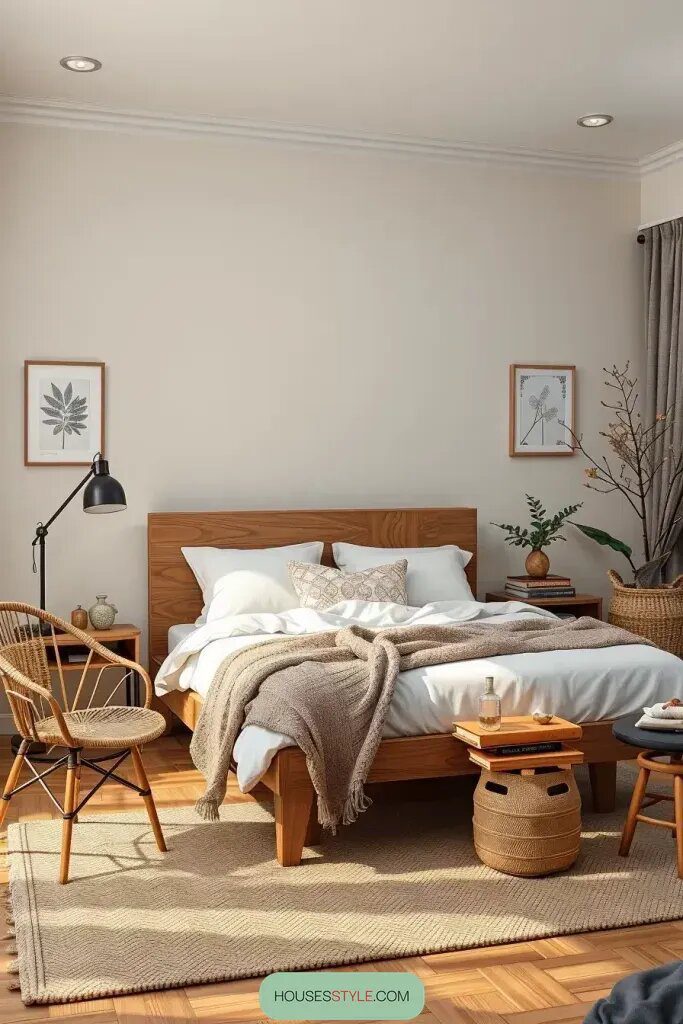
I recently tried combining Japandi with Hygge at home, following a friend’s suggestion, and it really made my space feel so cozy and inviting after a tiring day. The design pros at Dwell say that this fusion creates a soulful and rejuvenating design that is also practical for everyday living, and I couldn’t agree more.
To finish it off nicely, I’d recommend adding a light diffuser with some cedar oil near a cute ceramic tea set on your nightstand. This little touch really amps up the charm and gives a cozy Nordic and simple Japanese vibe.
Budget-Friendly Tips for a Japandi Makeover
You don’t need to spend a ton of money to give your bedroom that chic Japandi style makeover! I’ve worked with clients who have achieved beautiful results just by making a few simple and clever changes. Start by decluttering and getting rid of any unnecessary items to create a sense of calm in the room. Then, you can easily add affordable furniture pieces with natural materials and clean lines to achieve that perfect Japandi look. It’s all about finding that balance and creating a cozy and stylish space without breaking the bank.
 Save
Save
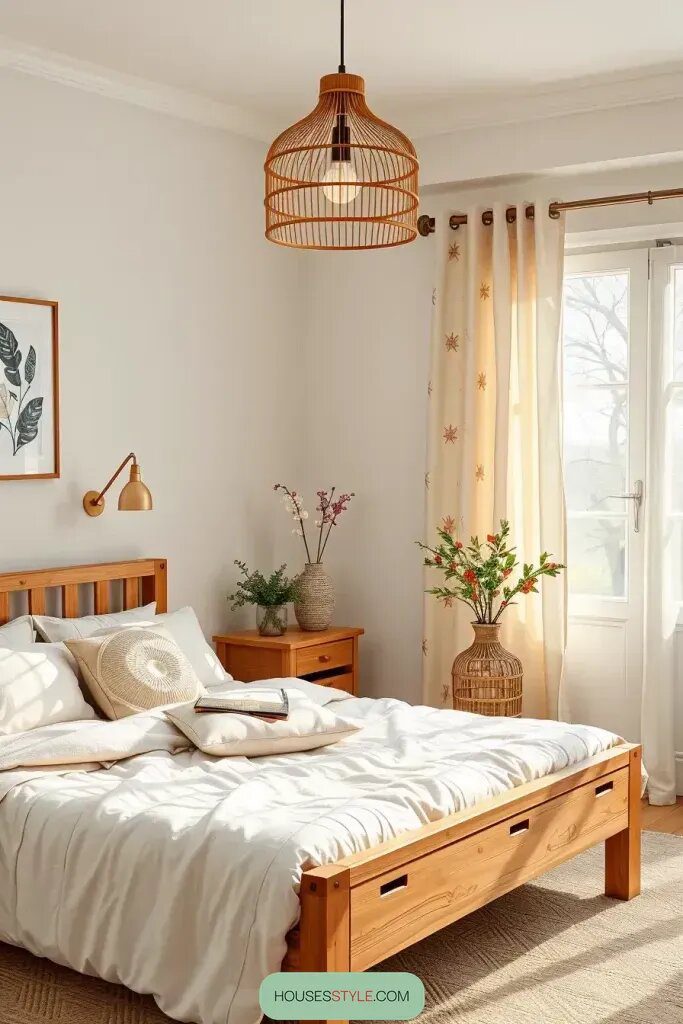
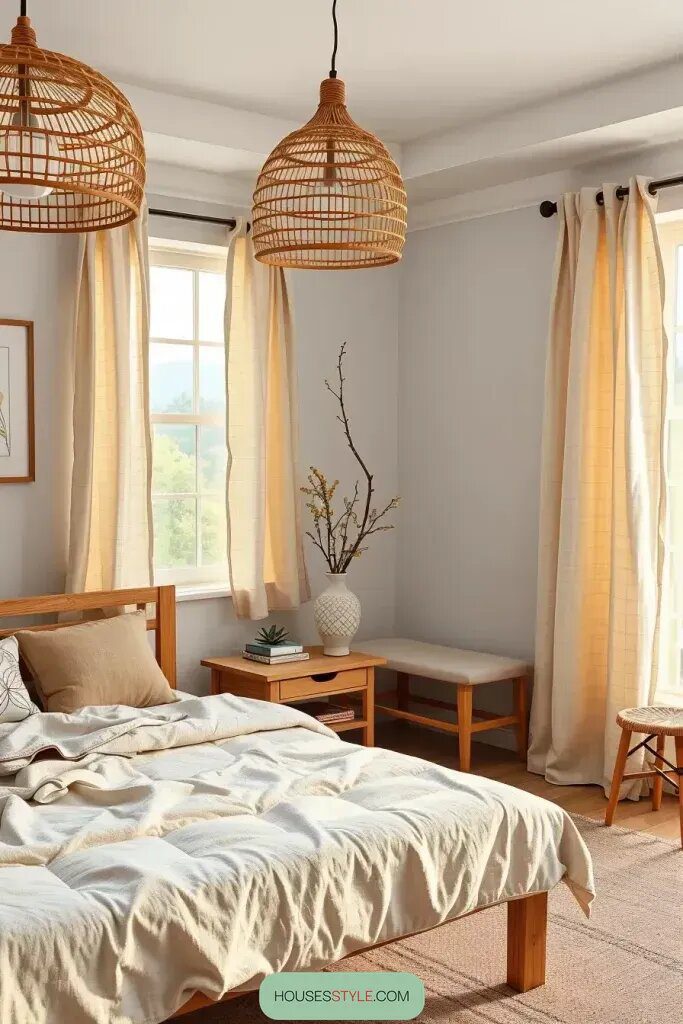
If you’re into Japandi furniture, you can check out thrift stores or even IKEA for some great finds. Picture a simple pine wood bed frame, cozy rattan light fixtures, and beds in calming neutral tones – it’s a winning combination! To add some personal touches, why not try some simple DIY projects? A fresh coat of matte paint on a small wooden bench, or sewing your own linen curtain panels can really make a room pop. And don’t underestimate the power of some pressed branches in a basic ceramic vase – it’s an elegant touch that won’t break the bank. Just a few ideas to help you create a beautiful and cozy space!
 Save
Save
I’ve actually had a lot of fun trying out some budget-friendly makeovers lately. I’ve come to realize that keeping things simple doesn’t mean sacrificing style, it’s all about being intentional. I always make sure to stick to neutral colors and prioritize storage, just like The Real Simple magazine recommends. It’s surprising how a great thrift store find can really bring a room together.
“I think investing in some nice bedding, like linen or organic cotton, can make a big difference. It not only looks great but feels amazing too!”
Final Thoughts on a Cozy Japandi Bedroom
When you subtly move things around, it helps create a sense of clarity and balance in your space. By using structured furniture or decor, you can establish clear boundaries. Choose calming white tones for a cohesive look and add some depth with accents of dark colors. This combination will create a serene and luxurious atmosphere.
 Save
Save
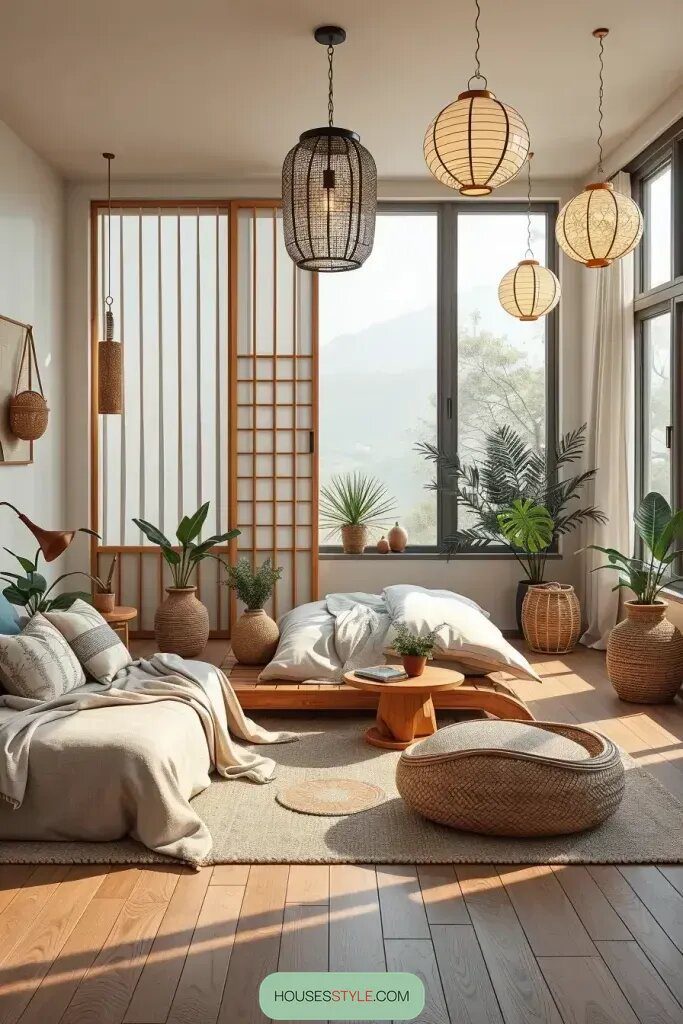
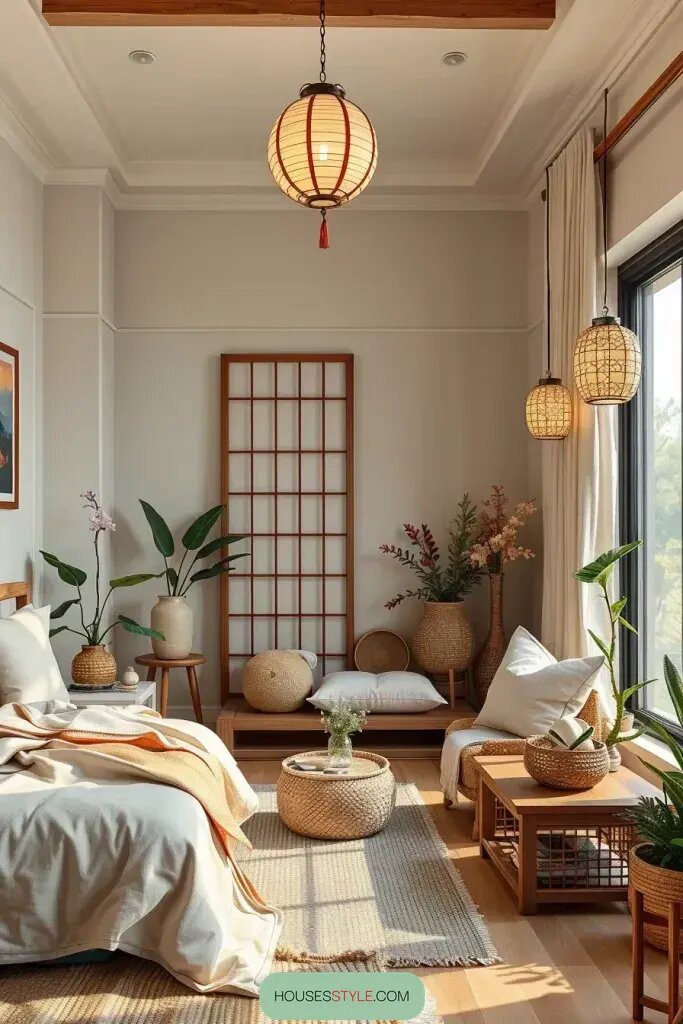
Imagine cozying up in a bed with a forward-facing bun style frame made of beautifully textured wood, giving your room a warm and welcoming feel. Overhead, clear lights create a soft glow, highlighting hand-painted baskets and shoji light boxes that add a visually stunning touch. The linen with intricate woven threads adds an extra layer of comfort and softness. In the rear, a dining area with paper-clad lanterns diffuses soft light, creating a gentle and calming atmosphere.
 Save
Save
I absolutely love the Japandi style in my bedroom – it has transformed it into a sanctuary! It’s the perfect place for me to relax and recharge after a long day. The simplicity of the design doesn’t make it feel cold at all, in fact, it brings a lot of warmth into the room. I read in House Beautiful that Japandi interiors promote a mindful way of living, and I’ve definitely noticed that influence in how I interact with my space.
If I could give you one more idea, I would say just throw in a splash of green – maybe a snake plant or a fiddle leaf fig. It will bring in some life and energy without messing up that awesome peaceful, minimalist vibe you’ve got going on.